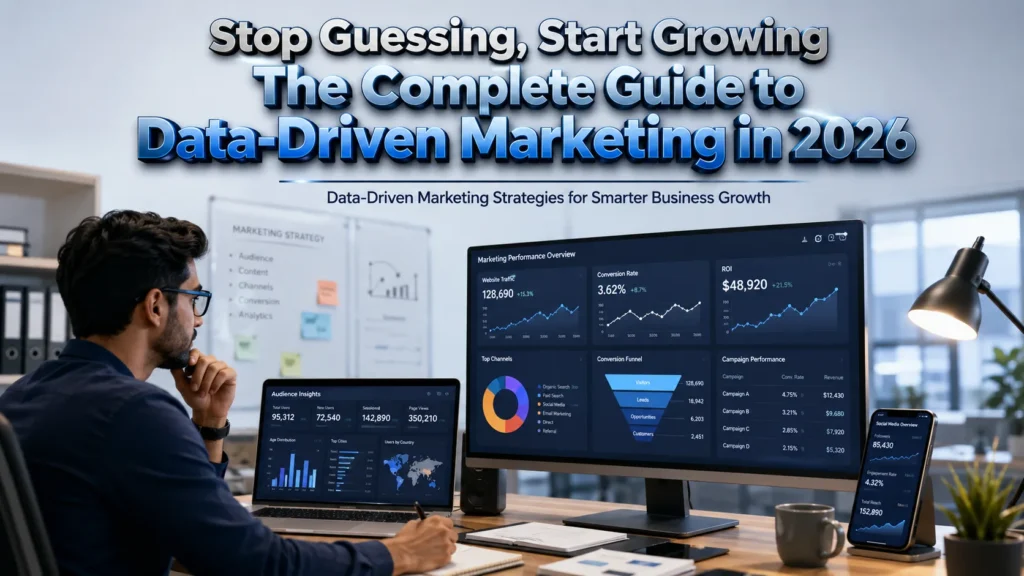

Data Driven Marketing in 2026
The art of marketing and the science of marketing have always gone together. The scientific aspect was hard to obtain for most of the history of marketing, and it involved large research budgets and specialised analytical resources. That’s the asymmetry that’s been massively compressed in 2026. Businesses that are leveraging the available data aren’t bigger or better equipped than those that are not. They’re just more conscious and more disciplined in what they use.
For every company, regardless of size and industry, the ability to execute data-driven marketing is the main factor separating high growth companies from the rest, according to Gartner’s CMO Spend and Strategy Survey 2025. The means by which this benefit can be obtained are becoming available to companies of all sizes.
Related Article: Manufacturing Business Under ₹1 Crore in India: Best Business Ideas
The Reactive-to-Proactive Shift: Why Timing Is Everything
The biggest change that can occur in marketing is from reactive to proactive decision-making. Reactive marketing is a reactive response to what has already occurred. Pro-active marketing puts a business in the right place and at the right time to take advantage of opportunities before they come to the fore when there is less competition and higher returns on investment.
In fact, there’s a lot of documentation in Think with Google’s Marketing Intelligence Resources about how companies that pay attention to new trends can consistently outperform those that act on trends that have already been identified. The information reveals that the initial companies to develop content or campaigns about a new trend grab a disproportionate amount of attention and conversion opportunity.
Google Trends: The Most Underused Marketing Tool Available
Google Trends for Business is free, complete and it deals with the search behaviour for over 100 countries worldwide. It provides seasonal pattern analysis, geographic demand intelligence, competitor brand comparison and emerging topics identification, which would have cost thousands of dollars per month from a market research firm 15 years ago.
Building a Data-Driven Marketing Calendar
A data-informed calendar is not created based on estimated seasonal activity or industry norms; instead, it’s created based on what data shows your customers’ behavior patterns in your particular market.
- Use Google Trends analysis for main categories of your product/services for 3-5 years. Recognize patterns throughout the year.
- Overlap your own sales and conversion rates to confirm or tweak the trends that Google Trends shows.
- Match competitor activity patterns with major campaigns, launches and sales periods to gain insight into when the competitive environment gets tough.
- Look for opportunities to fill the void when there’s increased search volume that isn’t being met by current content or campaigns.
- Avoidance of investment to be made after the seasonal peak and be ready to attract consumers in the research phase.
Read the Complete Book Here: Our Books
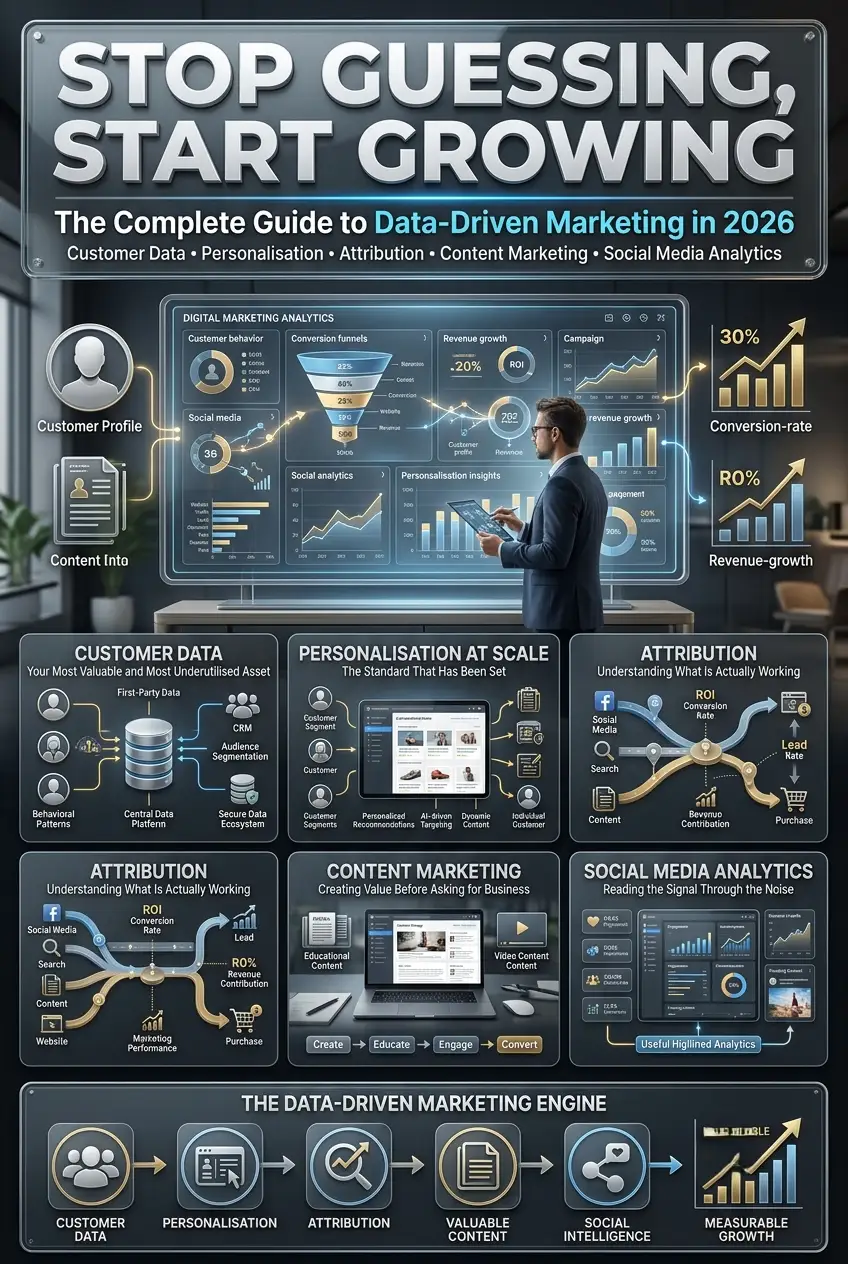
Customer Data: Your Most Valuable and Most Underutilised Asset
One of the top priorities in marketing for 2026 is the first party data strategy, which involves acquiring, structuring and leveraging data about your own customers. The IAB’s State of Data 2025 Report reveals that companies that have a strong first-party data source have 40-60% lower customer acquisition costs and convert at a much higher rate than those who use third-party data sources.
Personalisation at Scale: The Standard That Has Been Set
The level of personalisation consumer expect has never been higher and general marketing isn’t only less effective; it leaves a bad taste in consumers’ mouths. According to McKinley’s Next in Personalization Report, 76% of consumers are frustrated when companies don’t provide personalised interactions, and 71% expect them to do so. Firms with personalisation right earn 40% more out of such pursuits than the typical players.
Attribution: Understanding What Is Actually Working
With increasingly complex customer journeys, the attribution challenge has grown even more acute. The documentation for Google Analytics 4’s data-driven attribution (DDA) models clarifies how machine learning-driven attribution models deliver a more complete view of the effectiveness of marketing activities than the traditional last-click approach, which allows for more informed and effective budget allocation decisions from multi-touchpoint customer journeys.
Get Detailed Project Report (DPR): Project Reports & Profiles
Content Marketing: Creating Value Before Asking for Business
Content — content that actually helps, informs or educates — is the best marketing tool for most businesses. The annual B2C Content Marketing Report from Content Marketing Institute has been consistently demonstrating that companies with written content marketing strategies are three times more likely to say they succeed in marketing than those without and, over time, lower acquisition costs for customers.
Social Media Analytics: Reading the Signal Through the Noise
Every social media platform provides analytics dashboards, but extracting value requires clarity about which metrics correspond to business outcomes. Sprout Social’s Social Media Analytics Benchmarks Report provides industry-specific benchmarks for engagement rate, reach growth, and click-through performance that give businesses a meaningful reference point for evaluating their own performance.
Build a profitable business with the right idea
The Human Element: Why Data Is the Starting Point, Not the Ending Point
With all the focus on data, the most crucial reminder about data-driven marketing is that data is a starting point for making marketing decisions, not a substitute for human judgment, creativity, and emotional intelligence. Data is your answer to “what is happening?”. It doesn’t always tell you why. The best data-driven marketers are creative strategists who leverage data to refine their instincts, test their hypotheses and more intelligently allocate their budget.
Harvard Business Review’s Research on Data-Driven Decision Making confirms that the highest-performing organisations combine rigorous data analysis with strong creative and strategic judgment — neither alone produces the same results as the combination.
The Discipline Is the Differentiator
Data-driven marketing doesn’t have to be a secret. Tools are readily accessible. There is written documentation of the frameworks. The difference between those that actually do it and those that do not is discipline – the commitment to developing a regular monitoring and analysis routine, to making decisions on evidence, not assumption, and to testing, learning and adapting.
References & Further Reading
1. Gartner — CMO Spend and Strategy Survey 2025
2. Think with Google — Marketing Intelligence Resources
3. Google Trends — Business Research Tool
5. McKinsey — The Value of Getting Personalization Right
6. Google Analytics 4 — Data-Driven Attribution
7. Content Marketing Institute — Annual B2C Content Marketing Report
8. Sprout Social — Social Media Analytics Benchmarks
9. Harvard Business Review — Data-Driven Decision Making
10. Forrester — B2B Marketing Analytics Report