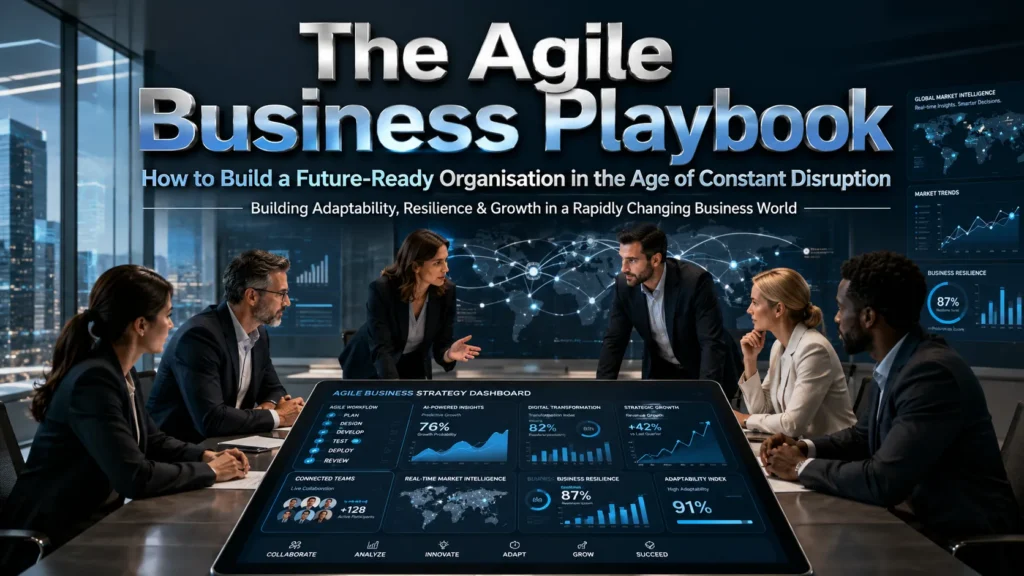

Why the Business Agility that survive and thrive in a NAVI world are the ones that treat adaptability not as a crisis response, but as a core strategic capability
Uncertainty has always been a part of business. The speed, the simultaneity and the interconnections of change are new in 2026. Now, disruptions come in waves, echoing each other in a chain reaction fashion and none of them is predictable as to which combination will shape the environment in the next quarter or the next year.
The research and consulting worlds that have been exploring and studying organisational resilience have met in a helpful acronym for describing this world: NAVI — Nonlinear, Accelerated, Volatile, and Interconnected. In fact, answering the call to lead in this kind of complex and fast-changing environment is the top challenge CEOs face, as reported in EY’s 2026 CEO Outlook Pulse Survey, where 87% of CEOs said this was the greatest challenge of their job, up from 62% three years ago.
Related Article: Best MSME Business Ideas in India for 2026: Top 50+ Profitable Projects
What “Agility” Actually Means (And What It Doesn’t)
Genuine agility is the organisational capacity to sense changes in the environment, interpret them accurately and quickly, decide on an appropriate response, and execute before the window of opportunity closes. McKinsey’s research on organisational agility identifies five trademarks of truly agile organisations: a shared purpose and vision, a network of empowered teams, rapid decision and learning cycles, dynamic people practices, and enabling technology. It is demonstrated through outcomes, not through the presence of flat hierarchies or Scrum methodology.
Strategic Clarity: The Anchor in an Uncertain World
The key paradox of agile organization is that you need stability on your strategic level. When there is no definition of purpose, values, direction, they simply rock back and forth endlessly when they are forced to react to all of the signals. This is the finding from Harvard Business Review’s research on strategic clarity, which showed that well communicated and clearly defined strategic intent enables organisations to make quicker, better decisions at every level, as people across the organisation can make decisions according to the intent without having to wait for instructions from the top.
Sensing Capability: Building the Early Warning System
Organisations that deal with the disruption best are the ones that first sense it. Information relating to market shifts, competitor activities, customer dissatisfaction and new technologies frequently resides at the fringes of organisations – in the frontline teams that directly engage with customers, markets and technologies.
Structural and cultural changes are needed to develop a true sense of the task. The research, published in MIT Sloan Management Review, reveals that companies that establish a formal process to gather and funnel information from their frontline staff to senior management are more effective at making strategic decisions and responding to disruption than are companies that are mostly top-down in how they communicate information.
Structural Sensing Mechanisms
- Frequent, substantive discussions between frontline teams and senior management, as opposed to annual town halls, regarding what the frontline teams are witnessing in the market.
- Customer advisory panels that involve and engage key customers in product and strategy development before it is finalised.
- Competitor monitoring that is systematic – to monitor competitor moves, competitor communications, job postings and customer reviews, helping to know what moves are being made at a competitor early on.
- Horizon scanning processes of emerging technologies, regulatory developments and social trends for potential relevance for business.
Decision Architecture: Making Good Decisions Faster
Decision architecture is one of the biggest contributors to organisational delays. Companies that are effective at decision making see profits almost six percentage points greater than those that are not effective at decision making, according to Bain & Company’s research on decision effectiveness. What separates the great from the good is not so much the quality of each decision, it’s the velocity and uniformity at which decisions are made and executed across the organisation.
- Move decisions as far down as they can be made, not as far up as they can be made!
- Identify reversible and irreversible decisions. Reversible decisions need to be made promptly and irreversible ones explicitly after weighing the pros and cons.
- Set decision authority. Clarifying who is responsible is one of the most frequent causes of organisation’s slowness.
- Time-box deliberation. Explicit time limits on decision processes compel discipline in the decision process: the decision must be made with the information available.
Get Detailed Insights from This Book: Our Books
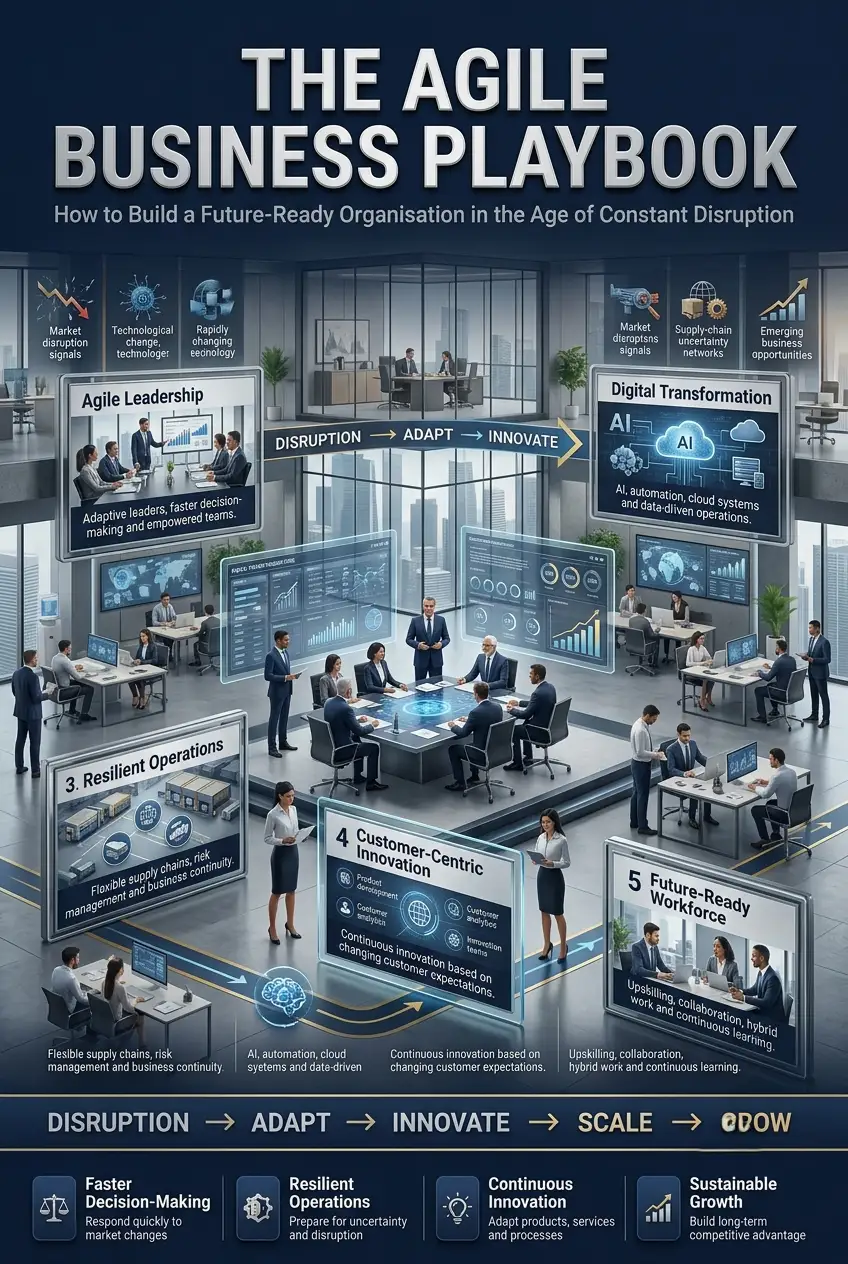
Execution Discipline: Making Fast Decisions Stick
The speed of decision without the discipline of execution creates one type of organizational chaos – the launching of initiatives that don’t really stick before the next one comes along. The most important practices to enhance the likelihood of execution success are: clear accountability (one owner, not a committee), explicit success measures, regular reviews in a rhythm and explicit stop processes for failed initiatives.
Learning Orientation: Turning Experience into Advantage
Organisations that compound their ability the quickest are able to get the most learning from every experience. Project Aristotle studies by Google on the elements of successful teams identified psychological safety as the most important part of team learning and success: the genuine belief that they will not be penalized for bringing up concerns or sharing unexpected information. Creating permission for the organisation to learn orientation, by leaders who publicly demonstrate it.
The Role of Technology in Organisational Agility
In today’s day and age, technology has been a necessary part of the agility of the organisation. According to Salesforce’s State of IT Report 2025, organisations using integrated real-time data platforms make strategic decisions 5x quicker than those using siloed, out-of-date reporting platforms. AI powered analytics, collaboration platforms and modular tech architectures all expand organisational capability in improved ways to sense and execute.
Agility for Small and Mid-Sized Businesses: The Natural Advantage
Smaller organisations are structurally better with faster communication, quicker access to decisions, and greater organisational culture. However, small firms are often very rigid too. OECD’s SME and Entrepreneurship Outlook highlights three elements that are the main sources of rigidity in small organisations, which hinder their adaptability: founder-centric decision making, informal processes depending on individual knowledge, and cultures that consider the founding approach as a sacred one.
Access Complete Business Plan: Project Reports & Profiles
The Leadership Requirement: What Future-Ready Leaders Do Differently
Building an agile organisation ultimately requires a different kind of leadership. The command-and-control model is structurally incompatible with the sensing, decision-speed, and learning requirements of an agile organisation. Deloitte’s Global Human Capital Trends Report documents that the leadership capabilities most associated with business resilience are learning agility, comfort with ambiguity, collaborative decision-making, and the ability to develop organisational capability rather than simply demonstrating personal capability.
Discover scalable startups tailored to your goals
The Competitive Reality: Agility Is Not Optional
The NAVI world does not reward organisational rigidity. The businesses pulling ahead in this environment share a common orientation: they view adaptability not as a response to crisis but as a core strategic capability requiring ongoing investment. The question is not whether your business needs to become more agile. It is whether you start building that capability before the next disruption arrives, or after.
References & Further Reading
1. EY — CEO Outlook Pulse Survey 2026
2. McKinsey — Five Trademarks of Agile Organisations
3. MIT Sloan Management Review — Organisational Sensing Research
4. Salesforce — State of IT Report 2025
5. Deloitte — Global Human Capital Trends Report
6. World Economic Forum — Future of Jobs Report 2025