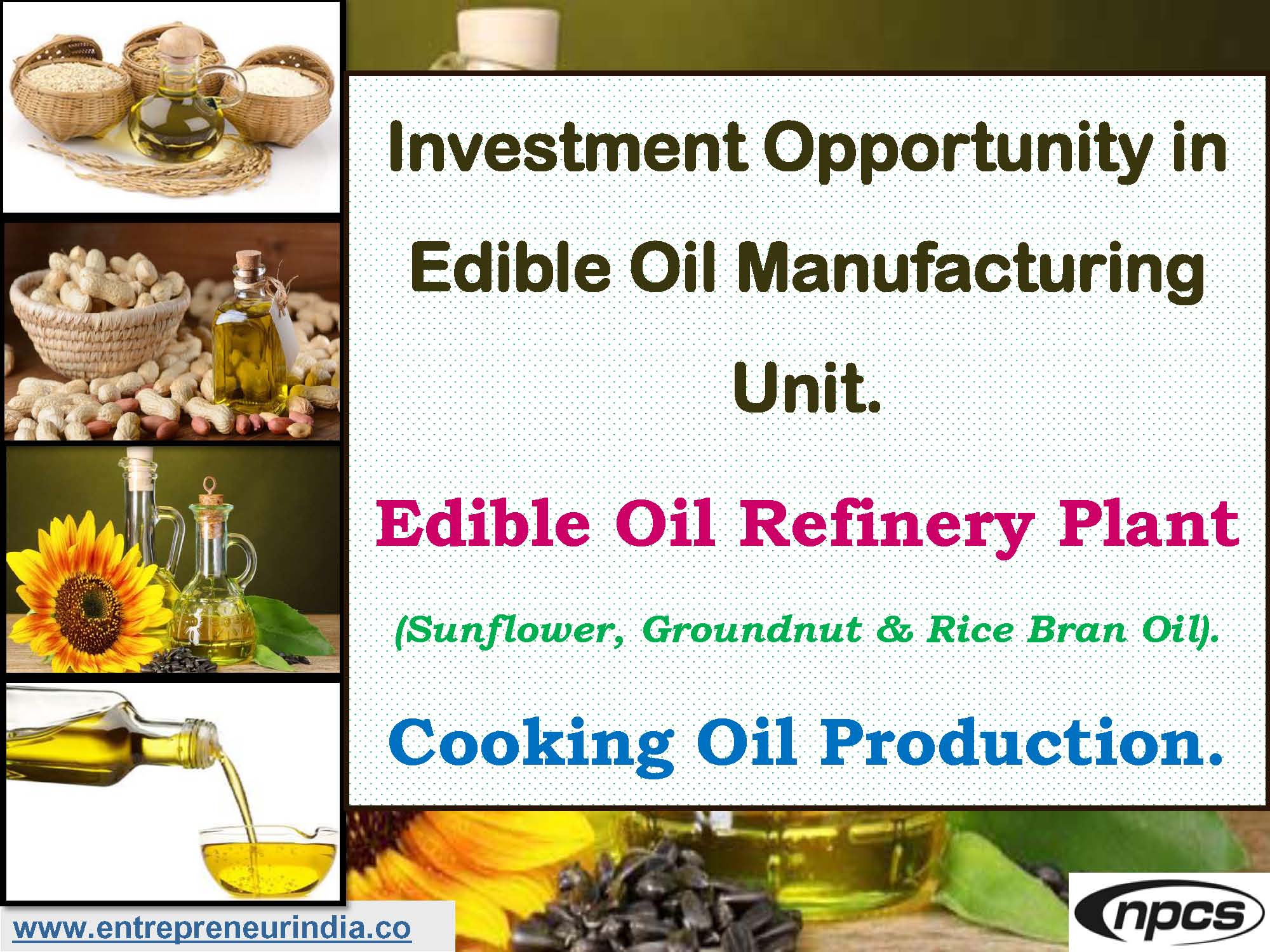
Establishing an edible oil manufacturing unit is not only a strategic investment but also a step toward contributing to one of the most essential sectors in the food processing industry. With rising health awareness, changing dietary habits, and growing demand for cooking oils, the edible oil market in India offers significant potential. Consequently, investing in this segment can generate steady returns with long-term viability. Whether you’re an entrepreneur looking for a profitable venture or an investor seeking a scalable model, the investment opportunity in edible oil manufacturing unit is worth serious consideration.
Investment Opportunity in Edible Oil Manufacturing Unit
As India continues to rely heavily on edible oil for daily cooking needs, the demand for various types—like mustard oil, sunflower oil, soybean oil, and groundnut oil—remains consistent. Moreover, the government’s push to reduce imports and promote domestic manufacturing under the “Make in India” initiative makes this sector especially attractive.
Market Overview and Growth Potential
India is the world’s second-largest consumer of edible oil. However, nearly 60% of its requirements are met through imports. As a result, there’s a large supply gap that local manufacturing units can bridge. According to market research, the Indian edible oil market is expected to grow at a CAGR of over 5.5% during the next five years.
In rural and urban areas alike, increasing disposable incomes and nutritional awareness are pushing consumers to opt for refined and branded oils. This trend opens up new opportunities for both small-scale and large-scale edible oil manufacturing setups.`
Types of Edible Oils You Can Manufacture
When considering the investment opportunity in edible oil manufacturing unit, it’s essential to choose the right product segment. Here are some of the most popular varieties:
1. Mustard Oil
Widely used in North and Eastern India, mustard oil has a pungent aroma and strong health appeal. It’s often marketed as a traditional and medicinal oil.
2. Soybean Oil
Due to its neutral flavor and high smoke point, soybean oil is a versatile option used in households and the food industry alike.
3. Sunflower Oil
Favored for its light taste and low saturated fat content, sunflower oil is a fast-growing market in urban areas.
4. Groundnut Oil
Especially popular in South India, this oil is known for its nutty flavor and is often used in deep-frying.
Choosing one or a combination of these oils depends on local preferences, raw material availability, and target market.
See Also – Profitable Manufacturing & Processing Ideas in Himachal
Manufacturing Process: From Seeds to Shelf
The edible oil production process involves several key stages:
Cleaning and Dehulling: Raw seeds are cleaned and their outer shells removed.
Crushing or Expelling: Seeds are crushed to extract crude oil.
Filtration: The crude oil is filtered to remove solid particles.
Refining: This step includes degumming, neutralization, bleaching, and deodorization to improve shelf life and taste.
Packaging: Finally, the oil is packed in consumer-friendly pouches, bottles, or jars.
Each of these stages requires specific machinery and quality control measures. Nevertheless, the technology is well-developed and easy to scale.
Required Investment and Setup Costs
The total investment for setting up an edible oil unit varies depending on the scale—small, medium, or large.
| Component | Small Scale | Medium Scale | Large Scale |
|---|---|---|---|
| Land and Building | ?20–30 lakh | ?50–75 lakh | ?1–2 crore |
| Machinery & Equipment | ?25–40 lakh | ?80 lakh – ?1.2 cr | ?2–3 crore |
| Raw Material Inventory | ?10–20 lakh | ?40–60 lakh | ?1–2 crore |
| Labor and Admin Setup | ?5–10 lakh | ?15–25 lakh | ?50 lakh+ |
| Licensing & Certification | ?2–5 lakh | ?5–10 lakh | ?15–25 lakh |
| Total Estimated Investment | ?60–1 crore | ?2–3 crore | ?5–8 crore |
As a result, you can choose the investment level based on your capital and long-term goals. Importantly, margins in this industry improve significantly with scale.
Machinery and Equipment
To operate efficiently, you will need the following machines:
Seed cleaner and grader
Oil expeller or screw press
Filter press
Refining unit (neutralizer, deodorizer, etc.)
Packing and sealing machines
Storage tanks
You can either buy individual machines or opt for a turnkey plant, depending on your budget.
Licensing and Regulatory Requirements
To start an edible oil manufacturing unit in India, you must comply with several legal norms:
FSSAI License: Mandatory for food businesses
GST Registration: Required for tax compliance
Factory License: For plants employing 10+ workers
Pollution Control Board NOC: For emissions and waste management
Trademark Registration: To protect your brand name
Additionally, ISO and AGMARK certifications will enhance your credibility in the market.
Profit Margins and ROI
Profitability in the edible oil business is closely tied to operational efficiency and raw material pricing. However, with proper planning, returns can be robust.
Gross Margin (Refined Oils): 20–30%
Profit After Tax: 12–18%
Break-even Period: 18–30 months
Payback Period: 2–3 years
By targeting both wholesale and retail channels, you can maximize revenue. In contrast, businesses that depend solely on bulk buyers may experience lower margins.
Target Market and Sales Strategy
To succeed, your marketing strategy must be multi-pronged:
Retail Sales: Tie up with grocery chains, kirana stores, and e-commerce platforms.
Wholesale Supply: Sell in bulk to restaurants, caterers, and institutional buyers.
Exports: Tap into international markets for oils like mustard and groundnut.
Moreover, branding plays a vital role in consumer trust. Use attractive packaging, clear nutritional labeling, and quality assurance to stand out.
Sustainability and Future Outlook
Edible oil production offers excellent prospects, especially with increasing demand for healthy oils like cold-pressed and organic variants. Furthermore, by-products like oilcake can be sold as cattle feed, adding an extra revenue stream.
Also, automation and energy-efficient technologies are making the industry more sustainable. By adopting green practices, manufacturers can not only reduce costs but also appeal to conscious consumers.
Read more – Profitable Projects on Food or Beverage Processing
Conclusion
The investment opportunity in edible oil manufacturing unit is both timely and rewarding. With India’s massive consumption, rising health trends, and government support for local production, this sector is poised for growth. Whether you’re a first-time entrepreneur or an experienced investor, setting up an edible oil plant can generate stable, long-term returns. By choosing the right location, oil type, and business model, you can build a brand that meets market needs and exceeds profitability expectations.