The processed food industry has become one of the fastest-growing sectors worldwide due to the increasing demand for ready-to-eat, nutritious, and value-added food products. This surge is particularly significant in agrarian economies like India, where abundant raw agricultural produce offers a golden opportunity for entrepreneurs to venture into processed food project ideas . By transforming raw crops into shelf-stable, convenient foods, small and medium businesses not only increase food value and longevity but also contribute to reducing post-harvest losses. For aspiring entrepreneurs, this sector opens up vast possibilities for innovation, sustainability, and profitability.
Contents
- 1. Why Start a Processed Food Project from Agriculture Products?
- 1.1. 1. Fruit Jam and Jelly Manufacturing
- 1.2. 2. Dehydrated Vegetables and Fruits
- 1.3. 3. Tomato Processing: Puree, Ketchup & Sauces
- 1.4. 4. Pickle Manufacturing
- 1.5. 5. Flour Milling Units
- 1.6. 6. Ready-to-Eat Snacks from Pulses and Grains
- 1.7. 7. Cold-Pressed Oils from Oilseeds
- 1.8. 8. Dairy-Based Processing Units
- 1.9. 9. Rice and Pulse Packaging Units
- 1.10. 10. Herbal Tea and Infused Drinks
- 1.11. Key Benefits of Investing in a Processed Food Project
- 1.12. Tips to Start a Successful Processed Food Project
- 1.13. Final Thoughts
Why Start a Processed Food Project from Agriculture Products?
Agricultural products serve as the foundational inputs for the food processing industry. From cereals and pulses to fruits, vegetables, and dairy, each raw product can be transformed into numerous processed food items. For instance, tomatoes can become ketchup, puree, or dried tomato flakes; milk can become cheese, butter, or yogurt. These transformations increase product shelf life, ease transportation, and offer consumers convenience, thus driving high demand in domestic and export markets. Here are some compelling processed food project ideas that are scalable, profitable, and rooted in local agricultural produce.
1. Fruit Jam and Jelly Manufacturing
Jams and jellies are some of the most common processed food items derived from fruits like mango, guava, strawberry, and apple. The process involves boiling fruit pulp with sugar and pectin to form a gel-like consistency. This project requires basic food processing machinery such as pulpers, steam-jacketed kettles, and packaging units. A small-scale unit can be started with moderate capital and has a ready market in both urban and rural areas. This processed food project idea is ideal for regions abundant in seasonal fruits.
2. Dehydrated Vegetables and Fruits
Dehydration removes moisture from vegetables and fruits, increasing their shelf life without the use of preservatives. Popular dehydrated products include onions, garlic, green peas, mango slices, and banana chips. These are widely used in households, restaurants, and packaged meal industries. The market for these items is growing among health-conscious consumers who prefer chemical-free preservation methods. This processed food project from agricultural products is eco-friendly, scalable, and offers significant export potential.
3. Tomato Processing: Puree, Ketchup & Sauces
Tomato-based products such as puree, ketchup, and sauces are highly popular in domestic kitchens and the fast-food industry. Setting up a tomato processing unit is a smart processed food project idea, especially in regions where tomatoes are produced in abundance. The process includes sorting, pulping, filtering, boiling, and packaging. It ensures year-round use of a seasonal crop and reduces farm-level wastage.
4. Pickle Manufacturing
Pickle making is a traditional but lucrative processed food business that utilizes vegetables and fruits like mango, lemon, chili, and carrot. It involves minimal machinery and has deep-rooted demand across all regions. With innovative packaging, longer shelf life, and hygienic processing, pickle brands can even enter international markets. This is one of the most low-cost processed food project ideas from agriculture products with consistent consumer demand.
5. Flour Milling Units
Grains like wheat, maize, millet, and rice can be processed into flour, semolina, and bran. Flour milling is one of the oldest food processing industries, and there’s still immense potential for modern units that ensure hygiene, packaging, and consistent quality. Specialty flours like gluten-free, multigrain, or organic flour can cater to a niche but growing market. A processed food project based on milling also provides by-products like bran and husk that can be used for animal feed.
6. Ready-to-Eat Snacks from Pulses and Grains
Pulses and cereals are staples in every Indian household. These can be transformed into savory snacks such as roasted gram, puffed rice mixtures, protein balls, or even extruded snacks like sticks and rings. These healthy and crunchy snacks are widely consumed and loved across all age groups. A processed food project like this combines taste with nutrition, especially in the urban market.
7. Cold-Pressed Oils from Oilseeds
Agricultural products like mustard, groundnut, sunflower, and sesame can be used to produce cold-pressed edible oils. Unlike refined oils, cold-pressed oils retain natural nutrients and flavors. With the rising demand for chemical-free and organic food, cold-pressed oils are becoming a premium segment in cooking essentials. A processed food project idea like this taps into health trends while using locally available crops.
8. Dairy-Based Processing Units
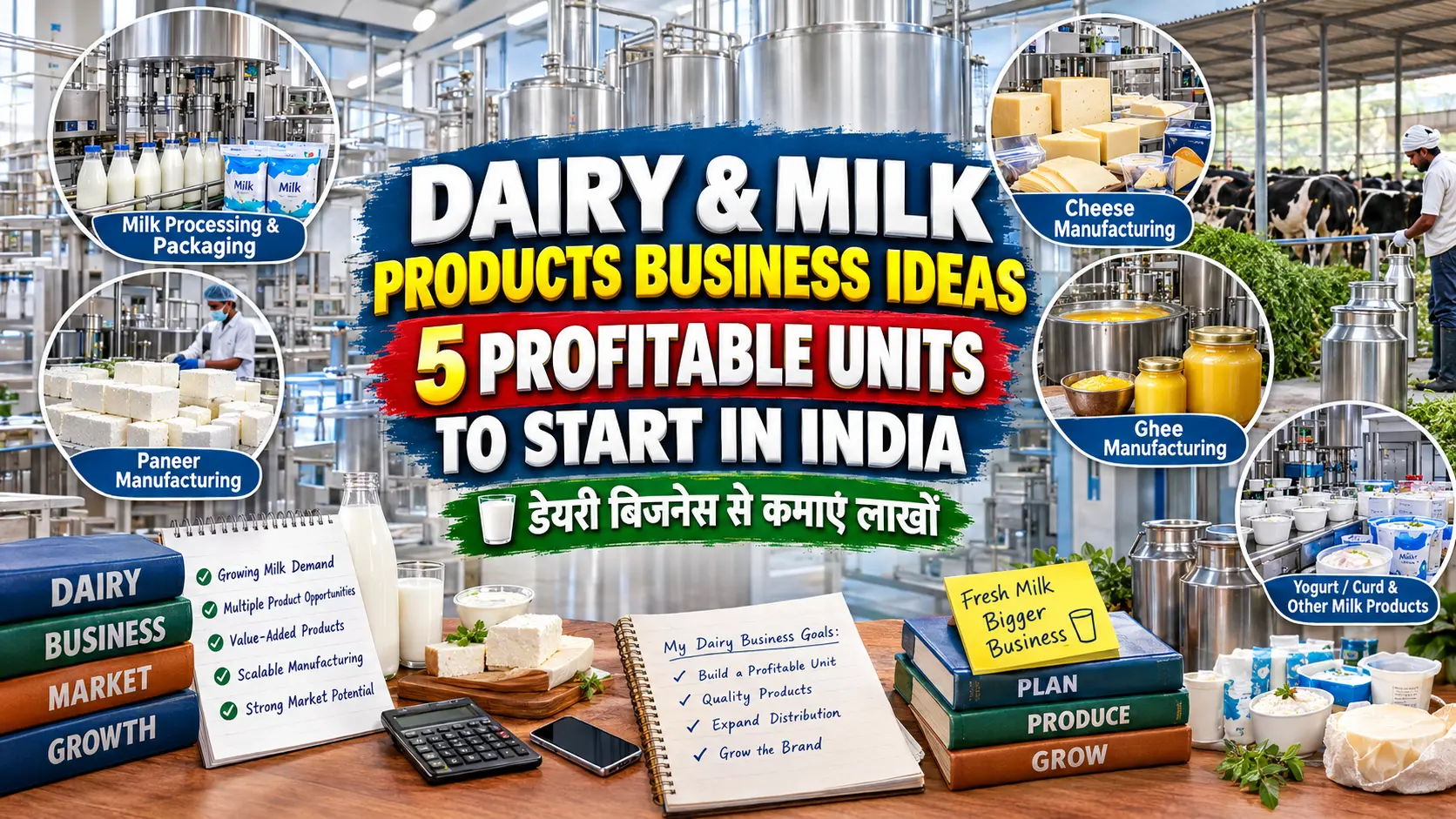
Milk is a perishable product, and converting it into value-added items such as paneer (cottage cheese), ghee (clarified butter), yogurt, flavored milk, and cheese increases its shelf life and profitability. Small dairy processing units can cater to both rural and urban demand. With improved hygiene and packaging, even small players can earn certifications and access large markets.
9. Rice and Pulse Packaging Units
Instead of traditional bulk selling, rice and pulses can be cleaned, graded, and packaged into consumer-friendly pouches with proper branding. The project does not involve complicated machinery and offers a quick return on investment. Urban consumers often prefer packaged products for convenience, hygiene, and consistency in quality. It’s one of the simplest processed food project ideas with a direct link to agriculture produce.
10. Herbal Tea and Infused Drinks
With increasing awareness about herbal health remedies, moreover, beverages made from tulsi, lemongrass, hibiscus, and moringa are gaining popularity. These crops can be dried, powdered, or infused into tea blends. In addition, herbal tea projects require minimal processing equipment and offer good profit margins. Consequently, this processed food project from agricultural herbs appeals to health-conscious, urban consumers and export buyers. Furthermore, the growing demand for natural and organic products is expected to boost the market even more.
Key Benefits of Investing in a Processed Food Project
Reduces Post-Harvest Losses: India suffers from high levels of agricultural wastage. Processing helps utilize excess or surplus produce effectively.
Adds Value: The price of processed food is significantly higher than raw produce, improving farmer income and processor margins.
Employment Generation: Even small units require skilled and semi-skilled workers, boosting rural employment.
High Export Potential: Value-added products meet global standards, especially when processed with quality certifications.
Longer Shelf Life: Processing ensures seasonal foods can be consumed year-round.
Tips to Start a Successful Processed Food Project
Conduct Market Research: Identify demand gaps, target customer preferences, and popular products.
Choose the Right Location: Proximity to raw material sources reduces cost and ensures freshness.
Ensure Quality and Hygiene: Modern consumers prioritize food safety, so clean processing is crucial.
Invest in Branding and Packaging: Attractive branding and informative labeling help gain customer trust.
Use Government Schemes: Explore subsidies and financial support under the Ministry of Food Processing Industries (MoFPI) or Pradhan Mantri Kisan SAMPADA Yojana.
Final Thoughts
The future of processed food projects from agriculture products is bright, especially as consumer preferences shift toward health, convenience, and taste. Entrepreneurs who leverage regional crop availability, modern processing technology, and smart marketing strategies can build scalable and profitable ventures. Whether you’re looking to start small with pickles and flours or aim for high-value items like cold-pressed oils and herbal teas, the opportunities are immense.
With increasing urbanization, rising income levels, and evolving lifestyles, the processed food sector is bound to flourish. Every region holds untapped potential with its unique agricultural bounty. When channeled through the right processed food project idea, this bounty can feed both the plate and the pocket.
Visit the page Select and Choose the Right Business Startup for You for sorting out the questions arising in your mind before starting any business and know which start-up you can plan. We, at NPCS, endeavor to make business selection a simple and convenient step for any entrepreneur/startup. Our expert team, by capitalizing on its dexterity and decade’s long experience in the field, has created a list of profitable ventures for entrepreneurs who wish to diversify or venture. The list so mentioned is updated regularly to give you a regular dose of new emerging opportunities.