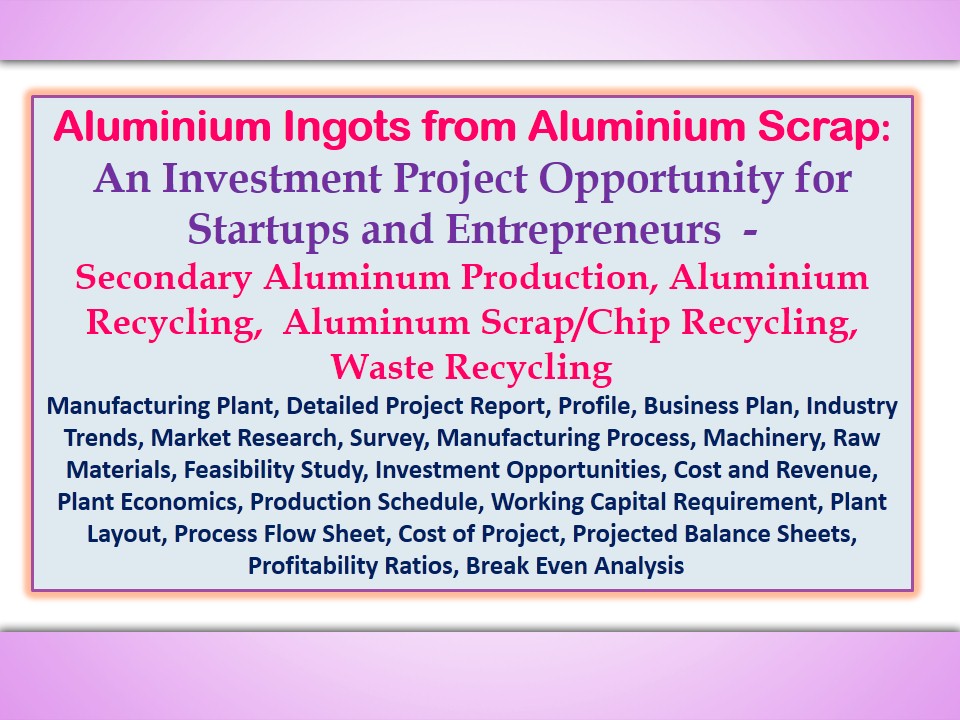
Aluminium is one of the most widely used metals globally due to its lightweight nature, corrosion resistance, excellent conductivity, and high recyclability. As industries increasingly focus on sustainable practices, recycling aluminium scrap into usable ingots has emerged as both an environmentally responsible and financially rewarding venture. The production of aluminium ingots from aluminium scrap is now viewed as a lucrative business opportunity, particularly for startups and small-scale entrepreneurs.
This business model capitalizes on the growing availability of scrap aluminium and rising global demand for secondary aluminium in construction, automotive, electrical, and packaging industries. By setting up a secondary aluminium production unit, entrepreneurs can enter a profitable market while contributing to the circular economy.
Scope of Aluminium Recycling and Ingot Production
The global aluminium industry is transitioning from primary metal production to recycling-based operations. Producing aluminium from bauxite requires significant energy and mining resources. In contrast, secondary aluminium production—through recycling—uses only 5% of the energy required for primary aluminium production and emits fewer greenhouse gases.
See More – Indian Companies Directory
With rising industrial waste, the availability of scrap—such as used beverage cans, automotive parts, window frames, and machining chips—is abundant. Aluminium ingots from aluminium scrap can meet over 35% of the world’s total aluminium demand. This makes aluminium recycling not only sustainable but also strategically important.
Types of Aluminium Scrap Used
The raw materials for producing aluminium ingots from aluminium scrap are readily available in both urban and industrial areas. These include:
Aluminium utensils and sheets
Used beverage cans (UBCs)
Automobile components (wheels, engine parts)
Construction scrap (doors, window frames)
Industrial machining chips and swarf
Electrical cable scrap
Classifying scrap into categories such as clean, contaminated, or mixed scrap is essential for ensuring efficient processing and quality control.
Process of Making Aluminium Ingots from Scrap
Manufacturing aluminium ingots from aluminium scrap involves the following essential steps:
1. Collection and Sorting
The first step is sourcing and sorting aluminium scrap from local dealers, municipal waste handlers, and industrial units. Magnetic separators, sensors, and manual sorting are used to remove non-aluminium materials.
2. Shredding and Pre-treatment
Scrap is shredded into smaller pieces for easier melting. Surface contaminants such as paint, plastic, and oils are removed through pre-treatment processes like thermal de-coating or chemical cleaning.
3. Melting
Clean scrap is fed into a high-efficiency induction furnace or rotary furnace. Melting occurs at about 660°C. During this process, fluxes are added to remove impurities and improve metal quality.
4. Degassing and Alloying
Inert gases such as nitrogen or argon are used to remove dissolved hydrogen and other impurities. Alloying elements like silicon, magnesium, or copper can be added depending on customer requirements.
5. Casting into Ingots
Molten aluminium is poured into ingot moulds, cooled, and solidified. Ingots are then removed, cleaned, and packed for storage or delivery.
Machinery and Infrastructure Required
Setting up a small-to-medium-scale unit for aluminium ingots from aluminium scrap requires the following infrastructure and equipment:
Shredders and sorting machines
Rotary or induction furnaces
Pre-treatment units (de-coating, drying, filtration)
Ladles and crucibles
Ingot casting machines
Pollution control systems (fume extraction, filters)
Material handling equipment (conveyors, forklifts)
An average plant processing 1–5 tons of scrap per day will require a land area of around 500–1,000 square meters, with an investment of ?80 lakh to ?2 crore depending on capacity and automation level.
Investment Overview and Project Economics
Starting a plant for aluminium ingots from aluminium scrap can be a capital-efficient opportunity. Below is an indicative cost structure:
Capital Investment:
Land and building: ?25–40 lakh
Machinery and equipment: ?50–70 lakh
Working capital (3–6 months): ?30–50 lakh
Total investment: ?1.2–1.5 crore for a small-scale unit
Operating Costs:
Scrap procurement: 60% of total costs
Energy and fuel: 20%
Labor and maintenance: 10%
Packaging, logistics, and overheads: 10%
Profitability:
Selling price of aluminium ingots: ?220–250/kg (subject to purity and alloy)
Gross margins: 20–30% possible
ROI: 30–40% achievable
Break-even period: 2–3 years
Demand for secondary aluminium is growing, and with strong scrap sourcing, plants can achieve high utilization and consistent profits.
Market Trends Driving Aluminium Ingot Business
Several factors are fueling the rise of aluminium ingots from aluminium scrap:
Rising metal prices: Primary aluminium is becoming expensive due to energy costs and supply chain issues.
Government policies: Initiatives promoting recycling, such as the Swachh Bharat Abhiyan and the EPR framework, encourage scrap utilization.
Green manufacturing: Companies are shifting to recycled metals to meet ESG and carbon neutrality goals.
Export demand: Countries like China, UAE, and the USA import aluminium ingots made from recycled sources due to cost and environmental benefits.
Applications of Aluminium Ingots
Aluminium ingots produced from scrap have applications across diverse sectors:
Automotive: Engine parts, transmission cases, wheels
Construction: Window frames, doors, cladding panels
Electricals: Bus bars, cable sheathing, conductors
Consumer Goods: Cookware, appliances, electronics casing
Packaging: Foils, cans, containers
Custom alloying allows flexibility in serving multiple industries, adding value to the business model.
Environmental and Compliance Benefits
Producing aluminium ingots from aluminium scrap supports environmental conservation and sustainability goals. Benefits include:
Energy savings: Uses only 5% of energy compared to primary metal production
Pollution reduction: Fewer emissions and reduced landfill waste
Carbon credits: Potential to earn credits through clean manufacturing
Compliance: Fulfills ESG requirements, ISO standards, and green building norms
Furnace fumes, if treated with proper pollution control systems, ensure clean operations and permit acquisition from state pollution boards.
SWOT Analysis
Strengths:
Low raw material cost (scrap is cheaper and abundant)
High energy efficiency
Large and growing market for recycled aluminium
Weaknesses:
Scrap price fluctuation can affect profit margins
Quality variation in scrap may lead to inconsistent ingot purity
Opportunities:
Rising global demand for secondary aluminium
Export potential to eco-regulated markets
Integration with machining and die-casting units
Threats:
Import of cheap aluminium ingots
Competition from large-scale recyclers
Volatility in metal prices
Government Support and Incentives
Entrepreneurs setting up a plant for aluminium ingots from aluminium scrap can avail several schemes and incentives:
MSME loans under CGTMSE or PMEGP
State Industrial Subsidies for green recycling units
Capital subsidy under the Sustainable Manufacturing Program
Custom duty benefits on pollution control and energy-saving equipment
Carbon credit eligibility for emissions saved
Obtaining assistance from financial institutions like SIDBI and NSIC can ease credit access and technical consultation.
Business Expansion Possibilities
Once a stable ingot production setup is in place, startups can explore:
Die casting of automotive components
Production of aluminium alloy billets and rods
Custom aluminium profiles for construction
Foil and sheet rolling units
Joint ventures with extrusion and fabrication companies
Diversifying into forward-integrated products enhances profitability and market control.
See More – Modern Printing Technology
Conclusion
The manufacturing of aluminium ingots from aluminium scrap is not just a business; it is a sustainable investment in the future. With high market demand, growing environmental awareness, and a favorable policy environment, secondary aluminium production provides startups and entrepreneurs a cost-effective, scalable, and impactful opportunity.
By combining modern recycling technologies with strong sourcing networks and customer relationships, businesses can create a robust presence in this evolving industry. Aluminium recycling not only saves money and resources but also plays a critical role in building a circular economy.
Frequently Asked Questions (FAQs)
FAQ 1: What is the aluminium ingots from scrap business?
The aluminium ingots from scrap business involves recycling used aluminium scrap—such as beverage cans, automotive parts, window frames, and industrial waste—into high-purity aluminium ingots. These ingots are then sold to industries like automotive, construction, electrical, and packaging.
Why it is profitable:
Uses only 5% energy compared to primary aluminium production
Growing demand for secondary aluminium globally
Abundant scrap availability
Profit margins of 20-30%
Supports circular economy and sustainability
With rising industrial waste and environmental awareness, the aluminium ingots from scrap business offers excellent returns on investment.
FAQ 2: What is the minimum investment required for an aluminium ingot plant?
The investment for an aluminium ingots from scrap plant depends on the scale:
| Scale | Estimated Investment |
|---|---|
| Small-Scale (1-2 tons/day) | ₹80 lakhs – 1.2 crore |
| Medium-Scale (3-5 tons/day) | ₹1.2 – 1.5 crore |
| Large-Scale (5+ tons/day) | ₹2 crore and above |
Cost Breakdown:
| Expense Category | Estimated Cost (₹) |
|---|---|
| Land & Building | 25 – 40 lakhs |
| Machinery & Equipment | 50 – 70 lakhs |
| Working Capital | 30 – 50 lakhs |
| Licensing & Compliance | 5 – 10 lakhs |
| Total Investment | 1.2 – 1.5 crore |
Government schemes like MSME subsidies and green manufacturing incentives can help reduce costs.
FAQ 3: What types of aluminium scrap are used?
The aluminium ingots from scrap business processes various types of scrap:
| Scrap Type | Sources |
|---|---|
| Aluminium Utensils & Sheets | Household and industrial waste |
| Used Beverage Cans (UBCs) | Recycling centers |
| Automobile Components | Wheels, engine parts, transmission cases |
| Construction Scrap | Doors, window frames, cladding |
| Machining Chips & Swarf | Industrial machining waste |
| Electrical Cable Scrap | Wiring and cable recycling |
Classifying scrap into clean, contaminated, or mixed categories ensures efficient processing.
FAQ 4: What is the manufacturing process for aluminium ingots?
The aluminium ingots from scrap manufacturing process involves:
| Step | Description |
|---|---|
| Collection & Sorting | Sourcing scrap and removing non-aluminium materials |
| Shredding & Pre-treatment | Shredding scrap and removing contaminants |
| Melting | Melting at 660°C in induction or rotary furnaces |
| Degassing & Alloying | Removing impurities and adding alloying elements |
| Casting | Pouring molten aluminium into ingot moulds |
| Cooling & Packing | Solidifying, cleaning, and packing ingots |
Each step must be monitored for quality and efficiency.
FAQ 5: What machinery is required for aluminium ingot production?
An aluminium ingots from scrap plant requires:
| Machinery | Purpose |
|---|---|
| Shredders & Sorting Machines | Processing scrap |
| Rotary or Induction Furnaces | Melting scrap |
| Pre-treatment Units | De-coating, drying, filtration |
| Ladles & Crucibles | Handling molten metal |
| Ingot Casting Machines | Casting into ingots |
| Pollution Control Systems | Fume extraction and filtration |
| Material Handling Equipment | Conveyors, forklifts |
A plant processing 1-5 tons/day requires 500-1,000 sq. meters of space.
FAQ 6: What certifications and licenses are required?
To operate an aluminium ingots from scrap plant legally, you need:
| License/Certification | Purpose |
|---|---|
| MSME/Udyam Registration | Access to subsidies |
| GST Registration | Tax compliance |
| Factory License | Compliance with Factories Act |
| Pollution Control NOC | Environmental compliance |
| BIS Certification | Quality standards for ingots |
| ISO 9001/14001 | Quality and environmental management |
| Import Export Code | For export operations |
Proper documentation builds trust among buyers and ensures regulatory compliance.
FAQ 7: How profitable is the aluminium ingots from scrap business?
The aluminium ingots from scrap business offers attractive profitability:
| Financial Metric | Value |
|---|---|
| Selling Price of Ingots | ₹220 – 250/kg |
| Gross Margins | 20 – 30% |
| ROI | 30 – 40% |
| Break-even Period | 2 – 3 years |
Key Profitability Drivers:
Low raw material cost (scrap)
High energy efficiency (5% of primary production)
Growing demand for secondary aluminium
Government support for recycling
With strong scrap sourcing, plants can achieve high utilization and consistent profits.
FAQ 8: What are the target markets for aluminium ingots?
The customer base for aluminium ingots from scrap is diverse:
| Customer Category | Applications |
|---|---|
| Automotive Industry | Engine parts, wheels, transmission cases |
| Construction Sector | Window frames, doors, cladding |
| Electrical Industry | Bus bars, cable sheathing, conductors |
| Consumer Goods | Cookware, appliances, electronics casing |
| Packaging Industry | Foils, cans, containers |
| Export Markets | China, UAE, USA |
Custom alloying allows flexibility in serving multiple industries.
FAQ 9: What are the environmental benefits?
| Benefit | Impact |
|---|---|
| Energy Savings | Uses only 5% energy vs. primary production |
| Pollution Reduction | Fewer emissions and reduced landfill waste |
| Carbon Credits | Potential to earn credits through clean manufacturing |
| Circular Economy | Supports sustainable practices |
| Green Compliance | Fulfills ESG and ISO requirements |
Environmental benefits enhance brand reputation and export potential.
FAQ 10: What are the challenges in the aluminium ingot business?
| Challenge | Solution |
|---|---|
| Scrap Price Fluctuations | Bulk contracts, diversified suppliers |
| Quality Variation | Strict sorting and quality control |
| Competition | Focus on quality, certifications, and green branding |
| Regulatory Compliance | Stay updated on pollution norms |
| Energy Costs | Invest in energy-efficient furnaces |
Proper planning and quality control can mitigate these challenges.
FAQ 11: Can I start this business with government support?
Yes, the Indian government offers several schemes:
| Scheme | Benefit |
|---|---|
| MSME/Udyam Registration | Access to subsidies |
| PMEGP | Financial assistance for micro-enterprises |
| CGTMSE | Collateral-free loans |
| Sustainable Manufacturing Program | Capital subsidy for green units |
| SIDBI & NSIC Support | Credit access and technical consultation |
FAQ 12: What is the future growth potential?
| Growth Driver | Impact |
|---|---|
| Rising Metal Prices | Primary aluminium becoming expensive |
| Government Policies | Recycling promotion and EPR framework |
| ESG Goals | Companies shifting to recycled metals |
| Export Demand | China, UAE, USA importing recycled ingots |
| Green Manufacturing | Growing demand for sustainable products |
With global demand for secondary aluminium rising, this business offers long-term scalability.
FAQ 13: What are the export opportunities?
| Target Market | Demand |
|---|---|
| China | Large importer of recycled aluminium |
| UAE | Growing construction sector |
| USA | High demand for green materials |
| Europe | Strict ESG compliance driving demand |
Requirements: IEC code, BIS/ISO certification, compliance with international standards.
FAQ 14: What is the SWOT analysis for this business?
| Strength | Weakness |
|---|---|
| Low raw material cost | Scrap price fluctuations |
| High energy efficiency | Quality variation in scrap |
| Growing market demand |
| Opportunity | Threat |
|---|---|
| Rising global demand | Import of cheap ingots |
| Export potential | Competition from large recyclers |
| Green manufacturing incentives | Metal price volatility |
FAQ 15: Why should I invest in aluminium ingots from scrap?
| Reason | Benefit |
|---|---|
| Growing Demand | Secondary aluminium meets 35%+ of global demand |
| High Profit Margins | 20-30% gross margins |
| Government Support | Subsidies, MSME benefits |
| Scalable Operations | Can start small and expand |
| Environmental Impact | Contributes to circular economy |
| Export Potential | Growing international demand |
| Sustainable Business | Green manufacturing focus |
With proper planning, quality control, and strategic marketing, an aluminium ingots from scrap business can become a highly profitable and sustainable venture.
Ready to Start Your Aluminium Ingots from Scrap Business?
The aluminium recycling industry is booming, driven by growing demand for sustainable materials, rising metal prices, and government support for green manufacturing. With ₹1.2-1.5 crore investment and 20-30% profit margins, there has never been a better time to enter this high-potential sector.
At NPCS (NIIR Project Consultancy Services), we help entrepreneurs turn their business ideas into reality:
✅ Detailed Project Reports – Comprehensive feasibility studies, market analysis, and financial projections
✅ Technology & Machinery Selection – Guidance on furnaces, casting machines, and pollution control systems
✅ Plant Setup Support – End-to-end assistance from planning to commissioning
✅ Regulatory Compliance – Expert advice on licensing and environmental clearances
✅ Market Intelligence – Insights into demand trends, pricing, and export opportunities
Take the first step toward building your aluminium recycling business today!
📞 Call us now for a personalized consultation
📧 Email us to request a detailed project report
🌐 Visit our website to explore more business opportunities