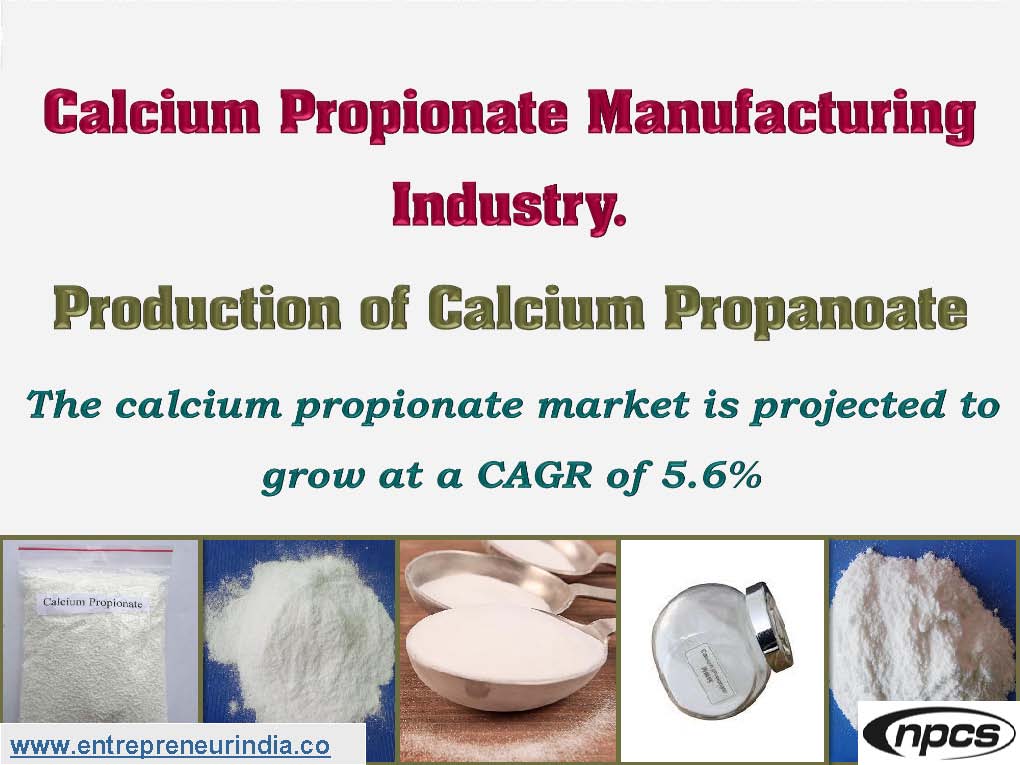
The Calcium Propionate Manufacturing Industry has gained immense traction in recent years due to the rising demand for safe and effective food preservatives. Calcium propionate is widely used to inhibit mold and bacterial growth in bakery products, dairy, and processed foods, extending shelf life without affecting taste or texture. With increasing awareness about food safety and stringent quality standards across global markets, the need for high-quality preservatives like calcium propionate continues to grow. As a result, the Calcium Propionate Manufacturing Industry has emerged as a promising and profitable segment within the chemical and food processing sector.
Understanding Calcium Propionate and Its Applications
Calcium propionate is the calcium salt of propionic acid. It acts as an antifungal agent, mainly used in bread and other baked goods to prevent spoilage. In addition to food, it finds application in animal feed, cosmetics, and pharmaceuticals.
Key applications of calcium propionate include:
Bakery Products: Bread, cakes, and pastries benefit from extended shelf life.
Dairy: Used in cheese and processed dairy products to control mold growth.
Animal Feed: Prevents feed spoilage due to microbial activity.
Cosmetics: Occasionally used in personal care products for microbial control.
Pharmaceuticals: Acts as a stabilizer in certain formulations.
The Calcium Propionate Manufacturing Industry services multiple sectors, offering diversified revenue streams for manufacturers.
Market Demand and Growth Potential
The global demand for calcium propionate is expected to rise steadily due to:
Growing packaged and processed food consumption
Expansion of the bakery industry in developing countries
Increasing need for shelf-stable animal feed
Stringent food safety regulations by authorities like FSSAI, FDA, and EFSA
Shifts toward clean-label and safer preservative options
According to market analysts, the Calcium Propionate Manufacturing Industry is projected to grow at a CAGR of over 5% in the next 5 years, with Asia-Pacific and Latin America showing the highest growth rates.
Raw Materials and Chemical Process
The production of calcium propionate primarily involves the neutralization of propionic acid with calcium hydroxide or calcium carbonate. The key raw materials are:
Propionic Acid
Calcium Hydroxide or Calcium Carbonate
Water (solvent)
Process overview:
Reaction: Propionic acid reacts with calcium hydroxide in aqueous medium, forming calcium propionate and water as a byproduct.
Crystallization: The solution is cooled, and calcium propionate crystals begin to form.
Filtration: Crystals are filtered to separate them from the mother liquor.
Drying: The solid is dried to remove residual moisture.
Sieving and Packaging: Dried product is milled, sieved, and packed in moisture-proof containers.
This process is relatively simple, making the Calcium Propionate Manufacturing Industry accessible to medium-scale entrepreneurs and investors.
Equipment and Machinery Needed
Setting up a Calcium Propionate Manufacturing Industry unit requires a moderate investment in specialized chemical processing equipment:
Stainless steel reactors with agitators
Heat exchangers for controlled cooling
Crystallization tanks
Filter press or centrifuge
Tray or rotary dryers
Pulverizer and sieving unit
Packing and sealing machines
Utility systems (boiler, water treatment, and ventilation)
Automation of temperature and pH control can enhance product quality and consistency.
Plant Setup and Infrastructure Requirements
A typical medium-scale Calcium Propionate Manufacturing Industry requires about 5,000 to 8,000 sq. ft. of built-up area, including:
Raw material storage
Reactor and processing area
Filtration and drying room
Finished goods storage
Quality testing laboratory
Admin office and utilities area
The plant must be designed with proper ventilation, chemical-resistant flooring, and safety measures as per industry standards.
Legal Compliance and Licenses
To start operations in the Calcium Propionate Manufacturing Industry, the following licenses and registrations are essential:
FSSAI License (if supplying to the food industry)
Factory License and Fire Safety NOC
Pollution Control Board Clearance
MSME/Udyam Registration
GST Registration
Drug License (if supplying to pharma or veterinary sectors)
ISO 22000 or HACCP Certification (optional but useful for export markets)
Compliance with food-grade manufacturing norms and proper labeling are crucial for consumer safety and legal operations.
Investment and Profitability Analysis
The investment needed to set up a Calcium Propionate Manufacturing Industry varies with plant capacity:
Small-scale setup: ?30–50 lakhs
Medium-scale setup: ?75 lakhs – ?1.5 crore
Large-scale industrial unit: ?3–5 crores
Key operating costs include:
Raw materials and chemicals
Utilities (electricity, water, steam)
Skilled labor and quality control
Packaging and transportation
Compliance and maintenance
The average gross profit margin in this sector ranges from 25% to 40%, depending on product purity, scale, and target market. ROI is usually achievable within 18 to 24 months of steady production.
Market Channels and Sales Opportunities
The Calcium Propionate Manufacturing Industry has a wide B2B customer base. Sales channels include:
Direct supply to bakery chains and food processors
Distribution through food-grade chemical wholesalers
Bidding for institutional and government supply contracts
Export to regions with rising processed food consumption
Collaboration with animal feed manufacturers
Establishing a strong sales network, attending food and pharma expos, and offering white-label manufacturing can boost brand visibility and revenue.
Sustainability and Safety Considerations
Although calcium propionate is considered safe and non-toxic, manufacturers must implement best practices for environmental and worker safety:
Proper effluent treatment and chemical waste disposal
Use of food-grade stainless steel equipment to avoid contamination
Worker safety gear including gloves, goggles, and ventilation
Training programs for chemical handling and first aid
Renewable energy and water recycling for sustainable operations
Adopting green practices can differentiate your brand and attract eco-conscious clients in the Calcium Propionate Manufacturing Industry.
Future Scope and Diversification
Entrepreneurs in the Calcium Propionate Manufacturing Industry can explore the following growth paths:
Produce other food preservatives like sodium benzoate or potassium sorbate
Expand into calcium propionate derivatives for pharma or cosmetics
Launch branded preservative lines for commercial bakeries
Develop animal-grade formulations for poultry and cattle feed
As the clean-label trend evolves, natural and safe preservatives will see increasing demand, opening new product development avenues.
Conclusion
The Calcium Propionate Manufacturing Industry is a lucrative business opportunity backed by high demand, diverse applications, and straightforward chemical processing. Whether you’re a food technologist, chemical manufacturer, or startup investor, entering this market with the right setup and quality focus can yield long-term profitability and brand credibility. With proper infrastructure, compliance, and marketing, you can build a strong presence in both domestic and international preservative markets.
Niir Project Consultancy Services
An ISO 9001:2015 Company
106-E, Kamla Nagar, Opp. Spark Mall,
New Delhi-110007, India.
Email: npcs.ei@gmail.com , info@entrepreneurindia.co
Tel: +91-11-23843955, 23845654, 23845886, 8800733955
Mobile: +91-9811043595
Website: www.entrepreneurindia.co , www.niir.org