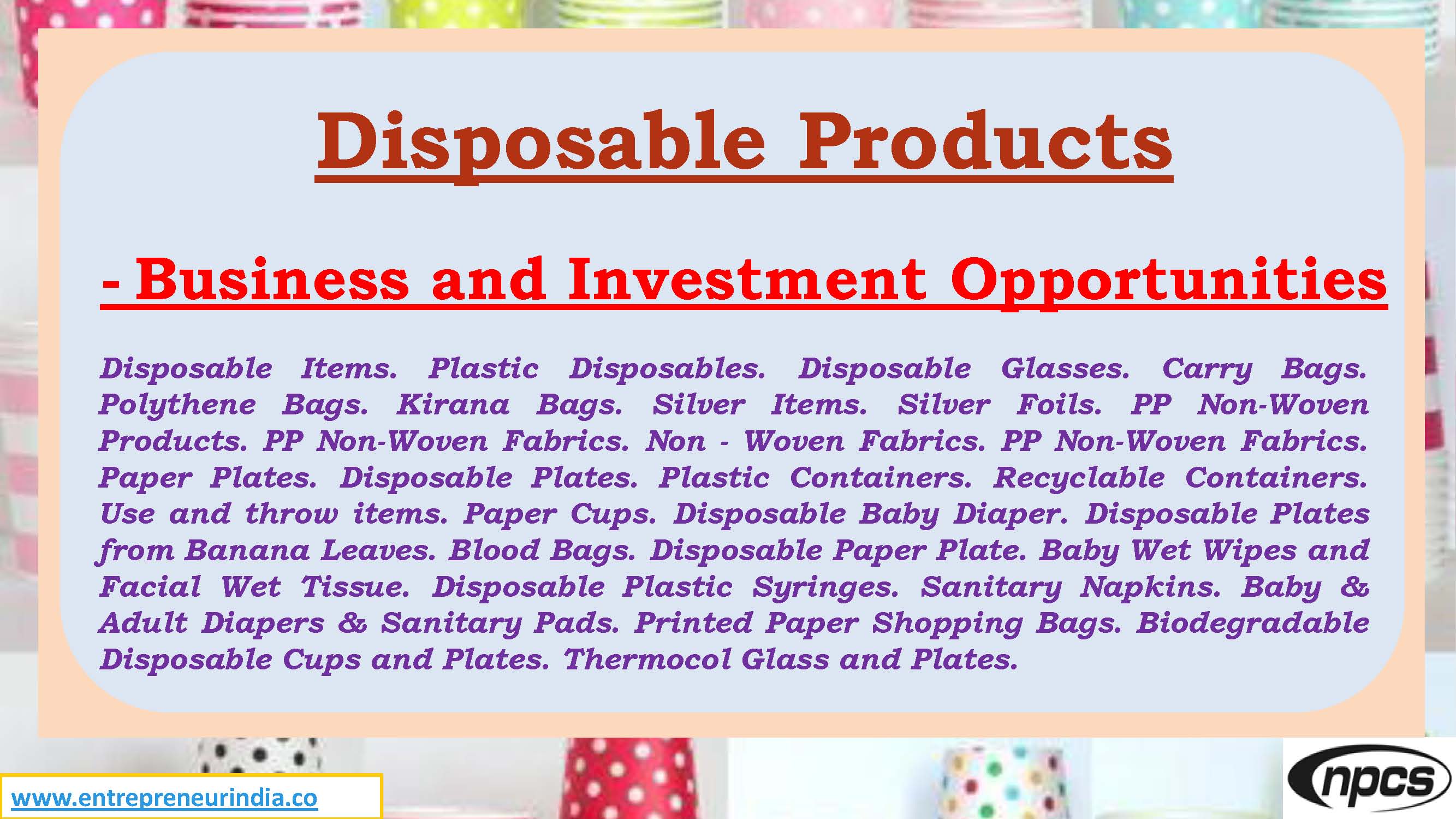
Disposable products have become essential in daily life. From food packaging and cutlery to medical and hygiene items, their use is growing rapidly. The Disposable Products Business is one of the most promising industries today due to the rising demand for single-use, affordable, and hygienic items. Whether you’re a new entrepreneur or an established manufacturer, investing in this segment offers scalability, low entry barriers, and a variety of product options.
Disposable Products Business | Investment Opportunities
Starting a Disposable Products Business can be a smart move in today’s fast-paced world. As consumer lifestyles change and health awareness increases, the demand for convenience and hygiene is on the rise. Moreover, single-use items reduce cleaning time, prevent contamination, and are often recyclable or biodegradable. With government initiatives supporting small-scale manufacturing and the rise of eco-conscious products, the market for disposables is expanding rapidly.
See Also :Profitable Manufacturing & Processing Business Ideas in Haryana
Types of Disposable Products to Manufacture
There are many options in the disposable segment. You can focus on one niche or create a combination of products based on your market. Popular choices include:
Disposable plates, bowls, and trays (paper, plastic, areca leaf, or bagasse)
Cups and glasses (paper or plastic)
Cutlery (spoons, forks, knives – wooden or plastic)
Food packaging containers and lids
Aluminum foil and cling films
Medical disposables (gloves, face masks, aprons, syringes)
Sanitary items (napkins, diapers, wet wipes)
Moreover, biodegradable alternatives are in high demand due to plastic bans and green packaging trends.
Market Demand and Growth Potential
The Disposable Products Business is thriving because:
Restaurants and catering services prefer disposables for hygiene
Hospitals and clinics require single-use products for safety
Events, travel, and outdoor activities rely on throwaway items
E-commerce food delivery boosts demand for packaging solutions
Moreover, Tier 2 and Tier 3 cities are now adopting disposable products at a fast pace, widening your customer base.
Manufacturing Process and Machinery
Setting up your unit depends on the type of products you want to manufacture. Here are basic machines needed for popular segments:
Paper plate/dona machines (manual, semi-automatic, or automatic)
Thermoforming or injection molding machines (for plastic disposables)
Hydraulic press machines (for areca leaf or bagasse plates)
Cup-making machines (with printing units for branding)
Medical disposable machines (like mask-making or glove-making units)
Moreover, printing and sealing units can help you brand your products for higher market value.
Raw Materials Required
Each product type has specific input needs. Common raw materials include:
Food-grade paper or board
Plastic granules (PP, PET, PVC – food safe)
Biodegradable materials (cornstarch, sugarcane bagasse, areca leaves)
Aluminum foil rolls
Elastic, melt-blown fabric, and nose pins (for masks)
Packaging film and boxes
Moreover, sourcing certified, eco-compliant materials adds trust and helps in branding.
Investment and Profit Potential
Here’s a general idea of the investment and expected returns in a Disposable Products Business:
| Scale | Investment Range (INR) | Monthly Profit (INR) |
|---|---|---|
| Small scale | ?3 – ?8 lakhs | ?30,000 – ?80,000 |
| Medium scale | ?10 – ?25 lakhs | ?1 – ?2.5 lakhs |
| Large scale | ?30 lakhs – ?1 crore | ?3 – ?7 lakhs+ |
Target Markets and Sales Channels
You can sell disposable products to various customer groups, such as:
Wholesalers and distributors
Caterers, hotels, and restaurants
Medical suppliers and clinics
Event planners and decorators
Food delivery chains and cloud kitchens
E-commerce platforms (Amazon, Flipkart, your own website)
Moreover, joining local exhibitions or trade fairs can help attract bulk buyers and institutional clients.
Licensing and Compliance
To legally operate your Disposable Products Business, you will need:
Udyam/MSME registration
GST registration
Factory license (if using heavy machinery)
Pollution Control Board NOC
FSSAI license (if dealing with food-grade items)
Moreover, if you manufacture biodegradable products, apply for relevant eco-certifications for added credibility.
Packaging and Branding
Attractive packaging increases product value. Use:
Printed poly or paper wraps
Eco-friendly, recyclable materials
Clear product labeling (size, use, safety)
Custom logo and brand name
Moreover, offering “green” or compostable options gives you an edge in eco-conscious markets.
Challenges and How to Overcome Them
Like any business, disposables have some challenges:
Fluctuating raw material prices
Competition from unorganized players
Environmental regulations and bans
To overcome these:
Build a strong supplier network
Offer quality products with consistent delivery
Focus on eco-friendly alternatives
Get certified to stand out from low-cost competitors
Moreover, creating a reliable brand helps build long-term trust with your customers.
Government Support and Subsidies
The Indian government promotes disposable and eco-product manufacturing through:
PMEGP scheme – Up to ?25 lakh loan with subsidy
Mudra loans – Easy credit for small businesses
Startup India – Tax and funding benefits
Pollution control schemes – Support for biodegradable alternatives
Moreover, some states offer extra support for green or women-led businesses.
Read Also :Manufacturing & Processing Business Ideas in Jammu & Kashmir
Conclusion
Starting a Disposable Products Business is a smart and scalable idea in today’s fast-moving world. With low investment, high market demand, and a wide range of products, you can build a profitable venture in a short time. Moreover, with the shift toward eco-friendly solutions and bulk consumption in urban and rural areas, the future of disposables is bright. Just focus on quality, branding, and timely delivery—and success will follow.