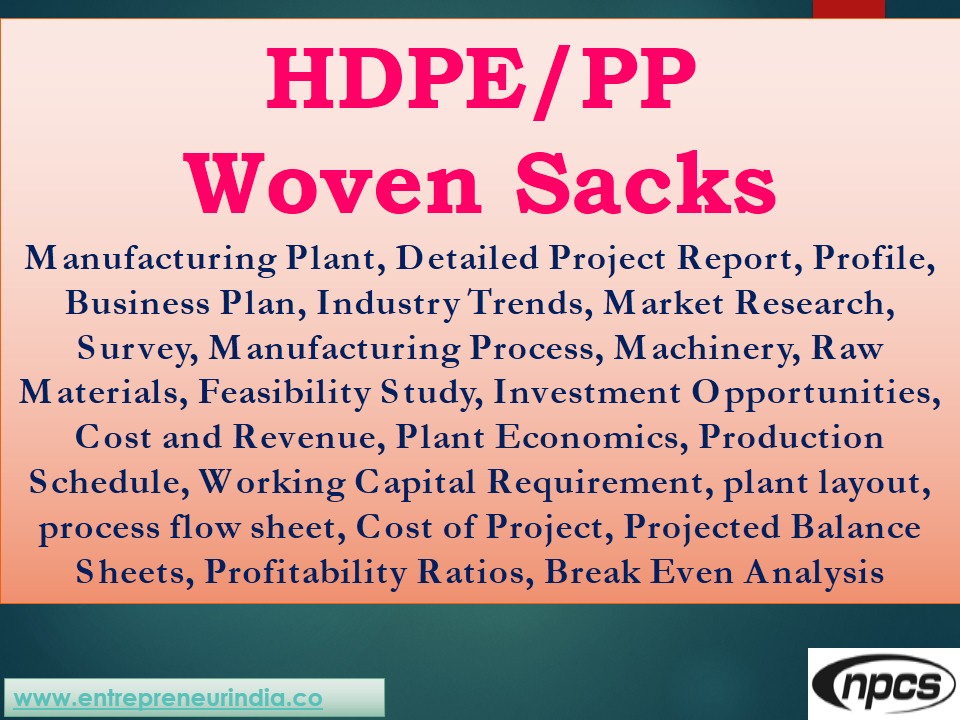
The demand for durable, cost-effective, and recyclable packaging materials has steadily increased. As a result, HDPE and PP woven sacks have been widely adopted in industries like agriculture, cement, sugar, fertilizers, and food grains. These sacks are known for their strength, lightweight nature, and reusability. Thus, an HDPE PP woven sacks manufacturing plant can be considered a lucrative business opportunity.
Introduction to Woven Sack Manufacturing
HDPE (High-Density Polyethylene) and PP (Polypropylene) woven sacks are fabricated through a specialized weaving process using plastic strips. These strips are extruded, drawn, and woven into a strong, flexible fabric. Afterward, the fabric is laminated, printed, and converted into sacks. Due to their wide utility and recyclable properties, these sacks are increasingly favored over traditional jute or paper packaging.
See Also – Activated Carbon Manufacturing
Market Potential of Woven Sacks
Globally, the packaging industry has witnessed exponential growth. As consumer goods, agriculture, and construction sectors expand, the use of woven sacks has been significantly promoted. In India alone, a substantial share of the demand comes from the food grain storage and transportation segment. Additionally, government procurement agencies prefer woven sacks for their moisture-resistant characteristics.
Consequently, many entrepreneurs are exploring the woven sack industry. Since the raw materials—HDPE and PP—are available domestically, dependency on imports has been reduced. Moreover, with sustainability initiatives gaining momentum, recyclable sacks are being encouraged across industries.
Project Setup for Woven Sack Manufacturing
For setting up a woven sacks manufacturing plant, a well-structured plan must be prepared. This includes land, machinery, utilities, manpower, and financial investments. Generally, a medium-sized plant requires around 5000–6000 sq. ft. of built-up area. Additionally, proximity to transport facilities is preferred to ensure smooth distribution.
Machinery and Equipment
Modern, semi-automatic, or fully automatic plants can be chosen based on the desired capacity and investment. Usually, the following equipment is required:
Extrusion Line – Used for converting raw polymer granules into flat tapes.
Tape Stretching Unit – Tapes are oriented to enhance tensile strength.
Circular Weaving Looms – Woven fabric is formed using circular looms.
Printing Machines – Designs and logos are printed on the surface.
Cutting & Stitching Machines – These convert woven fabric rolls into finished sacks.
Lamination Machines – For waterproofing and added strength, fabric is laminated.
Although high-capacity machinery increases production speed, moderate-scale units can be launched with affordable investments, ensuring quicker ROI.
Manufacturing Process
The HDPE PP woven sack manufacturing process involves multiple steps, all of which must be streamlined for quality output.
Extrusion & Tape Production
HDPE or PP granules are melted and extruded into tapes. These tapes are cooled and stretched to improve strength.Weaving
Tapes are woven into tubular fabric using circular looms. A consistent weave ensures durability and strength.Lamination (Optional)
A layer of BOPP or LDPE is applied on the fabric. This enhances waterproofing and print quality.Printing
Flexographic or screen printing methods are applied to print logos, product details, or branding.Cutting & Stitching
The printed rolls are cut to specific lengths and stitched at one end to form sacks.Quality Check & Packing
Finished sacks are inspected for defects and packed for dispatch.
Since automated equipment is used, human error is minimized and production efficiency is maximized.
Raw Materials and Utilities
Raw materials required include:
HDPE or PP granules
BOPP film (for lamination)
Printing ink and solvents
Thread for stitching
Moreover, utilities such as power, compressed air, and water are necessary. Therefore, a reliable electricity connection and backup systems must be ensured.
Investment and Cost Analysis
The cost of setting up an HDPE PP woven sack manufacturing plant can vary based on scale, location, and automation level. A rough breakdown is as follows:
Land & Building – ?20–25 lakhs
Machinery & Equipment – ?50–75 lakhs
Working Capital – ?15–20 lakhs
Other Expenses – ?10 lakhs
Hence, a total investment of ?1–1.25 crores may be required. However, with increasing demand, this cost can be recovered within 2–3 years through consistent sales.
Licensing & Legal Requirements
Before beginning operations, several licenses must be obtained:
Factory License
GST Registration
Pollution Control NOC
Udyam/MSME Registration
Trade License from Local Authorities
Furthermore, labor laws and safety standards must be strictly followed. Fire safety measures and waste management systems must also be incorporated.
Packaging & Marketing Strategies
Once sacks are produced, appropriate packaging methods must be adopted. Generally, finished sacks are bundled in sets of 100 or 500. Additionally, moisture-resistant packaging is used to prevent spoilage during transit.
For marketing, both B2B and government channels are targeted. Bulk buyers include:
Grain traders
Fertilizer companies
Cement manufacturers
Sugar mills
Exporters
Moreover, government tenders can be explored to supply sacks for public distribution systems. With effective branding and quality assurance, long-term clients can be secured.
Environmental & Safety Considerations
Though HDPE and PP sacks are recyclable, their manufacturing process involves heat and fumes. Hence, proper ventilation and dust extraction units are required. Additionally, plastic waste generated during trimming must be collected and reused.
To ensure minimal environmental impact, steps such as:
Installing air filtration systems
Using energy-efficient motors
Recycling defective products
…should be incorporated. Employee training must be conducted regularly on safe handling of equipment and fire emergencies.
Financial Viability
When monthly production is kept at 2–3 lakh sacks, and the average selling price is ?7–10 per sack, a good profit margin can be maintained. Fixed costs like rent and salary can be covered within the first quarter of operations if buyers are secured early.
Bank loans and government subsidies under MSME development programs can be availed to ease the financial burden. Furthermore, interest subsidies under the Credit Linked Capital Subsidy Scheme (CLCSS) or SIDBI can be explored.
Benefits of Starting a Woven Sack Manufacturing Unit
High Demand – Constant need across agriculture, construction, and food industries.
Recyclable Product – Encouraged under environmental norms.
Scalable Business – Easy expansion through automation.
Export Potential – Woven sacks are exported globally.
Although market competition exists, quality and service consistency help secure regular orders. Moreover, since woven sacks are considered a necessity in several sectors, seasonal fluctuations are rare.
See Also – Seamless Pipes & Tubes Manufacturing
Conclusion
In summary, the HDPE PP woven sacks manufacturing business offers a high potential for profitability. With growing environmental consciousness and demand for sturdy packaging, woven sacks continue to be the preferred choice across sectors. Although initial investments are significant, steady demand ensures a promising return on investment.
If planned and executed carefully, this business can be transformed into a long-term, sustainable venture. Therefore, by adhering to manufacturing standards, maintaining quality, and targeting the right market, success can certainly be achieved in this domain.