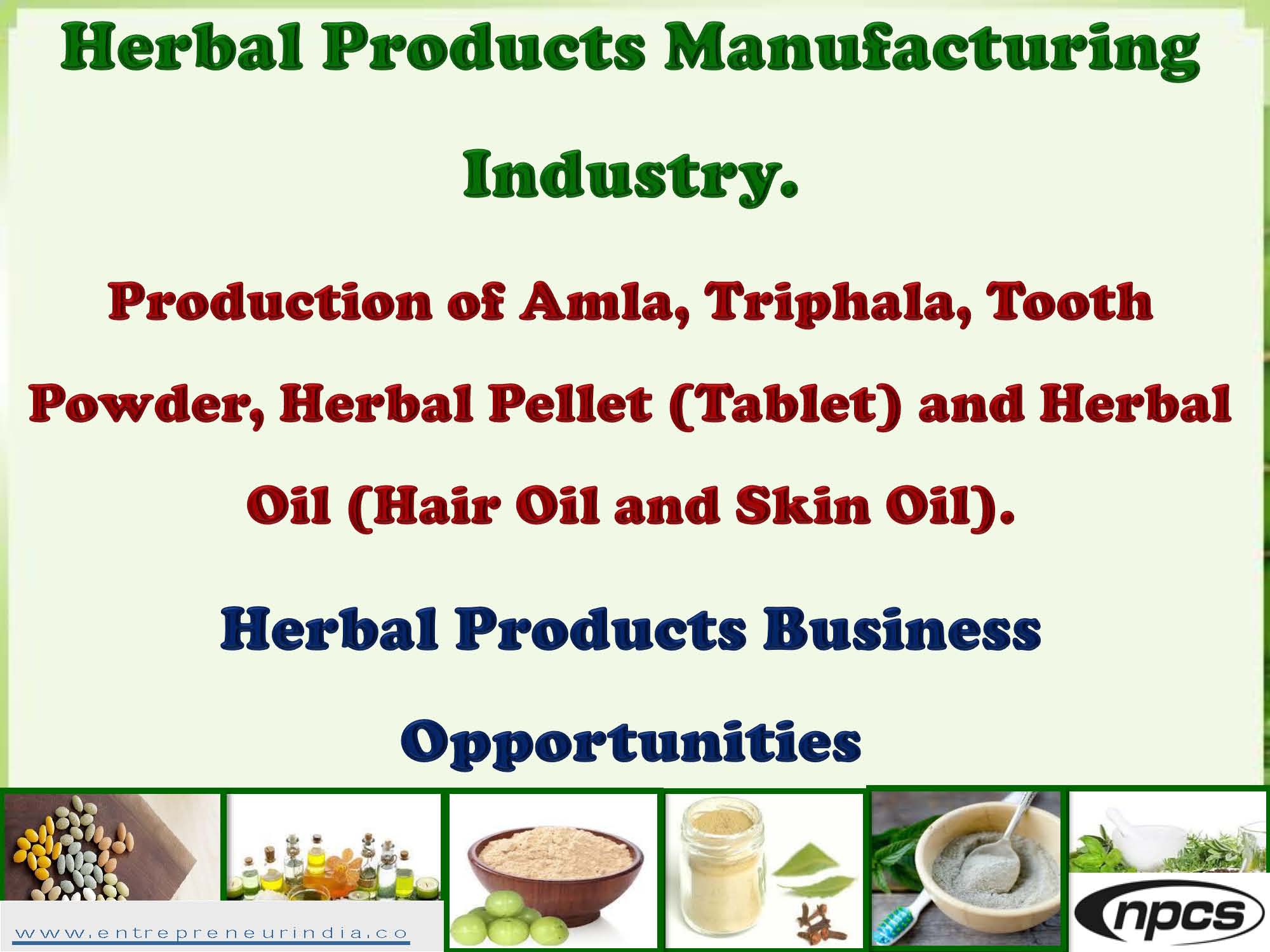
The Herbal Products Manufacturing Industry is experiencing robust growth due to increasing global interest in natural health, organic cosmetics, and alternative medicine. As consumers grow more conscious of what they consume and apply, herbal products are becoming the go-to choice for wellness, skincare, immunity, and nutrition. With a foundation rooted in traditional systems like Ayurveda, Unani, and Chinese medicine, the Herbal Products Manufacturing Industry provides a sustainable and profitable business avenue. It merges ancient knowledge with modern production techniques to create products that are safe, effective, and in high demand.
Market Overview and Industry Growth
The global herbal products market is expanding rapidly, with projections indicating a value surpassing $500 billion by 2030. The Herbal Products Manufacturing Industry is fueled by consumer preferences for plant-based solutions, free from synthetic chemicals or artificial preservatives. From dietary supplements and skincare formulations to medicinal oils and herbal teas, the range is vast.
India is one of the leading players in the industry, backed by centuries of Ayurvedic knowledge and biodiversity. With favorable government initiatives like the Ministry of AYUSH and support for MSME herbal startups, the country has become a key exporter of herbal products to the US, Europe, and Middle East markets. Growing e-commerce penetration and wellness awareness further drive domestic consumption.
Common Categories of Herbal Products
The Herbal Products Manufacturing Industry spans a wide variety of product categories, each catering to a specific consumer need:
Personal Care and Cosmetics: Herbal face creams, shampoos, soaps, toners, and sunscreens with ingredients like aloe vera, neem, tulsi, and turmeric.
Health Supplements: Capsules and powders made from ashwagandha, shilajit, giloy, moringa, and spirulina.
Medicinal Oils and Balms: Pain relief oils, massage oils, and vapor rubs using eucalyptus, camphor, and mint.
Immunity Boosters: Herbal teas, kadha powders, and tonics.
Baby Care and Hygiene: Natural products for infants, including rash creams, oils, and gentle cleansers.
Home and Lifestyle: Herbal incense, air purifiers, floor cleaners, and mosquito repellents.
Each product is formulated using botanical extracts, essential oils, roots, and minerals, making them safe for repeated use.
Production Process in Herbal Manufacturing
The Herbal Products Manufacturing Industry follows a meticulous, multi-step process to preserve the potency, purity, and therapeutic value of natural ingredients. Each stage plays a crucial role in ensuring product quality and consistency:
1. Procure Raw Materials
Manufacturers source herbs, leaves, barks, roots, and essential oils directly from certified organic farms or approved forest suppliers. They prioritize quality and traceability, as the effectiveness of herbal formulations depends heavily on raw material integrity.
2. Clean and Dry Ingredients
Operators clean raw herbs using water rinsing systems or air-dusting machines. They then dry the materials either under sunlight or in temperature-controlled dehydrators to prevent fungal contamination and preserve essential nutrients.
3. Grind and Extract Actives
Technicians grind the dried herbs into fine powders or extract bioactive compounds using solvents like water or ethanol. Depending on the application, they use cold pressing, decoction, steam distillation, or maceration to capture desired constituents.
4. Formulate and Blend
R&D teams or Ayurvedic experts combine the herbal extracts and powders in precise ratios based on traditional texts or scientific guidelines. This ensures therapeutic efficacy, taste balance, and regulatory compliance.
5. Filter and Concentrate (If Needed)
For liquid formulations, the team filters out solid residues and may concentrate the solution under low heat to enhance potency and shelf life.
6. Fill and Package the Final Product
Operators fill the finished herbal products into sterile bottles, jars, tubes, or sachets using automated or semi-automated filling lines. Packaging is done in cleanroom conditions to maintain hygiene and extend product shelf life.
Throughout the process, manufacturers adhere to Good Manufacturing Practices (GMP), ensuring that the final products are safe, effective, and consistent in quality.
Machinery and Setup Requirements
To start a Herbal Products Manufacturing Industry unit, some of the essential machinery includes:
Pulverizers and Grinders
Mixing Tanks and Blenders
Distillation Units
Extraction Reactors
Dehydrators and Dryers
Filling and Sealing Machines
Lab Equipment for Quality Testing
A basic manufacturing unit can be started in a 1,000–2,000 sq. ft. area with semi-automatic operations. For larger scale, GMP (Good Manufacturing Practice) certification and cleanroom facilities are recommended.
Investment and Setup Cost
Starting a Herbal Products Manufacturing Industry business can range from ?10 lakh to ?1 crore or more, depending on scale and automation. Key cost components include:
Land and Infrastructure: ?3–10 lakh for a rented space
Machinery: ?5–50 lakh
Raw Materials: ?2–10 lakh per month
Staff and Labor: Chemists, machine operators, QA staff
Licensing and Certification: AYUSH license, GMP certification, ISO, and FSSAI if food supplements are involved
Financial assistance can be availed through government schemes like PMEGP, MUDRA loans, and MSME credit support.
Licensing and Legal Requirements
The Herbal Products Manufacturing Industry must adhere to safety and legal protocols, which may vary based on product type:
AYUSH License: Mandatory for Ayurvedic and Unani products
FSSAI Registration: Required for consumables and supplements
GMP Certification: Good manufacturing practices for hygiene and safety
Drug License: If the product has therapeutic claims
Trademark Registration: For branding and protection of product names
ISO Certification: Enhances brand credibility, especially in exports
All herbal products should be tested for microbial content, heavy metals, and stability before release.
Branding and Marketing Strategies
Branding plays a significant role in the success of herbal product lines. To compete in the Herbal Products Manufacturing Industry, a brand should:
Highlight the natural, chemical-free, and organic nature of the product
Educate consumers on ingredient benefits using packaging and digital content
Offer eco-friendly, recyclable packaging to appeal to conscious buyers
Collaborate with influencers, health bloggers, and doctors to build trust
List products on Amazon, Flipkart, Nykaa, 1mg, and other e-commerce platforms
Use local languages and Ayurveda-inspired branding to connect with regional markets
Consistency in product quality and visible results ensures repeat purchases and strong word-of-mouth growth.
Profitability and Export Scope
Profit margins in the Herbal Products Manufacturing Industry can range between 30% to 60%, depending on branding, formulation exclusivity, and scale of production. Herbal products are in high demand globally, with major importing countries being:
USA
Germany
UAE
UK
Canada
Malaysia
India enjoys strong demand for ashwagandha, turmeric, triphala, brahmi, and neem-based products. Exporters can leverage APEDA, DGFT schemes, and logistics subsidies to grow internationally.
Sustainability and Future Outlook
The Herbal Products Manufacturing Industry aligns closely with global sustainability goals. The industry:
Promotes organic agriculture and forest conservation
Reduces chemical pollution in consumer goods
Encourages zero-waste packaging
Provides employment in tribal and rural areas
As awareness around green products increases, herbal manufacturing units are well-positioned to scale. The future also points toward:
Plant-based nutraceuticals
Customized herbal solutions using AI diagnostics
Holistic wellness kits
Subscription-based herbal care boxes
Conclusion
The Herbal Products Manufacturing Industry is a powerful blend of tradition, innovation, and global opportunity. With relatively low barriers to entry, diverse product lines, and a growing wellness-conscious consumer base, the industry is set for exponential growth. Entrepreneurs entering this field can benefit from government support, high-profit margins, and sustainable impact—all while promoting health and nature through authentic herbal solutions.
Niir Project Consultancy Services
An ISO 9001:2015 Company
106-E, Kamla Nagar, Opp. Spark Mall,
New Delhi-110007, India.
Email: npcs.ei@gmail.com , info@entrepreneurindia.co
Tel: +91-11-23843955, 23845654, 23845886, 8800733955
Mobile: +91-9811043595
Website: www.entrepreneurindia.co , www.niir.org