The leather production & tannery business is one of the oldest and most profitable manufacturing sectors in the world. Leather has been around forever, and honestly, it’s still one of the most profitable industries out there. You see it everywhere—shoes, jackets, bags, furniture, car interiors, belts, wallets, sports gear, even luxury accessories. And with everyone wanting high-end leather these days, running a leather processing business is a solid bet for entrepreneurs and investors.
Starting a leather production & tannery business means taking raw animal hides and turning them into tough, good-looking leather. The process involves tanning, dyeing, finishing, and using chemicals to get the job done. Nowadays, the industry pays a lot more attention to making top-quality products, meeting export standards, following environmental rules, and using sustainable methods to keep things cleaner.
Leather has consistently remained one of the most demanded natural materials due to its versatility, durability, and aesthetic appeal. From fashion to furniture, automobile interiors to footwear, leather is extensively used. Due to its economic and export potential, the leather production & tannery business has been identified as a profitable sector for entrepreneurs. However, to ensure long-term sustainability and profitability, certain essential factors must be considered.
Leather Production & Tannery Business – Process to Setup
To initiate a successful tannery business, the production process, raw material procurement, infrastructure needs, and environmental regulations must be thoroughly understood. Furthermore, significant attention must be given to selecting appropriate tanning methods and treatment techniques.
See Also : H2O2 Manufacturing Plant
Raw Material Sourcing and Selection
Animal hides and skins serve as the fundamental raw materials for leather production. Commonly, the hides of cattle, buffalo, sheep, and goats are utilized. These raw hides are typically procured from slaughterhouses, meat processing units, or livestock farms. In most cases, fresh, salted, or dried hides are purchased depending on the source and availability.
Once sourced, the hides are sorted based on size, thickness, texture, and presence of natural defects. Quality assessment is crucial because the final leather quality is directly influenced by the condition of the raw skin. Moreover, the selection of hide types must align with the intended leather products—fine-grain hides are preferred for apparel, while thicker hides are used for belts or upholstery.
Pre-Tanning Operations
Before tanning begins, pre-treatment of hides must be carried out. This includes soaking, liming, dehairing, fleshing, and deliming. Soaking helps in rehydrating the hides and removing dirt, blood, and salts. Subsequently, liming is done to open up the skin structure and loosen hair.
Afterward, dehairing is performed to remove hair completely, which is followed by fleshing to eliminate residual fat and flesh. Then, deliming and bating processes are executed to prepare the hide for the tanning stage. Enzymes are often applied during bating to soften the hides further. This entire phase determines the uniformity and workability of the leather.
Tanning Methods and Chemicals
Tanning stabilizes the hide’s protein structure and makes it non-putrescible. It also imparts strength, flexibility, and resistance to water and heat. Primarily, two types of tanning methods are used: chrome tanning and vegetable tanning.
Chrome tanning uses chromium salts and is preferred due to its speed, softness of leather, and wide applicability. On the other hand, vegetable tanning uses tannins extracted from bark, leaves, and fruits, providing a firmer texture and eco-friendly appeal.
For specific applications, synthetic tanning (using synthetic agents) and aldehyde tanning (used for baby products and medical items) are also utilized. The choice of method depends on the target market and environmental compliance policies.
Post-Tanning and Finishing Operations
After tanning, the leather must be processed further to enhance its usability. This phase includes neutralization, dyeing, fatliquoring, drying, and finishing. Neutralization balances the pH level of tanned hides, followed by dyeing to add color and enhance aesthetic value.
Fatliquoring introduces oils and greases that improve the softness and flexibility of the leather. Then, mechanical processes such as setting out, sammying, drying, and staking are conducted to achieve uniform moisture and texture.
In the final stage, finishing operations—like buffing, coating, polishing, and embossing—are carried out to impart surface effects and improve appearance. Various finishing agents, pigments, and lacquers are applied depending on the market requirement.
Infrastructure and Equipment Requirements
To set up a leather production & tannery business unit, suitable land, building, and essential machinery are required. Ideally, the plant must be located in an industrial zone or cluster with proper effluent treatment facilities.
Some of the core equipment includes:
- Soaking drums
- Tanning drums
- Fleshing machines
- Splitting machines
- Shaving machines
- Drying chambers
- Buffing and polishing machines
- Embossing machines
- Liming pits
- Dyeing vessels
- Effluent treatment systems
In addition to these, a water treatment plant must be installed to manage solid and liquid waste. A power backup system is also necessary to maintain uninterrupted processing.
Environmental Regulations and Waste Management
Tanning is considered one of the most polluting industries due to the use of heavy chemicals and large water consumption. Therefore, strict compliance with environmental norms is essential. Effluents must be treated through a Common Effluent Treatment Plant (CETP) or an in-house treatment facility.
Important requirements include:
- Pollution Control Board approvals
- Effluent Treatment Plants (ETP)
- chromium recovery systems
- waste-management systems
- water recycling technologies
Moreover, chrome recovery units, sludge dryers, and solid waste management protocols must be in place. With rising environmental awareness, the adoption of eco-friendly and cleaner tanning techniques is being encouraged.
Thus, the integration of green chemistry, water recycling, and bio-treatment processes can help in making the unit sustainable and more acceptable to global buyers.
Product Diversification and Leather Goods Manufacturing
Once processed, leather can be used to manufacture a wide range of finished products. These include:
- Footwear and boots
- Bags, wallets, and purses
- Belts and watch straps
- Jackets, pants, and gloves
- Furniture and automotive upholstery
- Saddlery and equestrian gear
Moreover, small-scale entrepreneurs can collaborate with artisans and designers to develop niche, handcrafted leather items. Branding, customization, and export-focused product lines offer additional profitability.
Marketing Strategy and Distribution Channels
In today’s market, leather goods can be sold through various channels including wholesale buyers, retail stores, e-commerce platforms, and export houses. Participation in trade fairs, B2B portals, and buyer-seller meets can boost visibility.
Additionally, digital marketing, social media presence, and storytelling around eco-friendly practices can build strong brand equity. Export certification and compliance with REACH regulations (for European markets) can facilitate international expansion.
Consequently, a well-thought-out marketing plan with competitive pricing and quality assurance must be implemented to ensure business growth.
Investment and Financial Planning
Initial investment depends on the scale of operation. A small to medium tannery plant may require ?50 lakhs to ?1.5 crores including land, building, machinery, and working capital. If value-added leather products are also produced, further investment may be needed for stitching, designing, and packaging units.
Financial assistance may be availed through government schemes such as:
Credit Guarantee Fund Trust for Micro and Small Enterprises (CGTMSE)
SIDBI loans
Technology Upgradation Fund Scheme (TUFS)
Leather Cluster Development Initiatives
Moreover, soft loans and capital subsidies are often offered by state governments to promote the leather industry.
Skilled Manpower and Training
The leather industry is labor-intensive and requires skilled workers for each phase. Tanners, chemical engineers, quality controllers, designers, and machine operators form the backbone of the workforce.
Training programs are offered by:
Central Leather Research Institute (CLRI)
Footwear Design and Development Institute (FDDI)
National Institute of Fashion Technology (NIFT)
Hence, collaboration with such institutes can ensure a steady supply of skilled personnel.
What is an LWG Certified Tannery?
An LWG (Leather Working Group) certified tannery follows international environmental and sustainability standards for responsible leather production. LWG certification evaluates:
- Water management
- Chemical handling
- Waste reduction
- Energy efficiency
- Traceability systems
Many export-oriented leather manufacturers seek LWG certification to improve global market acceptance and sustainability compliance.
Future Scope and Global Opportunities
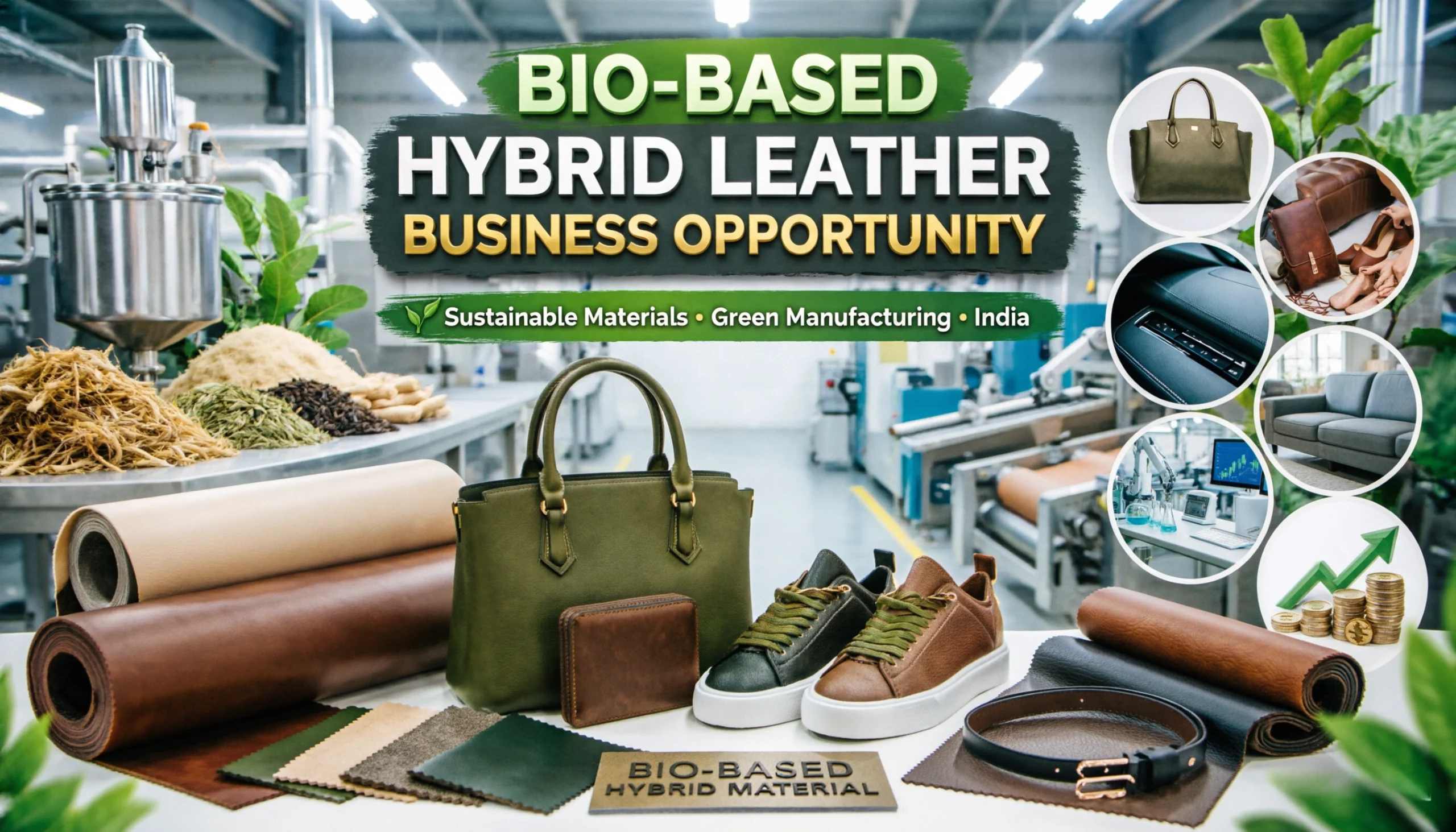
With growing global demand for ethical and sustainable leather, newer opportunities are emerging. Countries like Italy, Germany, and the USA offer high-value markets for premium leather products. Besides, vegan leather alternatives and plant-based tanning methods are gaining traction.
India, being one of the top leather producers, enjoys a strong supply chain and export infrastructure. Therefore, modernization of tanneries and value addition can drive significant growth in this sector.
Entrepreneurs must remain updated with market trends, regulatory updates, and innovations to remain competitive.
Indian Leather Industry & Market Opportunities
India is one of the world’s leading leather producers and exporters due to:
- large livestock availability
- skilled workforce
- strong export infrastructure
- growing footwear industry
- expanding fashion sector
Major leather manufacturing hubs in India include:
- Kanpur
- Chennai
- Kolkata
- Agra
- Ranipet
The leather industry offers strong opportunities in:
- footwear manufacturing
- leather garments
- furniture leather
- export businesses
- automotive interiors
Government Policies and Support
The Indian leather industry is supported by various initiatives under the Ministry of Commerce and Industry. Key policies include:
Indian Footwear, Leather & Accessories Development Programme (IFLADP)
Export promotion councils for leather goods
100% FDI allowance under the automatic route
Mega Leather Clusters for shared infrastructure
Because of such support, ease of doing business has improved significantly for startups in this domain.
Export Potential and Certification
Leather goods enjoy strong export potential due to India’s low labor cost and high-quality craftsmanship. However, compliance with quality standards, safety norms, and certification requirements is mandatory. ISO certification, BIS labeling, and REACH compliance must be adhered to for entering regulated markets.
Furthermore, duty benefits under FTAs and MEIS schemes can make Indian exports more competitive.
Market Challenges and Risk Mitigation
Despite its potential, the industry faces challenges such as environmental concerns, fluctuating raw material prices, and changing consumer preferences. To mitigate these, diversification, quality control, and adoption of cleaner technology are necessary.
Furthermore, supply chain disruptions must be managed by maintaining buffer stock and identifying multiple suppliers.
Opportunities for MSMEs and Rural Clusters
In rural and semi-urban India, leather production units can generate employment and promote traditional craftsmanship. MSMEs can benefit by forming cooperatives and SHGs (Self Help Groups), supported by NABARD and KVIC.
With minimal investment, micro units can focus on artisan-based leather goods and sell through online platforms.
Emerging Trends and Technology
Digital tanning processes, biodegradable tanning agents, and AI-based quality control are emerging trends in the leather sector. Additionally, laser engraving, smart textiles, and fashion-tech integration are creating newer avenues.
Innovation and collaboration with tech startups can accelerate modernization.
See Also : Industrial Investment & Technology
Frequently Asked Questions
What’s an LWG certified tannery?
It’s a tannery that lives up to the Leather Working Group’s standards—meaning it makes leather in a way that’s better for the environment and more sustainable.
Is LWG leather real leather?
Absolutely. LWG-certified leather is genuine leather, but it’s made with extra attention to sustainability and environmental impact.
How many tanneries are in India?
There are hundreds, clustered mostly in Tamil Nadu, Uttar Pradesh, and West Bengal.
Which is the best leather company in India?
India has several top players that make everything from footwear and garments to high-quality automotive and export leather.
Is the leather processing business profitable?
Definitely. Demand is strong at home and abroad, which means there’s good money to be made in leather production and tanning.
Conclusion
Leather production & Tannery industry is still one of the most profitable manufacturing industries out there, thanks to rising demand for everything from shoes and fashion accessories to furniture and car interiors. These days, modern tanneries use advanced technology, focus on quality and environmental standards with government support to turn out high-end leather for both domestic and export markets.
As more people around the world look for sustainable, quality leather, starting a tannery or leather production business makes a lot of sense for entrepreneurs, exporters, and investors.
Thinking about getting into the leather business?
Our team at NIIR can help you with:
- Detailed Project Reports (DPR)
- Market research on the leather industry
- Advice on setting up a tannery
- Guidance on machinery
- Pollution-control planning
- Support with the manufacturing process
- Feasibility analysis for your industrial project
Get in touch with our experts to find out how you can build a successful leather manufacturing business.