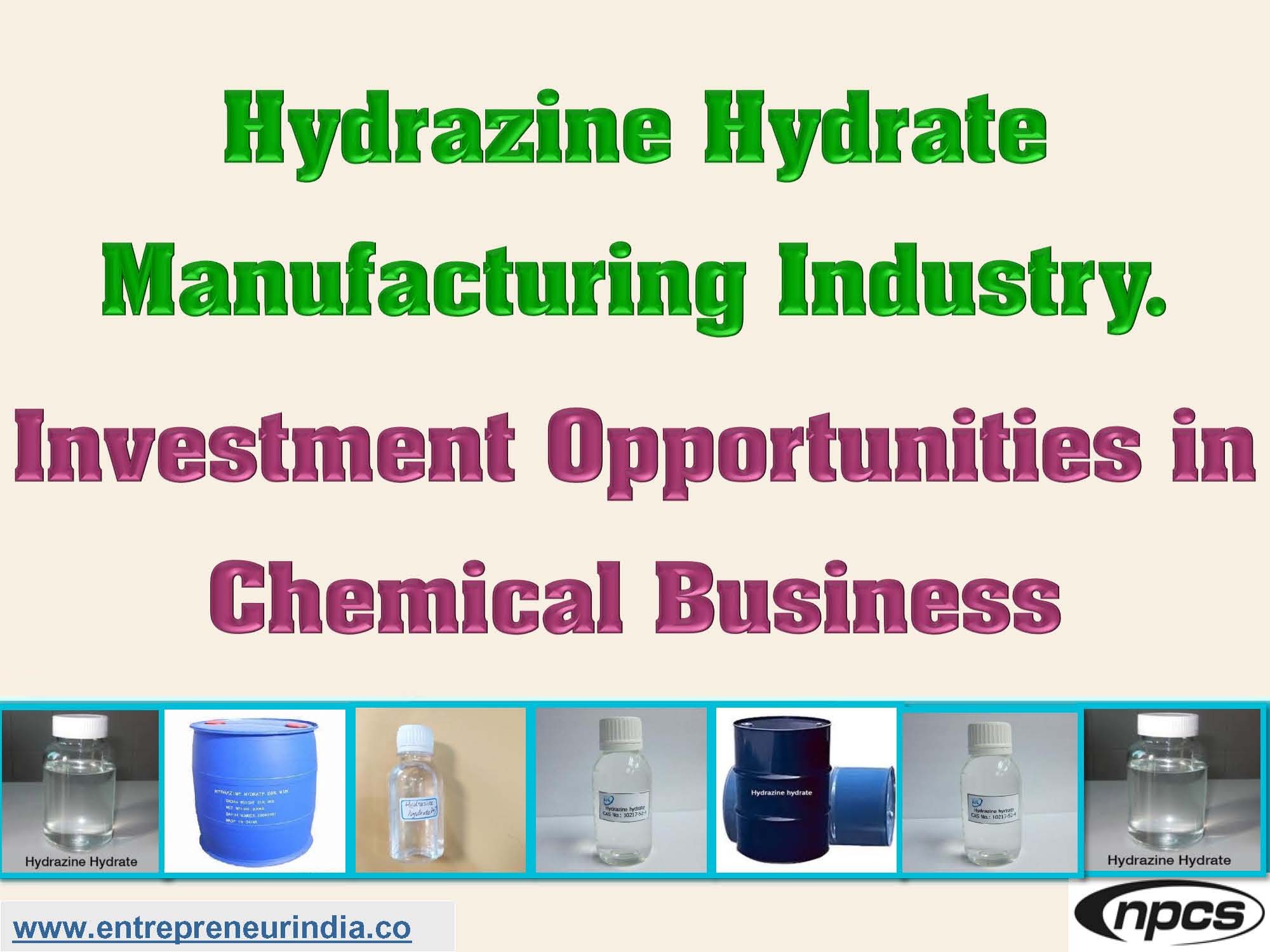
The Hydrazine Hydrate manufacturing industry plays a crucial role in global chemical production. Hydrazine hydrate is a powerful reducing agent and intermediate chemical, widely used across pharmaceuticals, agrochemicals, water treatment, polymers, and rocket propellants. Its unique chemical properties and versatile applications make it a vital compound in modern industry. With growing demand for high-performance chemicals and specialty formulations, the hydrazine hydrate market continues to expand rapidly, offering lucrative opportunities for manufacturers and investors.
Rising Demand for Specialty Chemicals
Global trends in agriculture, pharmaceuticals, and polymer production are increasing the need for Hydrazine Hydrate. This compound is used in the synthesis of active ingredients, polymers, and water treatment agents. As industrial economies expand and environmental regulations become stricter, hydrazine hydrate’s demand grows for both mainstream and niche chemical applications.
What is Hydrazine Hydrate?
Hydrazine hydrate (N?H?·H?O) is a colorless, fuming liquid with a strong ammonia-like odor. It is a water-soluble base and reducing agent, typically sold in concentrations ranging from 35% to 80%. The compound is highly reactive and must be handled with care due to its toxicity and explosive properties when concentrated.
Applications of Hydrazine Hydrate
The major applications of hydrazine hydrate include:
Agrochemicals – Used in the manufacture of herbicides, pesticides, and plant growth regulators
Pharmaceuticals – Acts as an intermediate in producing drugs like hydralazine and cephalosporins
Water Treatment – Used to scavenge oxygen in boiler feedwater systems, preventing corrosion
Polymer Industry – Participates in the synthesis of blowing agents like azodicarbonamide
Fuel and Energy Sector – Used in fuel cells and as a propellant in aerospace applications
Explosives and Catalysts – Essential in the production of gas-generating systems and catalysts
This wide application range contributes to its consistent demand across industrial sectors.
Raw Materials and Chemical Inputs
To begin hydrazine hydrate manufacturing, the following raw materials are essential:
Ammonia (NH?) – Serves as a nitrogen source
Sodium hypochlorite (NaOCl) or hydrogen peroxide (H?O?) – Acts as the oxidizing agent
Ketones (like acetone) – Used in the ketazine process
Water – For diluting and controlling reaction concentration
Catalysts and stabilizers – Required for process efficiency and safety
The two main methods of production are the ketazine process and the urea process, with the former being the most commonly used due to high efficiency and low cost.
Hydrazine Hydrate Manufacturing Process
Ketazine Process (Most Widely Used)
Ammonia and ketone react to form ketazine (intermediate compound)
Oxidizing agent (sodium hypochlorite or hydrogen peroxide) reacts with the ketazine
Hydrazine hydrate is formed and separated through extraction and distillation
The byproducts and waste gases are neutralized and removed through scrubbers
Final product is diluted to required concentrations (35–80%) and packed
This process provides high yield, better purity, and lower environmental impact than earlier methods.
Plant Setup and Machinery
A typical hydrazine hydrate manufacturing plant requires:
Reactors with corrosion-resistant linings
Distillation columns and separators
Heat exchangers and condensers
Storage tanks for ammonia and oxidizers
Control systems for pH, temperature, and flow
Scrubber systems for fume control
Packaging line with drum or container filling machines
Waste treatment systems for neutralizing spent materials
A plant with a 1,000 TPA capacity requires an area of 5,000 to 8,000 sq. ft. and investment between ?8 crores to ?15 crores, depending on automation and compliance features.
Licensing and Compliance
Hydrazine hydrate is a hazardous and controlled chemical, requiring strict regulatory compliance:
Factory and company registration
Pollution Control Board clearance (air, water, and waste)
Explosives and hazardous chemical handling licenses
Occupational safety and emergency response measures
Storage licenses for ammonia and hydrogen peroxide
MSDS documentation and chemical labeling as per GHS norms
These compliances ensure safe manufacturing, storage, and transport of the product.
Packaging and Storage Requirements
Hydrazine hydrate must be stored and transported with extreme caution:
High-density polyethylene (HDPE) drums with secure seals
ISO tanks or IBC containers for bulk exports
Storage in cool, ventilated, and flame-free zones
Containers labeled with hazard and handling information
Regular inspections to detect leaks or corrosion
Dedicated logistics partners and specialized chemical transport protocols are necessary for delivery.
Marketing and Sales Strategy
The primary consumers of hydrazine hydrate include:
Agrochemical manufacturers
Pharmaceutical companies
Power plants and boiler manufacturers
Explosives and defense contractors
Polymer and resin companies
Sales channels include:
Direct industrial supply contracts
Export to chemical processing hubs in Europe, Japan, and the US
B2B trade shows and global sourcing platforms
Government tenders and defense procurement
LinkedIn and chemical B2B platforms for lead generation
Building long-term relationships with OEMs ensures stability in demand and revenue.
Profit Margin and Business Viability
The hydrazine hydrate manufacturing industry yields high profitability if managed efficiently:
Cost of production per kg: ?80 – ?120
Selling price per kg: ?150 – ?300 (based on purity and demand)
Profit margin: 40% – 60%
Break-even period: 2 to 3 years for a medium-capacity plant
Cost optimization, safety compliance, and skilled workforce training significantly improve ROI.
Sustainability and Environmental Considerations
Hydrazine hydrate production involves toxic intermediates and byproducts. Therefore:
Effluent treatment systems must neutralize waste before discharge
Scrubbers and fume absorbers must remove harmful vapors
Green production techniques, such as the hydrogen peroxide method, should be adopted
Regular audits and safety drills protect both the environment and plant personnel
A sustainable setup not only meets legal norms but also enhances credibility among international buyers.
Conclusion
The Hydrazine Hydrate manufacturing industry offers immense potential for growth, provided safety and quality standards are upheld. As global demand rises for specialty chemicals, establishing a plant with efficient technology and strong compliance systems can position entrepreneurs for long-term success. With proper market targeting, innovation, and scale, this business can yield consistent profits and international recognition.
Niir Project Consultancy Services
An ISO 9001:2015 Company
106-E, Kamla Nagar, Opp. Spark Mall,
New Delhi-110007, India.
Email: npcs.ei@gmail.com , info@entrepreneurindia.co
Tel: +91-11-23843955, 23845654, 23845886, 8800733955
Mobile: +91-9811043595
Website: www.entrepreneurindia.co , www.niir.org