With rising demand in religious, pharmaceutical, and wellness industries, many entrepreneurs are showing interest in how to start camphor manufacturing business in India. Camphor (Kapoor) is widely used in temples for aarti, in ayurvedic medicines, vapor rubs, mosquito repellents, and even air fresheners. The growing awareness of natural products and the shift toward organic lifestyle choices have made camphor a daily-use item in many households. Moreover, the low setup cost and consistent raw material availability make this business accessible for small and medium entrepreneurs. With proper planning, quality assurance, and market targeting, camphor manufacturing can be both profitable and scalable.
How to Start Camphor Manufacturing Business in India
Starting a camphor manufacturing unit involves selecting the right type of camphor product, investing in basic equipment, ensuring safety standards, and building reliable distribution networks. Here’s a complete overview of what it takes to launch and run a successful camphor production unit.
1. Market Demand and Product Scope
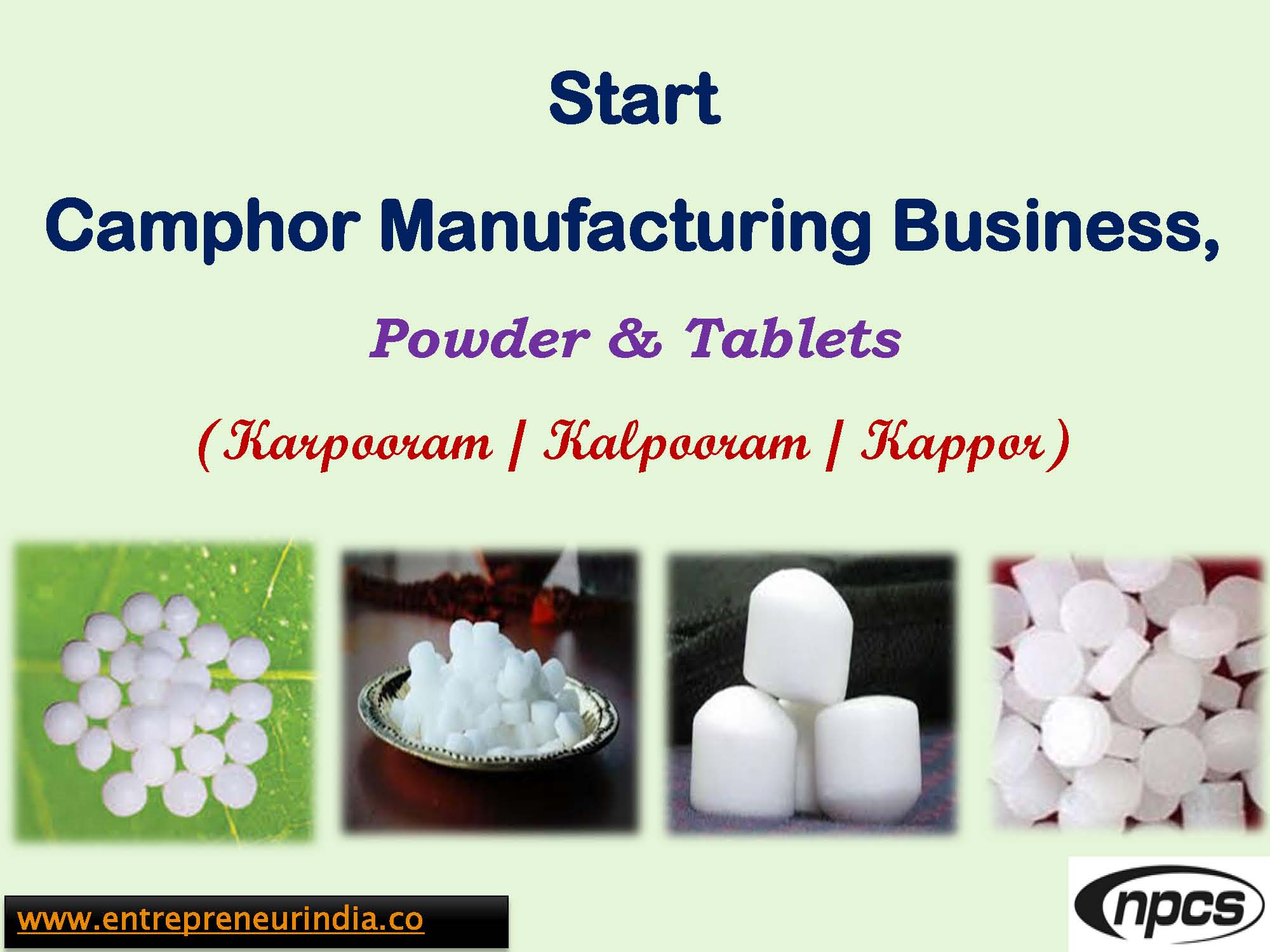
Camphor exists in many forms: tablets, cones, cubes, and even powder. It is in constant demand in temples, households, wellness stores, ayurvedic centers, and medical supply outlets. Moreover, camphor is considered sacred in Indian rituals and is also used in products like balms and inhalers due to its cooling and anti-inflammatory properties. In contrast to synthetic room fresheners or repellents, camphor is preferred for being chemical-free and environmentally friendly. As a result, there is strong year-round market potential across both urban and rural India.
2. Raw Materials and Manufacturing Process
The key raw material in this business is turpentine oil, which is chemically processed to extract camphor crystals. The process includes:
Distillation or sublimation to extract camphor from turpentine oil
Cooling and solidification into crystals
Molding the crystals into various shapes (tablets, cones, cubes) using pressing machines
Packaging in airtight, moisture-resistant containers
Moreover, the process must be carefully monitored due to the flammable nature of camphor. Proper ventilation and fire safety protocols are mandatory in the production area.
See More –Razor Blade Manufacturing Company
3. Machinery and Setup Requirements
For a small-scale camphor manufacturing unit, you’ll need the following equipment:
Camphor tablet pressing machine
Crystalizer or sublimation unit
Mixer and dryer (optional for blended camphor variants)
Weighing and packaging machine
Fire safety setup and PPE (personal protective equipment)
A small plant can be started with an investment of ?5–10 lakhs, depending on the scale and automation level. Moreover, the setup requires 500–1000 sq. ft. of space in a well-ventilated, dry area. Investing in a semi-automatic machine boosts efficiency while keeping operational costs low.
4. Licenses, Packaging, and Distribution
To legally start camphor manufacturing business, you’ll need:
Udyam/MSME Registration
GST Registration
Factory License
Pollution Control Board NOC (if using solvents or in bulk manufacturing)
Trademark registration for branding
Camphor should be packed in sealed, tamper-proof containers to avoid contamination and moisture exposure. Moreover, use proper labeling that includes net weight, batch number, and usage instructions. You can distribute through wholesalers, temple supply shops, general stores, ayurvedic retailers, and e-commerce platforms like Amazon and Flipkart.
See More –Noodles and Tastemaker Manufacturing Business
Conclusion
To start camphor manufacturing business, you don’t need massive investment—just a solid understanding of production, packaging, and market demand. With minimal raw material costs and year-round consumer demand, the profit margins in this business are high. Moreover, with smart branding and eco-friendly positioning, camphor products can appeal to a wide market. As religious activities, natural remedies, and traditional practices remain integral to Indian culture, camphor manufacturing remains a sustainable and rewarding business idea for new entrepreneurs.
Frequently Asked Questions (FAQs)
FAQ 1: What is the camphor manufacturing business and why is it profitable?
The camphor manufacturing business involves producing camphor (kapoor) from turpentine oil through chemical processes like distillation, sublimation, and crystallization. Camphor is widely used in:
Temples for aarti and religious rituals
Ayurvedic and pharmaceutical products (balms, inhalers, vapor rubs)
Mosquito repellents and air fresheners
Wellness and aromatherapy products
Why it is profitable:
Year-round consistent demand across urban and rural India
Low raw material cost (turpentine oil is readily available)
High profit margins with proper branding and distribution
Growing preference for natural and chemical-free products
Scalable from small to large-scale operations
With minimal investment and strong market potential, the camphor manufacturing business is an attractive opportunity for new entrepreneurs.
FAQ 2: What is the minimum investment required to start a camphor manufacturing business?
A small-scale camphor manufacturing business can be started with an investment of ₹5 lakhs to ₹10 lakhs, depending on the scale and level of automation.
| Cost Component | Estimated Range |
|---|---|
| Machinery (Tablet Press, Crystallizer, Packaging) | ₹3 – 6 lakhs |
| Raw Materials (Turpentine Oil, Packaging) | ₹1 – 2 lakhs |
| Licensing and Registration | ₹0.5 – 1 lakh |
| Infrastructure (500–1000 sq. ft. space) | ₹0.5 – 1 lakh |
| Working Capital | ₹1 – 2 lakhs |
Semi-automatic machines improve efficiency and reduce labor costs, making the business more profitable in the long run.
FAQ 3: What raw materials are required for camphor manufacturing?
The primary raw material for the camphor manufacturing business is turpentine oil, which is chemically processed to extract camphor crystals.
| Raw Material | Purpose |
|---|---|
| Turpentine Oil | Main raw material for camphor extraction |
| Distilled Water | Used in the crystallization process |
| Packaging Materials | Airtight, moisture-resistant containers |
| Labels and Printing | For branding and compliance information |
The availability of turpentine oil is consistent, and sourcing from reliable suppliers ensures quality output. Proper storage of raw materials is essential due to the flammable nature of camphor.
FAQ 4: What is the manufacturing process for camphor?
The manufacturing process in a camphor manufacturing business involves several chemical and mechanical steps:
| Step | Description |
|---|---|
| Distillation/Sublimation | Turpentine oil is heated to extract camphor crystals |
| Cooling and Crystallization | The extracted camphor is cooled and solidified into crystals |
| Molding/Pressing | Crystals are pressed into shapes (tablets, cones, cubes) |
| Drying | The molded camphor is dried to remove moisture |
| Weighing and Packaging | Camphor is weighed, sealed, and labeled for distribution |
Important: Due to camphor’s highly flammable nature, the manufacturing area must have proper ventilation, fire safety equipment, and strict safety protocols.
FAQ 5: What machinery is required for a camphor manufacturing unit?
A camphor manufacturing unit requires the following essential machinery:
| Machinery | Purpose |
|---|---|
| Camphor Tablet Pressing Machine | For molding camphor into tablets, cones, or cubes |
| Crystallizer/Sublimation Unit | For extracting camphor from turpentine oil |
| Mixer and Dryer | For blending (if producing blended variants) |
| Weighing Machine | For accurate weight measurement |
| Packaging Machine | For sealing and packing finished products |
| Fire Safety Equipment | Mandatory for handling flammable materials |
Semi-automatic machines are recommended for small-scale units as they boost efficiency while keeping operational costs low.
FAQ 6: What licenses and approvals are required for a camphor manufacturing business?
To legally operate a camphor manufacturing business in India, you need the following licenses:
| License/Approval | Purpose |
|---|---|
| Udyam/MSME Registration | Access to subsidies and government benefits |
| GST Registration | Tax compliance |
| Factory License | Compliance with factory regulations |
| Pollution Control Board NOC | For units using solvents or bulk manufacturing |
| Trademark Registration | Brand protection and identity |
| Fire and Safety NOC | Mandatory due to camphor’s flammable nature |
Consulting with a legal expert can help ensure all approvals are obtained before starting commercial operations.
FAQ 7: What are the different types of camphor products I can manufacture?
You can manufacture various types of camphor products in a camphor manufacturing business:
| Product Type | Application |
|---|---|
| Camphor Tablets | Temple use, household rituals |
| Camphor Cones | Aarti, religious ceremonies |
| Camphor Cubes | General purpose, pharma use |
| Camphor Powder | Ayurvedic remedies, wellness products |
| Blended Camphor | Mixed with other ingredients for specific applications |
| Scented Camphor | For aromatherapy and air freshening |
Diversifying product offerings allows you to cater to different customer segments and maximize revenue potential.
FAQ 8: How can I market and distribute camphor products?
Effective marketing and distribution are crucial for success in the camphor manufacturing business:
| Channel | Strategy |
|---|---|
| Wholesale Distribution | Supply to wholesalers and distributors |
| Temple Supply Shops | Partner with shops near temples and religious centers |
| General Stores | Distribute through local retail outlets |
| Ayurvedic Retailers | Supply to wellness and ayurvedic stores |
| Pharmaceutical Outlets | For medicinal-grade camphor |
| E-Commerce Platforms | Sell through Amazon, Flipkart, and your own website |
| B2B Supply | Partner with pharma companies and wellness brands |
Key Tips:
Use tamper-proof, moisture-resistant packaging
Include proper labeling (net weight, batch number, usage instructions)
Build a strong brand with eco-friendly positioning
Leverage social media for awareness and customer engagement
FAQ 9: What are the challenges in the camphor manufacturing business and how can I overcome them?
| Challenge | Solution |
|---|---|
| Fire and Safety Risks | Install fire extinguishers, maintain proper ventilation, implement strict safety protocols |
| Competition from Established Brands | Focus on product quality, unique packaging, and eco-friendly branding |
| Raw Material Price Fluctuations | Build relationships with multiple suppliers and maintain buffer stock |
| Quality Consistency | Implement strict quality control measures and regular testing |
| Seasonal Demand Variations | Diversify product portfolio to cater to different applications |
| Regulatory Compliance | Stay updated on legal requirements and renew licenses on time |
With proper planning, safety measures, and market understanding, these challenges can be effectively managed.
FAQ 10: Can I start a camphor manufacturing business from home?
Yes, a small-scale camphor manufacturing business can be started from home, provided you have:
A well-ventilated, dry area (500+ sq. ft.)
Access to reliable electricity and water supply
Fire safety equipment and proper storage facilities
Compliance with local residential business regulations
However, for bulk production and safety reasons, it is recommended to operate from a dedicated industrial space. Many entrepreneurs start small from home and scale up to a commercial unit as demand grows.
FAQ 11: What are the profit margins in the camphor manufacturing business?
The camphor manufacturing business offers attractive profit margins:
| Metric | Value |
|---|---|
| Cost of Production (per kg) | ₹100 – ₹150 |
| Average Selling Price (per kg) | ₹200 – ₹350 |
| Gross Profit Margin | 30% – 50% |
| Break-even Period | 12 – 18 months |
Key Factors Influencing Profitability:
Quality and purity of camphor
Brand recognition and packaging
Distribution network and market reach
Operational efficiency and cost control
With efficient operations and strong marketing, this business offers excellent returns on investment.
FAQ 12: Is camphor manufacturing an eco-friendly business?
Yes, camphor manufacturing is considered an eco-friendly business for several reasons:
| Eco-Friendly Aspect | Benefit |
|---|---|
| Natural Raw Material | Camphor is derived from natural turpentine oil |
| Chemical-Free Product | Preferred over synthetic air fresheners and repellents |
| Biodegradable | Camphor is environmentally safe |
| Sustainable Demand | Aligns with the global shift toward natural products |
Positioning your brand as eco-friendly and natural can attract health-conscious consumers and command premium pricing.
FAQ 13: What are the export opportunities for camphor?
India has significant export potential for camphor products:
| Target Market | Opportunity |
|---|---|
| Middle East | High demand for religious and wellness products |
| Southeast Asia | Growing pharmaceutical and wellness sectors |
| Europe and USA | Demand for natural and organic products |
| South Asian Countries | Cultural and religious usage |
Requirements for Export:
Import Export Code (IEC) from DGFT
Compliance with international quality standards
Certifications like ISO, GMP for pharmaceutical-grade products
Export markets offer premium pricing and higher profit margins.
FAQ 14: What support does the government offer for camphor manufacturing?
The Indian government offers several schemes to support small-scale manufacturing businesses:
| Scheme | Benefit |
|---|---|
| MSME/Udyam Registration | Access to subsidies, loans, and government benefits |
| PMEGP (Prime Minister’s Employment Generation Programme) | Financial assistance for micro-enterprises |
| MUDRA Loans | Loans for small businesses without collateral |
| Make in India | Policy support and investment facilitation |
| State-Level Subsidies | Varies by state, includes power subsidies, land benefits, etc. |
Applying for these schemes can significantly reduce your initial financial burden and accelerate business growth.
FAQ 15: Why should I start a camphor manufacturing business?
Starting a camphor manufacturing business offers multiple advantages:
| Reason | Benefit |
|---|---|
| Low Investment | Can start with ₹5–10 lakhs |
| Consistent Demand | Year-round demand across multiple sectors |
| High Profit Margins | 30–50% gross margins |
| Scalable | Can start small and expand |
| Eco-Friendly | Natural product with growing demand |
| Cultural Relevance | Deep-rooted in Indian traditions |
| Government Support | Eligible for subsidies and incentives |
| Export Potential | Access to international markets |
This business offers a perfect blend of profitability, sustainability, and cultural significance.
Ready to Start Your Camphor Manufacturing Business?
The camphor manufacturing business offers a unique opportunity to build a profitable venture rooted in Indian tradition while catering to modern market demands. With low investment requirements, consistent demand, and high profit margins, this is the perfect time to enter this growing industry.
At NPCS (NIIR Project Consultancy Services), we specialize in providing end-to-end project consultancy services to help you establish a successful camphor manufacturing unit:
✅ Detailed Project Reports – Comprehensive feasibility studies, market analysis, and financial projections
✅ Technology & Machinery Selection – Guidance on the latest equipment and production processes
✅ Plant Setup Support – End-to-end assistance from planning to commissioning
✅ Regulatory Compliance – Expert advice on licensing, safety, and quality standards
✅ Market Intelligence – Insights into demand trends, pricing, and distribution strategies
Take the first step toward building a profitable and sustainable camphor manufacturing business today!