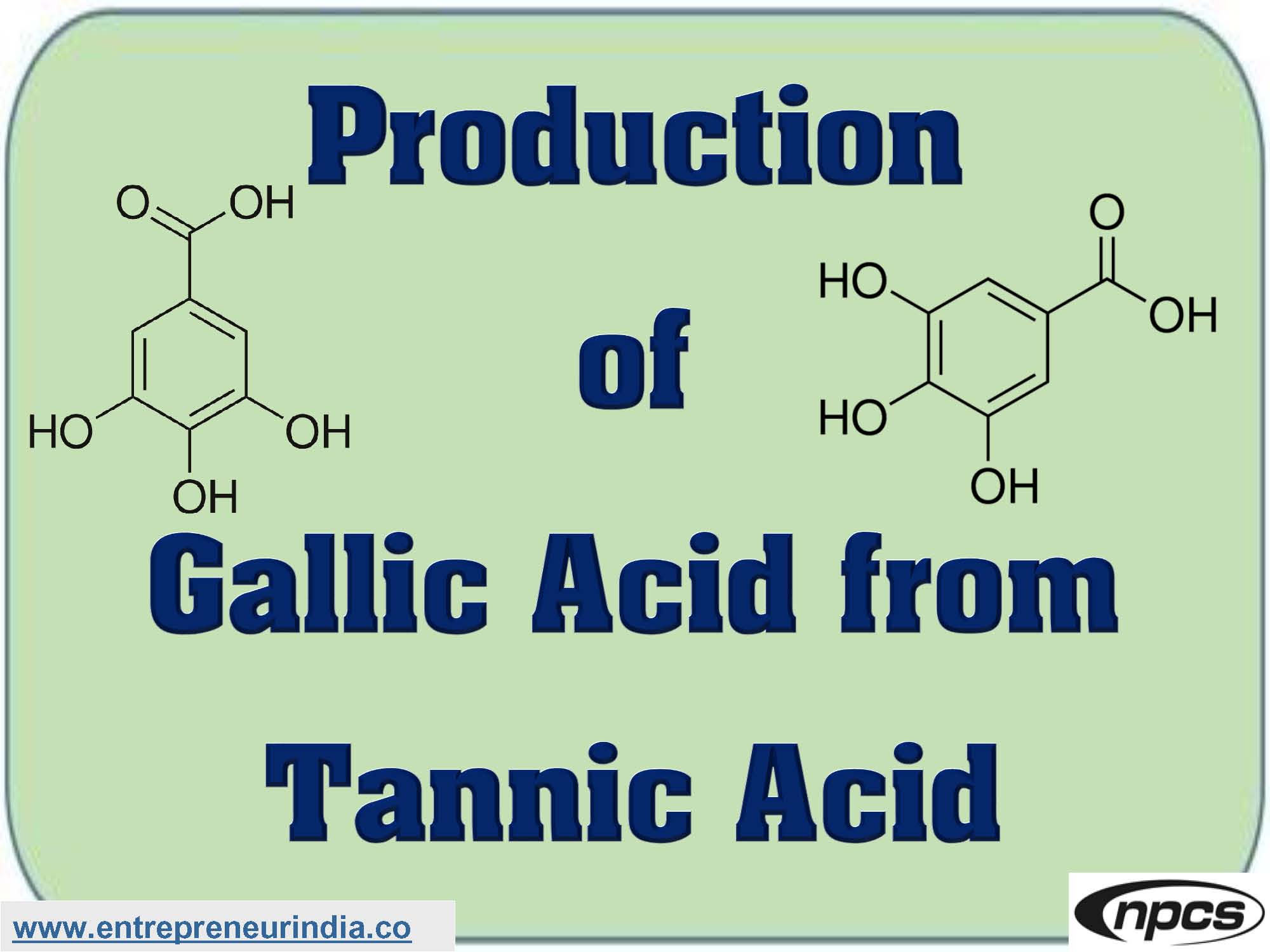
The production of gallic acid from tannic acid is a critical process used in the pharmaceutical, cosmetic, food, and chemical industries. Gallic acid is a naturally occurring phenolic compound known for its antioxidant, anti-inflammatory, and antimicrobial properties. Tannic acid, on the other hand, is a polyphenol found in various plant sources such as gallnuts, oak bark, and tea leaves. Through chemical or biological hydrolysis, tannic acid can be effectively converted into gallic acid, making this a cost-effective and sustainable production route.
Process of Gallic Acid Production from Tannic Acid
The conversion of tannic acid to gallic acid involves hydrolysis—a reaction that breaks down the complex tannin structure into simpler phenolic acids. There are two primary methods for this transformation: chemical hydrolysis and enzymatic or microbial hydrolysis.
Chemical Hydrolysis Method
Chemical hydrolysis uses mineral acids to break the ester bonds in tannic acid and release gallic acid. This method is relatively straightforward and widely practiced in industrial settings.
Raw Material: Tannic acid derived from plant sources
Reagents: Dilute sulfuric acid (H?SO?) or hydrochloric acid (HCl)
Temperature: 80°C to 90°C
Reaction Time: 4 to 6 hours
Outcome: Gallic acid and residual glucose
Once the reaction is complete, the mixture is filtered and the gallic acid is purified through crystallization and drying. While the method is effective, careful monitoring is essential to prevent product degradation or side reactions.
Microbial or Enzymatic Hydrolysis Method
This eco-friendly approach involves using microorganisms or enzymes to break down tannic acid. Specific strains like Aspergillus niger, Bacillus subtilis, and Penicillium spp. secrete tannase—an enzyme that catalyzes the hydrolysis.
Microorganism: Aspergillus niger (most common)
Fermentation Medium: Aqueous tannic acid solution
Conditions: pH 5.5–6.0, temperature 30–35°C
Incubation Time: 24 to 72 hours
Product: High-purity gallic acid
This method is preferred for pharmaceutical-grade gallic acid production as it reduces chemical use, minimizes environmental impact, and enhances product purity.
Steps for Purification and Crystallization
After hydrolysis, the gallic acid must be separated and purified. The purification process includes:
Filtration: To remove biomass or undissolved particles
pH Adjustment: Neutralizing the solution for optimal extraction
Solvent Extraction: Using ethanol or methanol to isolate gallic acid
Crystallization: By cooling the extract or evaporating the solvent
Drying: Using vacuum drying or air drying techniques
The resulting product is a white to off-white crystalline powder with high solubility in water and alcohols.
Applications of Gallic Acid
Gallic acid produced from tannic acid has a wide range of applications:
Pharmaceuticals: Used to manufacture antiseptics, trimethoprim, and gallates
Food Industry: Acts as a natural antioxidant and food preservative
Cosmetics: Used in skin-whitening, anti-aging, and anti-inflammatory products
Ink and Dye: An essential component of iron gall ink
Analytical Chemistry: Employed in quantifying phenols and flavonoids
Its strong antioxidant properties make it a popular ingredient in dietary supplements and nutraceuticals.
Benefits of Using Tannic Acid as a Precursor
Using tannic acid for gallic acid production offers several advantages:
Naturally abundant raw material
Cost-effective for large-scale production
Sustainable and renewable source
High conversion efficiency using enzymatic methods
Reduces dependency on synthetic chemical routes
Additionally, tannic acid can be sourced from agro-waste, promoting circular economy models and waste valorization.
Commercial Relevance and Market Demand
The demand for gallic acid is growing rapidly due to its use in clean-label foods, natural cosmetics, and pharmaceutical formulations. Countries like India, China, and Brazil are leading producers. The global market is expected to rise significantly, especially with a shift toward plant-based and naturally derived ingredients.
Industrial units are now investing in microbial fermentation processes, as they provide better control, scalability, and environmental safety. The NIIR Project Consultancy Service and other agencies offer detailed feasibility reports and turnkey project guidance for commercial production setups.
Safety and Environmental Considerations
When using the chemical method, proper safety measures are necessary:
Use of acid-resistant equipment
Proper disposal or neutralization of acid waste
Air filtration to avoid fume hazards
Biological methods, on the other hand, reduce the environmental footprint and avoid harsh chemical handling, making them suitable for green chemistry initiatives.
Future Trends in Gallic Acid Production
As sustainability becomes a central theme in chemical and pharmaceutical industries, the focus is shifting toward:
Biocatalytic production using genetically engineered microbes
Use of agricultural waste as a tannic acid source
Improved purification systems for higher yield and purity
Automation and AI-based monitoring of fermentation processes
Investment in research and development continues to open new doors for more efficient and cleaner methods of gallic acid production.
Conclusion
The production of gallic acid from tannic acid remains a versatile and economically viable process for industries worldwide. Whether through chemical hydrolysis or enzymatic fermentation, this method offers scalability, sustainability, and high-purity results. With increasing global demand and emerging green technologies, gallic acid production presents a valuable opportunity for both small-scale manufacturers and industrial giants alike.
Niir Project Consultancy Services
An ISO 9001:2015 Company
106-E, Kamla Nagar, Opp. Spark Mall,
New Delhi-110007, India.
Email: npcs.ei@gmail.com , info@entrepreneurindia.co
Tel: +91-11-23843955, 23845654, 23845886, 8800733955
Mobile: +91-9811043595
Website: www.entrepreneurindia.co , www.niir.org