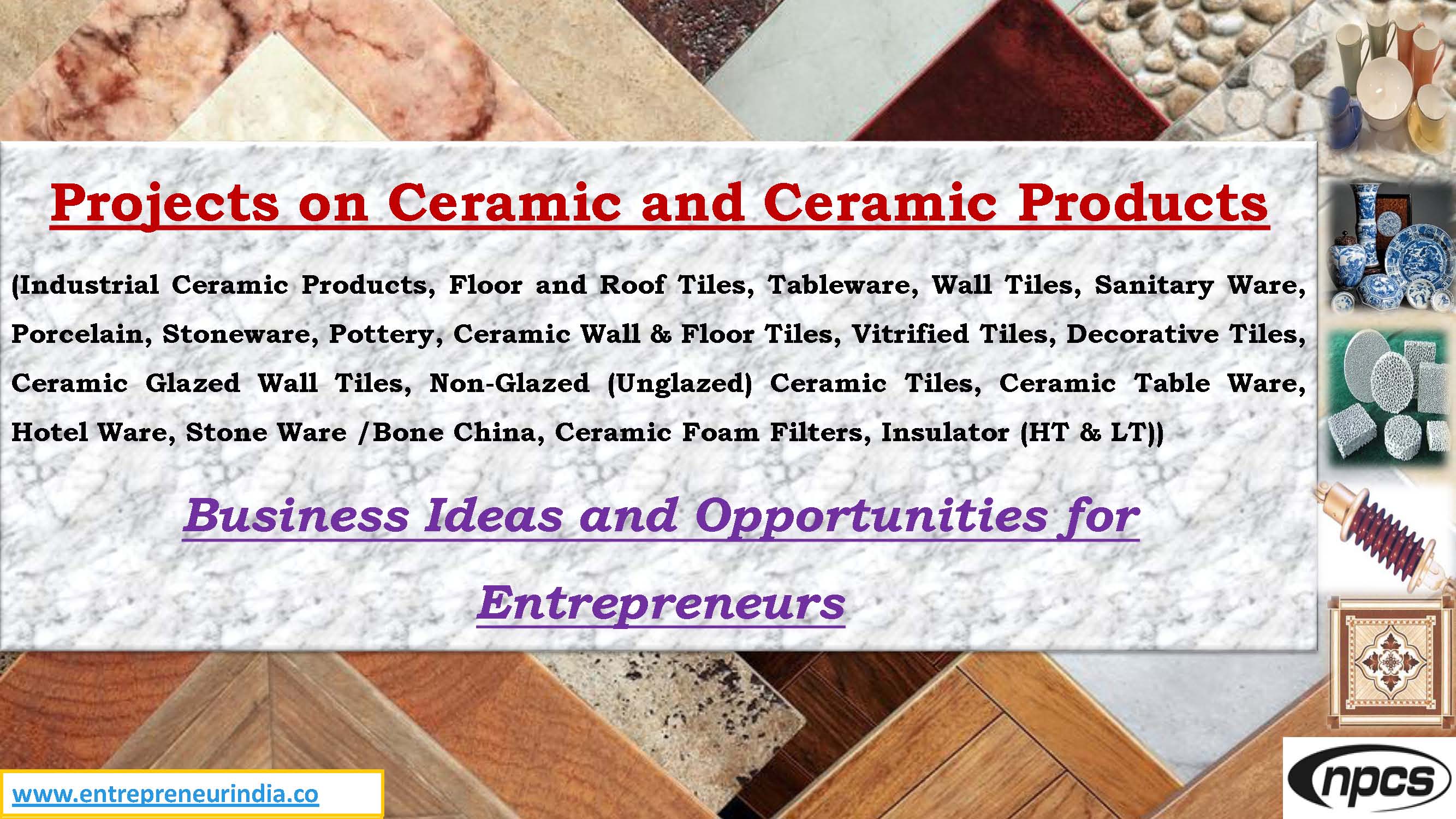
India has a rich legacy in pottery and ceramic craftsmanship, and today, this legacy powers a thriving industrial sector. From sanitaryware and tiles to high-tech ceramics for electronics and aerospace, the demand for quality ceramic product manufacturing continues to rise. With both domestic infrastructure growth and global export potential, setting up a ceramic manufacturing plant has become a highly rewarding business option. Moreover, India’s abundance of natural clay and minerals provides a strong base for cost-effective production.
Ceramic Product Manufacturing Projects | Start a Plant
A ceramic product refers to any item made from natural clay, minerals, and other inorganic materials that are shaped and then fired at high temperatures. The process creates hard, heat-resistant products that are widely used in construction, consumer goods, electrical insulation, and industrial components. Whether you want to manufacture decorative items or technical ceramics, starting a ceramic plant offers flexibility, scalability, and access to both traditional and high-value markets.
Types of Ceramic Products You Can Manufacture
There are multiple categories in the ceramic manufacturing domain:
Sanitaryware – Wash basins, toilet bowls, urinals
Floor and Wall Tiles – Glazed or unglazed tiles for residential and commercial spaces
Tableware – Plates, cups, dishes made from bone china or porcelain
Refractory Ceramics – Used in furnaces, kilns, and boilers
Advanced/Technical Ceramics – Used in aerospace, defense, and electronics
Artistic Ceramics – Handcrafted pottery, home décor items
Insulators – Ceramic bushings and supports used in the power sector
Moreover, diversification into different ceramic categories allows businesses to reduce risk and maximize market reach.
Read Also :Business to Start in Jammu & Kashmir
Raw Materials Required
For a successful ceramic product plant, consistent and quality raw materials are essential:
Clay (kaolin, ball clay) – Primary forming material
Feldspar – Acts as a flux to lower melting point
Quartz/silica – Adds strength and durability
Alumina – Enhances hardness in technical ceramics
Zircon, magnesite – Used in refractories
Coloring oxides & glazes – For aesthetic finishing
Moreover, sourcing from regions like Rajasthan, Gujarat, and West Bengal ensures access to high-quality minerals at competitive prices.
Manufacturing Process
Though the process may vary by product type, a general ceramic manufacturing workflow includes:
Raw material preparation – Crushing, mixing, and grinding of minerals
Forming – Shaping the body using molds, extrusion, or pressing
Drying – Removing moisture before firing
Firing – Sintering at temperatures ranging from 1000–1700°C
Glazing (optional) – For smooth surface finish and color
Second Firing – To harden glaze and strengthen the product
Inspection & Packaging – Quality checks and safe packaging
Moreover, using automated kilns and molding systems enhances output quality and reduces operational costs.
Machinery and Equipment
To set up a ceramic product manufacturing unit, key machinery includes:
Ball mills and blungers
Pug mills for mixing
Hydraulic presses or jigger-jolly machines
Slip casting molds
Dryers and spray booths
Tunnel kilns or shuttle kilns
Glazing machines
Cutting, polishing, and finishing tools
Moreover, installing dust collectors and energy-efficient kilns helps in maintaining compliance and cost control.
Investment and Profitability
The investment depends on the plant size, automation, and product type:
| Unit Type | Investment (INR) | Monthly Profit Potential |
|---|---|---|
| Handcrafted pottery unit | ?10–20 lakhs | ?50,000 – ?1 lakh |
| Tile or sanitaryware plant | ?1 – ?3 crores | ?2 – ?5 lakhs |
| Technical ceramics unit | ?5 – ?10 crores | ?6 – ?12 lakhs |
Moreover, high-end tableware and export-grade tiles yield better margins due to brand value and quality expectations.
Market Demand and End-Use Sectors
Ceramic product demand is driven by both traditional and modern sectors:
Real estate and construction – Tiles, sanitaryware, bricks
Hospitality and homes – Designer crockery, washroom fittings
Heavy industries – Refractory bricks, kiln furniture
Electronics and telecom – Insulators, ceramic substrates
Medical and aerospace – High-tech technical ceramics
Retail and export décor – Decorative and gift ceramics
Moreover, India is the second-largest producer of ceramic tiles globally, which underscores the market depth.
Export Potential
Indian ceramic products are exported to more than 160 countries, including:
United States
UAE
Saudi Arabia
Brazil
United Kingdom
South Africa
Tiles, sanitaryware, and decorative pieces are major contributors. Moreover, Gujarat and Morbi have emerged as global hubs for ceramic exports, supported by inland ports and road infrastructure.
Licenses and Certifications
Before starting production, you must acquire:
Udyam/MSME registration
Pollution Control Board NOC
Factory license
GST registration
BIS certification for specific products (e.g., tiles, insulators)
Fire safety clearance
Moreover, adopting ISO 9001 and ISO 14001 helps in winning international orders and improving internal processes.
Government Support and Schemes
Entrepreneurs can take advantage of various government schemes:
Credit Linked Capital Subsidy Scheme (CLCSS)
PMEGP loan assistance for artisans and small plants
Export incentives under RoDTEP
Skill development programs under KVIC and MSME Ministry
Industrial cluster support in ceramic zones like Morbi, Khurja, and Jaipur
Moreover, the government is actively promoting ceramic startups under the One District One Product (ODOP) program.
See Also :Curcumin Extraction
Conclusion
Setting up a ceramic product manufacturing plant is a smart business move for entrepreneurs looking to tap into India’s booming construction, décor, and industrial sectors. With diverse applications ranging from sanitaryware to technical components, ceramics offer a unique combination of creativity and industrial utility. Moreover, with strong domestic demand, rising exports, and government incentives, the ceramic sector provides a long-term, scalable, and profitable opportunity. Whether you’re starting small with artisan pottery or aiming big with high-volume tile production, ceramics can help shape a successful industrial future.