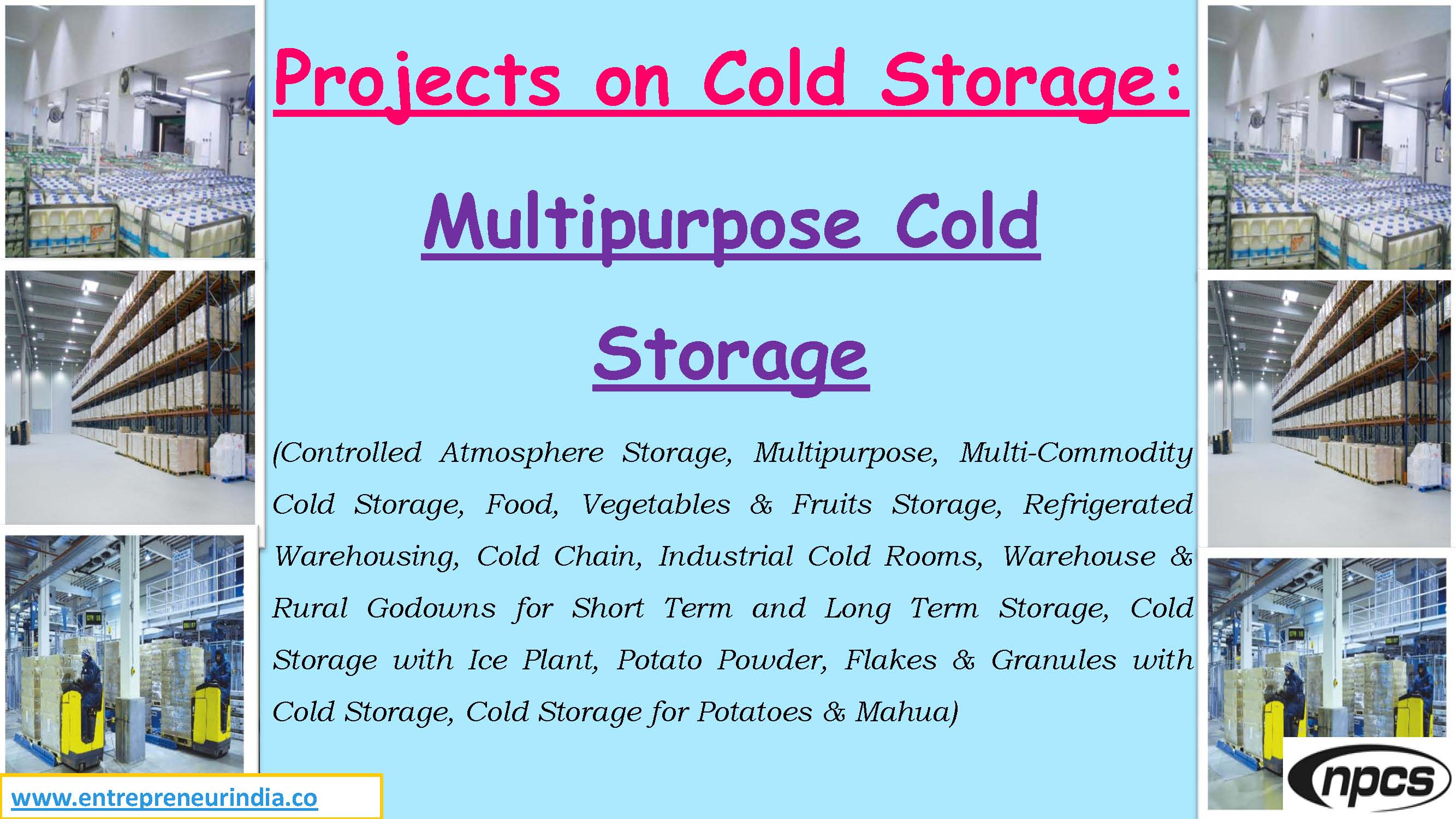
With India being one of the largest producers of fruits, vegetables, and perishables, reducing post-harvest losses remains a national priority. Nearly 30–40% of fruits and vegetables are wasted annually due to inadequate storage infrastructure. This presents a huge opportunity for businesses looking to invest in Cold Storage and Controlled Atmosphere (CA) storage solutions. Not only do these facilities extend the shelf life of produce, but they also help stabilize market supply, increase farmer incomes, and support agribusiness exports. Moreover, government subsidies and rising demand for frozen goods are fueling interest in this high-potential sector.
Cold Storage & CA Storage Projects | Business Opportunities
Cold Storage refers to temperature-controlled facilities that help preserve perishable products such as fruits, vegetables, dairy, seafood, meat, and even pharmaceuticals. With changing consumption patterns and the rise of modern retail, the need for reliable storage solutions has surged. In contrast to traditional storage, CA (Controlled Atmosphere) storage goes one step further by regulating oxygen, carbon dioxide, humidity, and temperature levels. This is especially useful for apples, pears, kiwis, and other high-value crops.
Investing in a Cold Storage business allows entrepreneurs to serve multiple sectors—agriculture, food processing, pharma, and e-commerce. Moreover, such infrastructure forms the backbone of a robust supply chain and reduces the risk of seasonal price fluctuations.
Read Also :Food Packaging Business
Types of Cold Storage Models
There are several business models you can consider:
Single-commodity storage (e.g., potato, apple)
Multi-commodity cold stores (vegetables, fruits, dairy, etc.)
Frozen storage units (meat, seafood, ice cream)
Ripening chambers (banana, mango, avocado)
CA and Modified Atmosphere (MA) storages
Moreover, mobile cold storage units are gaining popularity among logistics players for last-mile delivery in urban and rural areas.
Setup and Equipment Required
To establish a Cold Storage facility, you’ll need the following:
Insulated structure with PUF panels
Refrigeration units (compressors, condensers)
Temperature and humidity control systems
CA equipment (gas control units, sensors – for CA storage)
Backup power systems
Material handling equipment like trolleys and forklifts
Moreover, investing in energy-efficient refrigeration helps reduce operational costs significantly.
Investment and Profitability
Your investment depends on the type, size, and level of automation. Here’s a general estimate:
| Type of Unit | Investment (INR) | Monthly Profit Potential |
|---|---|---|
| Small cold room (10 MT) | ?8–12 lakhs | ?30,000 – ?70,000 |
| Medium unit (500 MT) | ?75 lakhs – ?1.2 Cr | ?1 – ?2 lakhs |
| CA Storage (1000 MT+) | ?2.5 – ?4 crores | ?3 – ?6 lakhs |
Moreover, leasing out storage space to farmers, traders, or food companies ensures a steady income stream year-round.
Licensing and Compliance
To operate legally, you’ll need:
Udyam (MSME) registration
GST registration
Cold Chain license from the Ministry of Food Processing (if availing subsidies)
Pollution Control NOC
Factory License (for large units)
FSSAI license (if handling food)
Moreover, temperature logs and quality control records must be maintained for food safety compliance.
Target Markets and Clients
Your client base will vary depending on your specialization:
Farmers and agri-cooperatives
Food processing companies
Dairy producers and distributors
Frozen food and meat exporters
Retail chains and e-commerce platforms
Pharmaceutical distributors
Moreover, offering value-added services like packaging, grading, and sorting increases your revenue potential.
Government Support and Subsidies
India’s central and state governments provide significant support for Cold Storage infrastructure under various schemes:
Pradhan Mantri Kisan SAMPADA Yojana
NABARD Cold Chain Subsidy (up to 35%–50%)
Integrated Cold Chain and Value Addition Infrastructure Scheme
Capital Investment Subsidy Scheme (Horticulture Mission)
Moreover, financial institutions like SIDBI, NABARD, and nationalized banks offer loans at reduced interest rates for agri-infrastructure projects.
Modern Technologies in Cold Storage
Adopting modern technologies can boost efficiency and reduce waste:
IoT-based temperature and humidity monitoring
Solar-powered refrigeration systems
RFID and barcoding for inventory management
Blockchain for traceability
Cloud-based data logging
Moreover, predictive maintenance and AI algorithms can help in reducing energy consumption and extending equipment life.
Challenges and Solutions
Like any business, Cold Storage operations face certain challenges:
High electricity costs
Perishable product risk
Seasonal demand variations
Lack of trained staff
Complex logistics
However, you can overcome these issues by:
Installing solar systems or hybrid energy
Partnering with local FPOs for steady supply
Using remote monitoring tools
Training staff in cold chain logistics
Moreover, developing long-term contracts with FMCG and pharma companies ensures predictable cash flow.
See Also :Bread Making Business
Conclusion
A Cold Storage business offers an ideal combination of impact and profitability. It helps reduce post-harvest losses, improves farmer income, and supports modern supply chains for food and medicine. Moreover, with government support, rising consumer demand, and increasing focus on sustainability, this sector is poised for rapid growth. Whether you start a small unit in a rural area or build a fully automated CA facility near a fruit belt, cold storage is one of the most promising infrastructure ventures in India today.