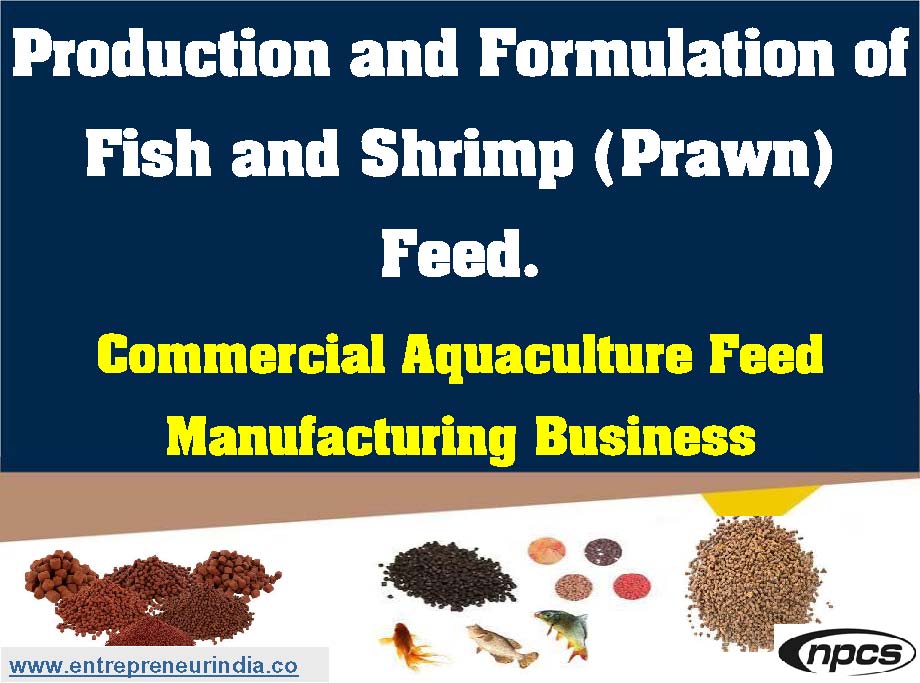
The decision to start fish and shrimp feed production opens the door to one of the most profitable and sustainable agribusinesses in today’s aquaculture-driven world. As fish and shrimp farming becomes more intensive and commercialized, the demand for scientifically formulated, high-quality feed has skyrocketed. Feed accounts for nearly 60% of the total production cost in aquaculture, making it not only essential but also a recurring purchase for farmers. With global seafood consumption rising and countries like India, Vietnam, and Indonesia leading aquaculture growth, entrepreneurs now have an excellent opportunity to start fish and shrimp feed production as a stable, scalable business.
Growing Demand for Aquafeed
As aquaculture expands rapidly, so does the demand for commercial fish and shrimp feed. Farmers are shifting from traditional, unprocessed feeds like rice bran and raw materials to nutritionally balanced, pelletized feeds that promote faster growth and better immunity in aquatic animals. When you start fish and shrimp feed production, you tap into a market driven by rising consumption, increasing exports, and enhanced farming practices.
Shrimp exports are particularly lucrative, and intensive farming techniques require customized, high-protein feed. Similarly, freshwater fish farming of carp, tilapia, and catla demands floating feed pellets for optimal FCR (Feed Conversion Ratio). The shift toward precision aquaculture makes feed formulation and quality control a critical business pillar.
Types of Feed and Their Use
Different species and growth stages require different types of feed. If you plan to start fish and shrimp feed production, you should understand the major feed types:
Crumbles: Used for hatchlings and early-stage fingerlings
Pellets: Commonly used for grow-out stages of fish and shrimp
Extruded floating feed: Ideal for surface-feeding fish like tilapia, catla, and carp
Sinking feed: Suitable for bottom-feeding species such as shrimp and catfish
Shrimp feed must be water-stable for a minimum of two hours to reduce waste and pollution. Investing in extrusion or pelletization technology is essential to deliver feed in the desired form with long shelf life and high digestibility.
Ingredients and Nutritional Requirements
A balanced feed must meet the protein, lipid, carbohydrate, vitamin, and mineral needs of the species. In your effort to start fish and shrimp feed production, you’ll use key ingredients such as:
Protein sources: Fish meal, soybean meal, groundnut cake, cottonseed cake
Carbohydrate sources: Maize, wheat bran, broken rice, cassava powder
Fats and oils: Fish oil, soybean oil, palm oil
Binders and stabilizers: Wheat gluten, starch, guar gum
Additives: Vitamin and mineral premixes, probiotics, enzymes, immunostimulants
A typical fish feed requires 25–35% protein, while shrimp feed needs 35–40%. Ingredient selection will also depend on price volatility, seasonal availability, and digestibility.
Manufacturing Process of Aquafeed
To start fish and shrimp feed production, you need to understand the step-by-step manufacturing process:
Grinding: Raw ingredients are ground into a fine, uniform powder
Mixing: Dry and liquid ingredients are mixed to ensure even distribution
Conditioning: The mixture is steamed to enhance pellet quality
Pelleting or extrusion: Feed is shaped into pellets using a pelletizer or extruder
Drying and cooling: Pellets are dried to reduce moisture and then cooled to prevent spoilage
Oil coating: Lipids are sprayed onto pellets for nutritional enrichment
Packaging: The final product is packed in moisture-proof bags and labeled
Extruded feed offers superior water stability, digestibility, and floating capability, making it more desirable in modern farming systems.
Machinery and Plant Setup
To successfully start fish and shrimp feed production, you’ll need to invest in a small to medium-scale feed mill setup, including:
Pulverizer/grinder
Vertical or horizontal mixer
Conditioner and steam boiler
Pelletizer or extruder
Cooler and dryer
Coating drum
Weighing and packing machine
A basic unit can be started with an investment of ?50 lakhs to ?1.5 crores depending on capacity, automation, and the inclusion of laboratory testing facilities. Choosing a location close to aquaculture zones ensures access to raw materials and a ready market.
Regulatory Requirements and Certifications
Before you start fish and shrimp feed production, obtain all necessary licenses and approvals:
Factory license and MSME registration
FSSAI registration (for feed safety)
NOC from Pollution Control Board
BIS standards compliance
ISO or HACCP certifications for quality control (optional but beneficial)
Additionally, setting up an in-house lab for nutritional and microbial testing enhances your product credibility and ensures regulatory compliance.
Marketing and Distribution Strategies
Once you start fish and shrimp feed production, a robust distribution strategy will ensure profitability. You can market your product through:
Direct sales to fish and shrimp farms
Tie-ups with aquaculture co-operatives and hatcheries
Appointing dealers and regional distributors
Participation in aquaculture expos and conferences
Social media and digital campaigns targeting farmers
Offer feed trials and educational support on feeding schedules to build long-term customer relationships. Customized nutrition plans for specific species and water conditions can also become a USP for your brand.
Financials and ROI Potential
The aquafeed market offers impressive returns when operated efficiently. A well-managed plant can achieve an operating profit margin of 15–25%. With consistent production, bulk sales, and optimized raw material sourcing, you can recover your investment within 2–3 years.
When you start fish and shrimp feed production, profit is largely influenced by:
Quality consistency and feed conversion efficiency
Ingredient cost management
Distribution scale and pricing strategy
Seasonal planning (peak farming periods)
Brand value and farmer trust
Demand is year-round, but peak sales occur before the farming season, making inventory planning essential.
Conclusion
To start fish and shrimp feed production is to invest in the future of aquaculture. With rising seafood consumption, export opportunities, and the shift towards intensive and semi-intensive farming systems, the demand for high-quality feed is only set to grow. This business offers scalability, recurring revenue, and strong industry linkages with hatcheries, farms, and export units.
If you are looking for a sustainable agribusiness opportunity with solid market fundamentals and government support, the aquafeed sector is one of the most promising segments to explore.
Niir Project Consultancy Services
An ISO 9001:2015 Company
106-E, Kamla Nagar, Opp. Spark Mall,
New Delhi-110007, India.
Email: npcs.ei@gmail.com , info@entrepreneurindia.co
Tel: +91-11-23843955, 23845654, 23845886, 8800733955
Mobile: +91-9811043595
Website: www.entrepreneurindia.co , www.niir.org