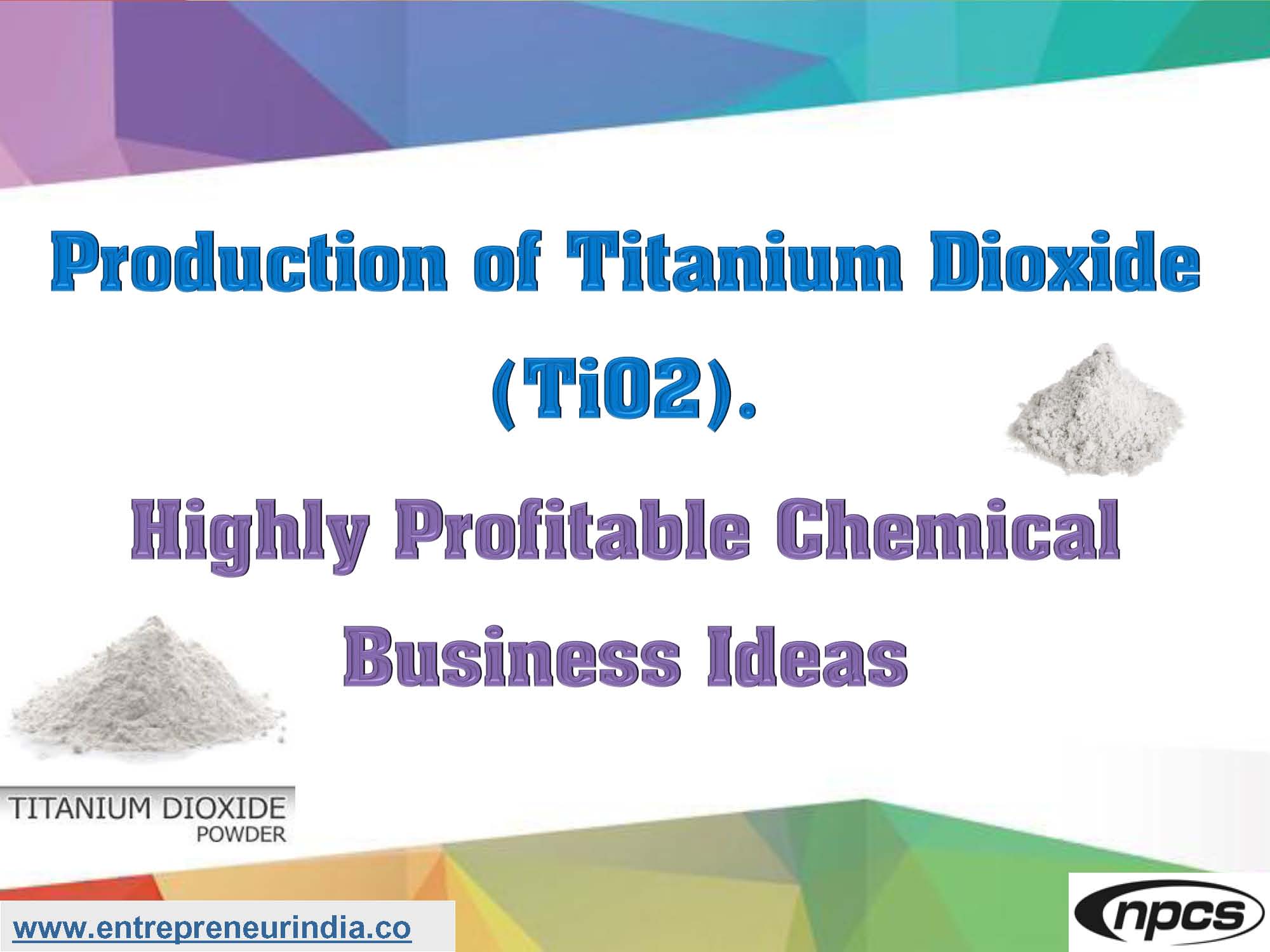
The production of titanium dioxide is one of the most significant operations in the global chemical industry. Titanium dioxide (TiO?) is a white pigment widely used in paints, plastics, paper, cosmetics, and food coloring. Known for its brightness and high refractive index, this compound plays a critical role in both industrial and consumer applications. The increasing demand for coatings, packaging materials, and eco-friendly construction supplies has fueled the steady growth of the production of titanium dioxide across global markets.
What is Titanium Dioxide and Why is It in Demand?
Titanium dioxide is a naturally occurring oxide of titanium, usually found in minerals like ilmenite, rutile, and anatase. In its refined form, it appears as a fine, white powder with high opacity and UV resistance, making it ideal for pigmentation and protective coatings.
The production of titanium dioxide is essential for industries that manufacture:
Architectural and industrial paints and coatings
Sunscreens and cosmetic products
Plastics and PVC materials
Printing inks and textiles
Pharmaceuticals and food-grade coloring agents
Its non-toxic nature, brightness, and resistance to discoloration under UV light make it a preferred additive across diverse applications.
Key Methods Used in the Production of Titanium Dioxide
There are two primary processes used in the production of titanium dioxide: the sulfate process and the chloride process. Each has its benefits, depending on raw materials, desired purity, and environmental regulations.
Sulfate Process:
Uses ilmenite or titanium slag
Involves reacting the ore with sulfuric acid
Produces a variety of TiO? grades (including anatase and rutile)
Generates waste acid, requiring neutralization and treatment
Chloride Process:
Uses rutile ore or upgraded titanium slag
Involves reacting titanium ore with chlorine and coke at high temperatures
Produces high-purity rutile TiO?
Generates fewer by-products, is more efficient, and environmentally preferred
Choosing the right method depends on the availability of raw materials, end-use requirements, and investment capacity.
Raw Materials and Industrial Setup
To initiate the production of titanium dioxide, several materials and utilities are essential:
Titanium-containing ores: Ilmenite (FeTiO?), Rutile (TiO?), or leucoxene
Acids and reagents: Sulfuric acid (for sulfate process), chlorine gas and petroleum coke (for chloride process)
Utilities: High-temperature furnaces, reactors, filtration units, centrifuges, and drying systems
Safety equipment: Especially in chloride-based plants due to chlorine handling
For a medium-sized plant with an annual capacity of 10,000–20,000 tons, the investment may range between ?40–100 crores (approx. $5–12 million), depending on automation level, plant layout, and environmental compliance systems.
Market Overview and Growth Potential
The global titanium dioxide market is projected to grow steadily, driven by infrastructure development, rising urbanization, and eco-conscious consumer goods. Asia-Pacific, particularly China and India, dominate the market due to strong demand from construction, automotive, and packaging industries.
India’s import dependence on titanium dioxide offers a tremendous opportunity for local manufacturing units. Establishing domestic production of titanium dioxide can reduce reliance on imports, control prices, and ensure consistent supply to downstream industries.
With environmental regulations tightening globally, demand for high-grade, low-toxicity, and eco-safe pigments is also pushing innovation in the TiO? sector.
Applications and Industrial Clients
Manufacturers involved in the production of titanium dioxide can serve a wide range of industries:
Paint and Coatings: Largest consumer of TiO?; used for opacity and color retention
Plastics: Increases UV resistance and aesthetic appeal in PVC and polyethylene
Cosmetics: Used in sunscreens for UV protection and in powders and creams for whiteness
Food Industry: Approved as a coloring agent (E171) in some countries
Pharmaceuticals: Used in tablet coatings and capsules
Each industry segment prefers specific TiO? grades—anatase for cosmetics and food, rutile for coatings and plastics—making product customization a key strategy.
Environmental and Safety Considerations
The production of titanium dioxide can have environmental impacts, especially the sulfate process, which generates large volumes of acidic waste. Hence, proper waste treatment and pollution control mechanisms are vital.
To ensure sustainable operations:
Install acid recovery systems
Use scrubbers for exhaust gases
Recycle water wherever possible
Ensure safe handling and storage of hazardous chemicals like chlorine and sulfuric acid
Environmental compliance under laws like CPCB (in India), REACH (in Europe), and EPA (in the US) is mandatory for market access and operational safety.
Licensing, Certifications, and Quality Standards
Setting up a production of titanium dioxide facility requires:
Factory license and environmental clearances
Hazardous chemical handling permissions
Pollution Control Board approval
ISO 9001 for quality management
ISO 14001 for environmental management
Product quality testing for particle size, purity, brightness, oil absorption, and UV resistance
Certifications improve client trust and expand export potential.
Profitability and Business Scope
Despite the capital-intensive nature of the business, the production of titanium dioxide is highly profitable due to:
Strong demand across essential industries
Product versatility with premium pricing in specialty applications
Limited global manufacturers, creating a competitive edge for new entrants
Government support for import substitution and Make-in-India initiatives
With proper planning, marketing, and efficiency, a TiO? plant can recover investments within 3–5 years and enjoy long-term profitability.
Marketing and Distribution Strategies
For success in the production of titanium dioxide, manufacturers should focus on:
Partnering with paint, plastic, and cosmetics companies
Building export relationships with Southeast Asia, Middle East, and Africa
Showcasing quality and consistency through samples and lab reports
Attending chemical expos, pigment fairs, and industrial buyer meets
Offering bulk packaging, private labeling, and delivery support
Maintaining supply reliability and high product quality is key to retaining industrial clients and tapping into premium markets.
Conclusion
The production of titanium dioxide is a dynamic and scalable business with robust industrial demand and strategic long-term potential. With the right technology, sustainable practices, and market positioning, this venture offers a lucrative opportunity for chemical entrepreneurs and large-scale investors alike.
As infrastructure development, sustainable packaging, and high-performance coatings continue to rise, titanium dioxide will remain a core ingredient across multiple global value chains. Now is the right time to invest in this future-proof industrial opportunity.
Niir Project Consultancy Services
An ISO 9001:2015 Company
106-E, Kamla Nagar, Opp. Spark Mall,
New Delhi-110007, India.
Email: npcs.ei@gmail.com , info@entrepreneurindia.co
Tel: +91-11-23843955, 23845654, 23845886, 8800733955
Mobile: +91-9811043595