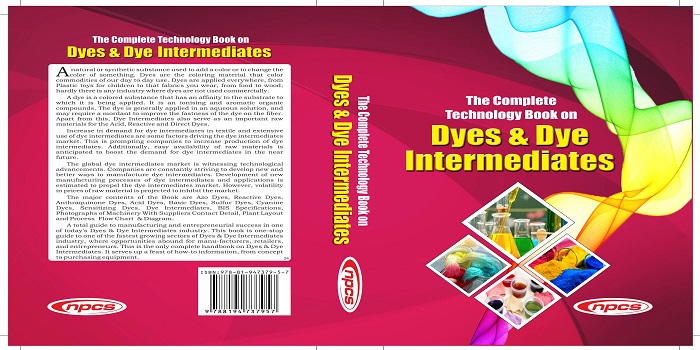

In the world of colorants and textile innovation, the book on dyes and dye intermediates is an essential resource for professionals, students, researchers, and entrepreneurs. This comprehensive reference not only provides insights into the chemistry and applications of dyes but also explores their manufacturing processes, classifications, and market potential. Whether you are planning to enter the chemical industry or want to deepen your understanding of the dye sector, this book is a treasure trove of technical knowledge and industrial guidance.
Related Business Plans: Dyestuff , Dyes, Pigments and Dye Intermediates Projects
Contents
An Overview of Dyes and Dye Intermediates
Dyes are substances used to impart color to materials such as textiles, leather, paper, and plastics. Dye intermediates are the raw materials or chemical compounds used in the synthesis of dyes. These intermediates form the building blocks for numerous types of synthetic dyes, especially azo dyes, reactive dyes, acid dyes, and disperse dyes.
The book on dyes and dye intermediates serves as an in-depth guide to:
Types of dyes and their specific applications
Chemical structures and synthesis methods
Raw materials used in the production of dyes
Environmental impact and waste treatment
Manufacturing processes and plant layout
Industrial standards and regulations
Types of Dyes Covered in the Book
This book thoroughly explains different dye classes, including:
Azo Dyes: Widely used in textiles due to their bright shades and cost-effectiveness
Reactive Dyes: Ideal for cotton and cellulose fibers; offer good wash fastness
Acid Dyes: Mainly used for protein fibers like wool and silk
Disperse Dyes: Best suited for synthetic fibers such as polyester
Basic Dyes: Used on acrylic fibers and have high tinctorial strength
Direct Dyes: Applied directly to the fabric without a binding agent
Vat and Sulfur Dyes: Used for deep shades on cotton with high colorfastness
Each dye category is discussed in terms of chemical composition, dyeing mechanism, and compatibility with various substrates.
Dye Intermediates and Their Industrial Significance
The production of synthetic dyes heavily relies on dye intermediates, which are typically derived from petrochemicals. Common intermediates include:
Aniline
Naphthol
Sulfanilic acid
H-acid and J-acid
Benzidine derivatives
These compounds undergo processes such as nitration, sulfonation, reduction, and coupling to form final dye products. The book details each of these reactions, complete with reaction mechanisms, catalysts used, and by-products generated.
Manufacturing Process Flow Diagrams and Plant Setup
One of the book’s standout features is its detailed illustrations of manufacturing processes, including:
Batch and continuous production models
Reaction vessel specifications
Effluent treatment setups
Equipment required for various dye classes
Cost estimation and economic viability of setting up a dye plant
Entrepreneurs and plant designers will particularly benefit from the technical layouts and real-world examples provided in this section.
Environmental and Safety Considerations
Dye manufacturing involves hazardous chemicals that can pose serious environmental risks. The book addresses:
Effluent treatment methods (ETP)
Zero liquid discharge (ZLD) systems
Air pollution control techniques
Worker safety protocols and PPE usage
Waste minimization and by-product utilization
Compliance with REACH regulations, Indian BIS standards, and GOTS certification is also discussed in detail to help businesses remain globally competitive.
Applications and Market Trends
Dyes and dye intermediates are used across diverse industries:
Textiles and garments
Paper and pulp industry
Plastics and paints
Food, cosmetics, and pharmaceuticals
Leather processing and packaging
The book offers a market analysis on the global demand, export potential, and import dynamics for various dye types. Emerging trends such as natural dyes, digital textile printing inks, and eco-friendly alternatives are also explored.
Who Should Read This Book?
This book is ideal for:
Chemical engineering students
Entrepreneurs planning to start dye or pigment manufacturing
R&D professionals in colorant and textile industries
Exporters and importers in the chemical sector
Environmental consultants and compliance officers
With a blend of theoretical knowledge and industrial application, this resource acts as both an academic textbook and a practical business guide.
Conclusion
Whether you’re a budding entrepreneur aiming to enter the dye manufacturing industry or a researcher seeking in-depth chemical insights, this book on dyes and dye intermediates will serve as your ultimate companion. With detailed explanations, flowcharts, market data, and safety standards, it bridges the gap between theory and practical execution.
Related Books: Dyes And Dye Intermediates, Textile Dyes & Pigments, Textile Auxiliaries, Natural, Synthetic Dyes And Pigments
See More Links:
- Start a Business in Asia
- Start a Business in Potential Countries for Doing Business
- Best Industry for Doing Business
- Business Ideas with Low, Medium & High Investment
- Looking for Most Demandable Business Ideas for Startups
- Start a Business in Africa
- Start a Business in India
- Start a Business in Middle East
- Related Videos
- Related Books
- Related Projects
- Related Market Research Reports
NIIR PROJECT CONSULTANCY SERVICES, DELHI
An ISO 9001:2015 Company
ENTREPRENEUR INDIA
106-E, Kamla Nagar, Opp. Mall ST,
New Delhi-110007, India.
Email: npcs.ei@gmail.com
Tel: +91-11-23843955, 23845654, 23845886
Mobile: +91-9097075054, 8800733955
Website: https://www.entrepreneurindia.co
https://www.niir.org