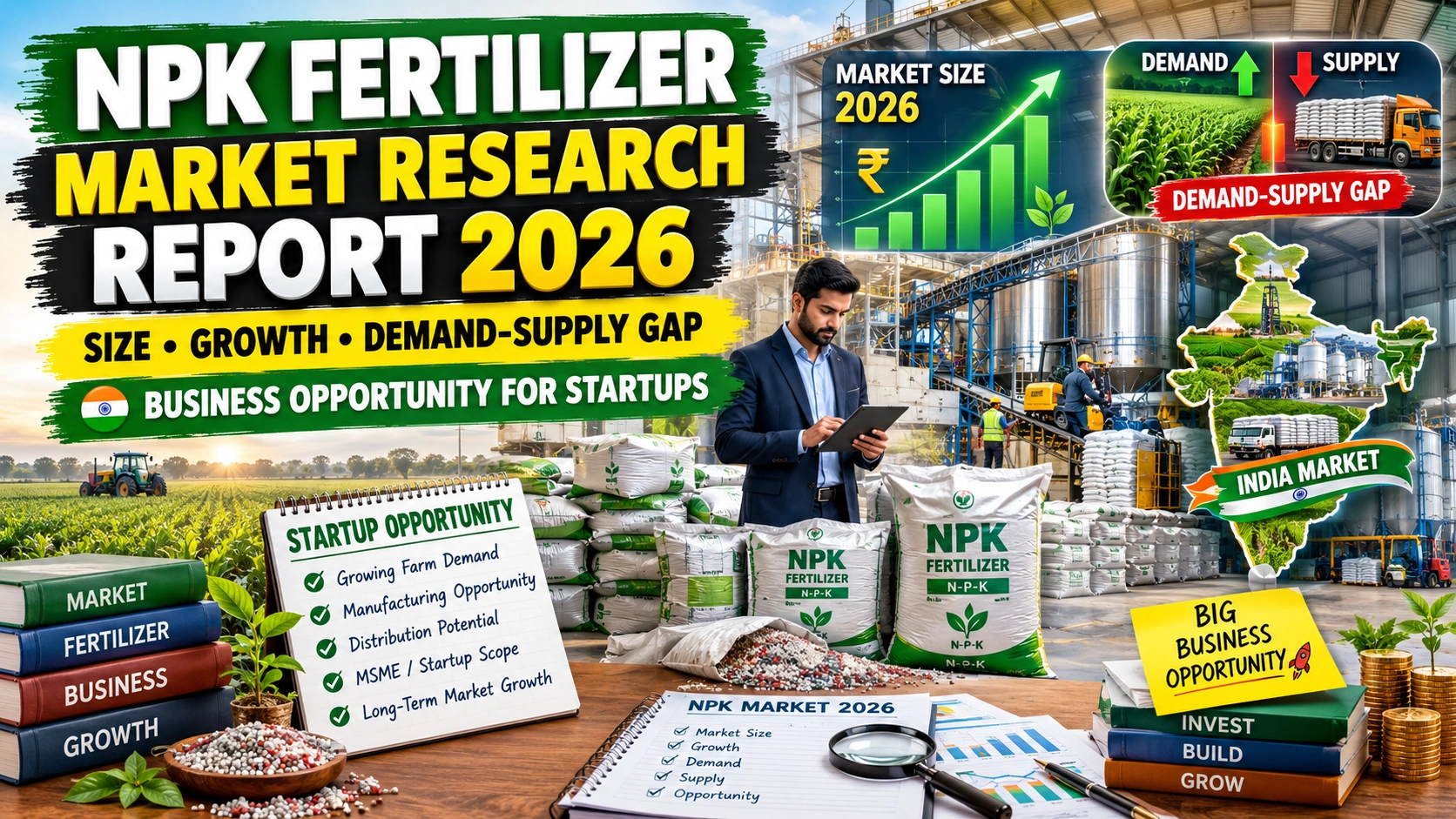

Setting up an NPK Fertilizer Plant requires meticulous planning, a deep understanding of chemical formulations, and adherence to environmental and industrial regulations. With the agricultural sector demanding high-quality fertilizers for optimal crop yield, establishing a plant that produces NPK (Nitrogen, Phosphorus, and Potassium) fertilizers can be both lucrative and impactful. This article serves as a detailed guide for entrepreneurs, investors, and agri-tech companies planning to set up an NPK fertilizer unit, covering everything from feasibility analysis to market trends and financial projections.
Contents
- 1. Importance of NPK Fertilizers in Modern Agriculture
- 1.1. Feasibility Study and Market Demand
- 1.2. Raw Materials and Chemical Formulations
- 1.3. Plant Layout and Machinery
- 1.4. Licensing, Approvals, and Compliance
- 1.5. Investment Cost and Financial Planning
- 1.6. Environmental Management and Sustainability
- 1.7. Marketing and Distribution Strategy
- 1.8. Future Trends and Growth Opportunities
- 1.9. Conclusion
Importance of NPK Fertilizers in Modern Agriculture
NPK fertilizers are vital for enhancing plant growth and ensuring soil fertility. Each component in the NPK blend plays a critical role: nitrogen boosts leaf development, phosphorus encourages root and flower growth, and potassium improves the overall health of the plant. The correct balance of these nutrients determines the productivity and sustainability of farming practices.
In India and across the globe, rising food demand and the drive toward sustainable agriculture have made the NPK Fertilizer Plant a central focus of agro-industrial development. These fertilizers can be produced through different chemical processes, such as granulation or compaction, depending on the available raw materials and technology.
See Also: Profitable Small Manufacturing Business
Feasibility Study and Market Demand
Before initiating the setup of an NPK Fertilizer Plant, a detailed feasibility study is essential. This includes analyzing the target market, estimating demand, identifying competitors, and understanding supply chain logistics. India’s fertilizer market, for instance, is highly regulated and price-sensitive. However, there is consistent demand driven by a vast farming community and government subsidies.
Globally, countries with agriculture-heavy economies—like Brazil, Indonesia, and several African nations—also present attractive opportunities for investment in fertilizer manufacturing units. Conducting a SWOT analysis (Strengths, Weaknesses, Opportunities, Threats) helps in strategic planning and financial forecasting.
Raw Materials and Chemical Formulations
The success of an NPK Fertilizer Plant largely depends on sourcing high-quality raw materials. The main ingredients include urea or ammonium nitrate (for nitrogen), phosphate rock or phosphoric acid (for phosphorus), and potassium chloride (for potassium). Depending on the type of formulation—complex, mixed, or customized—the process and equipment will vary.
Formulation ratios such as 10-26-26, 12-32-16, or 20-20-20 are commonly used for different crops and soil conditions. The process may involve chemical reactions, granulation, coating, drying, and cooling to ensure the final product meets agronomic and physical quality standards.
Plant Layout and Machinery
A typical NPK Fertilizer Plant requires the following key sections:
Raw material storage unit
Mixing and weighing unit
Granulation and drying section
Screening and coating unit
Packaging and dispatch section
Machinery must be corrosion-resistant and capable of handling bulk materials. Equipment like mixers, rotary drum granulators, crushers, dryers, sieves, elevators, and automatic packaging machines are essential for a semi-automated or fully automated plant.
It’s also vital to plan the plant layout to optimize material flow, reduce manual handling, and ensure safety and compliance with factory norms.
Licensing, Approvals, and Compliance
Setting up an NPK Fertilizer Plant involves obtaining multiple licenses and approvals:
Environmental Clearance (EC) from the Ministry of Environment
Consent to Establish and Operate from the State Pollution Control Board
Fertilizer Registration Certificate under the Fertilizer Control Order (FCO)
Factory license, labour registration, and fire safety approvals
Additionally, periodic product testing, adherence to BIS (Bureau of Indian Standards) norms, and regular audits are required to maintain compliance and brand reputation.
Investment Cost and Financial Planning
The capital investment for a medium-scale NPK Fertilizer Plant (with a capacity of 100–200 TPD) can range from ?10 crores to ?25 crores, depending on automation level and plant location. The major cost components include:
Land and building – 20%
Plant and machinery – 40%
Working capital – 20%
Licensing and legal fees – 5%
Contingency and margin money – 15%
Government subsidies, venture capital, or institutional loans can ease financial burden. Preparing a detailed project report (DPR) helps in attracting investors and financial institutions. The DPR should include balance sheets, break-even analysis, ROI (Return on Investment), and sensitivity analysis.
Environmental Management and Sustainability
Modern NPK Fertilizer Plants are increasingly adopting eco-friendly practices such as:
Wastewater recycling
Use of renewable energy sources
Zero-discharge processes
Low-emission technology
Emission control systems, scrubbers, and proper waste disposal mechanisms are essential to comply with environmental norms. Companies can also explore the use of bio-based raw materials or hybrid fertilizers that blend organic and chemical nutrients.
Sustainable branding not only reduces operational risks but also aligns the business with future-ready agricultural practices.
Marketing and Distribution Strategy
Once operational, the success of an NPK Fertilizer Plant depends on an effective marketing and distribution network. Strategies may include:
Partnering with agricultural cooperatives and FPOs
Appointing rural distributors and dealers
Offering bulk discounts to agro-input retailers
Conducting soil testing and customized fertilizer recommendations
Leveraging digital platforms and mobile apps to connect directly with farmers
Brand credibility is built on consistent quality, field-level demonstrations, and farmer training programs. Promotional activities during the sowing seasons can boost product adoption and retention.
Future Trends and Growth Opportunities
The global shift toward precision farming, integrated nutrient management, and digital agriculture is reshaping the fertilizer industry. Technologies like drone-assisted fertilizer spraying, AI-based soil analysis, and GIS mapping will increase the demand for customized and high-efficiency NPK blends.
There’s also growing interest in water-soluble and slow-release NPK formulations, particularly for horticulture and export crops. Companies investing in R&D and product innovation will have a competitive edge in the evolving agro-inputs market.
Government initiatives like “Atmanirbhar Bharat” and PLI schemes for agro-chemicals also present policy support for setting up indigenous fertilizer plants.
See Also: Natural Dyes & Pigments
Conclusion
In conclusion, establishing an NPK Fertilizer Plant offers a promising business opportunity with wide-reaching benefits for the agriculture sector. From strategic planning and technology selection to environmental compliance and marketing, every stage demands thorough execution. With proper guidance, market insight, and operational efficiency, an NPK fertilizer unit can become a cornerstone of sustainable and profitable agribusiness.