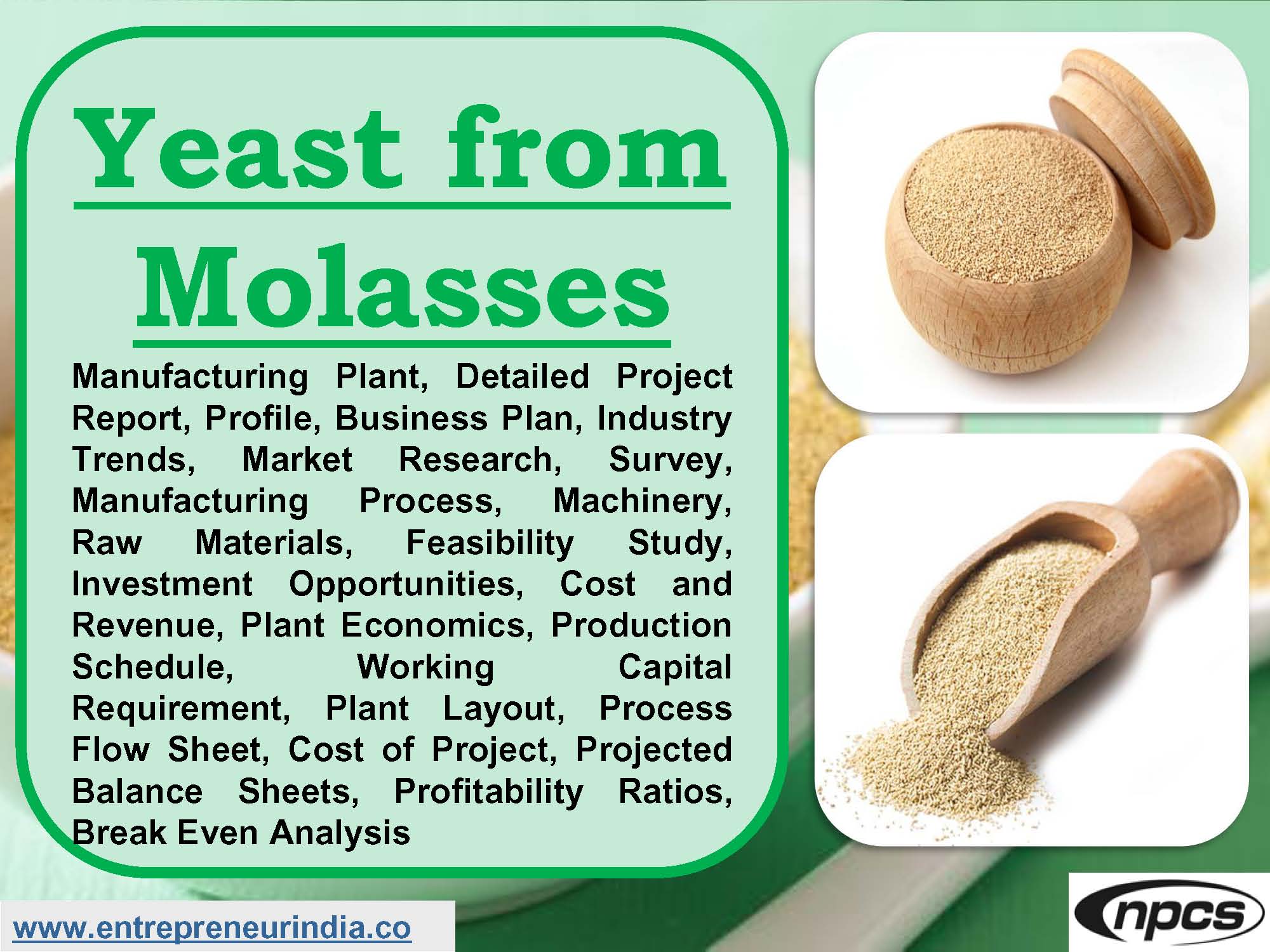
India’s distillery and sugar industries generate abundant molasses as a by-product, creating a prime raw material for yeast production. With expanding demand in baking, brewing, animal feed, and bioethanol industries, Yeast from Molasses Manufacturing is a high-potential business for entrepreneurs. This venture combines low-cost inputs with strong demand from food and pharmaceutical markets. Moreover, as the demand for natural and organic ingredients increases globally, yeast derived from sugarcane molasses is becoming a preferred solution.
Yeast from Molasses Manufacturing | Business Setup Guide
The global yeast market is growing due to rising demand in bakery items, alcoholic beverages, nutritional supplements, and industrial fermentation. Yeast from Molasses Manufacturing is particularly advantageous in India, where sugar mills generate molasses in large quantities. Entrepreneurs can capitalize on this raw material availability to set up a yeast production unit. Moreover, this industry aligns with sustainability goals by converting agricultural by-products into high-value ingredients.
Read Also :Want to Start a Business in Maharashtra
What Is Yeast and Why Use Molasses?
Yeast is a type of unicellular fungus that converts sugars into alcohol and carbon dioxide through fermentation. It plays a crucial role in baking, brewing, and bioethanol production.
Why use molasses?
Rich in fermentable sugars (sucrose, glucose, fructose)
Available in bulk as a by-product of sugar mills
Low-cost, renewable resource
Enhances sustainability by reducing waste
Supports industrial-scale fermentation processes
Moreover, molasses-based yeast production is a mature and proven method with predictable yields.
Applications of Molasses-Based Yeast
Yeast produced from molasses has a wide variety of applications:
Baking yeast: for bread, biscuits, cakes
Brewer’s yeast: in beer and alcohol production
Nutritional yeast: as a food supplement
Feed yeast: for livestock and poultry nutrition
Bioethanol yeast: in fuel production
Industrial fermentation: for enzymes and organic acids
Moreover, the type of yeast can be tailored depending on downstream industry requirements.
Manufacturing Process Overview
The process for Yeast from Molasses Manufacturing includes several technical and hygienic steps. Here’s a simplified breakdown:
Raw material preparation:
Dilute molasses to 15–20% sugar concentration. Remove impurities via filtration.Sterilization:
Sterilize molasses to eliminate unwanted microorganisms.Inoculum preparation:
Grow starter yeast culture under sterile, controlled conditions.Fermentation:
Conduct aerobic fermentation in tanks with nutrients, pH control, and aeration for 24–36 hours.Harvesting:
Separate yeast cells using centrifugation or filtration.Washing and concentration:
Wash and concentrate yeast to desired moisture levels.Drying (optional):
Produce active dry yeast using fluid bed or spray dryers.Packaging:
Pack yeast in moisture-resistant containers (vacuum pouches, sachets, jars).
Moreover, efficient process control ensures high yield, quality, and consistency.
Machinery Required
To set up a Yeast from Molasses Manufacturing plant, you’ll need:
Molasses dilution tanks
Sterilization units
Inoculum fermenters
Main fermenters (aerated, temperature-controlled)
Nutrient dosing system
Centrifuges or filtration units
Drying system (optional)
Packaging line
Laboratory for quality control
Automation and SCADA systems are recommended for large-scale plants. Moreover, maintaining hygiene and aseptic conditions is critical for consistent quality.
Investment and Profitability
Here’s an estimate based on capacity:
| Scale | Investment Range | Monthly Profit Potential |
|---|---|---|
| Small (100–200 kg/day) | ?25 – ?35 lakhs | ?70,000 – ?1.5 lakhs |
| Medium (500–800 kg/day) | ?50 – ?80 lakhs | ?2 – ?4 lakhs |
| Large (1–3 tons/day) | ?1 crore+ | ?5 – ?10 lakhs+ |
Profit margins are higher in nutritional and industrial yeast. Moreover, bulk contracts with breweries, bakeries, or ethanol plants improve sales stability.
Licensing and Compliance
For legal operations in India, you will require:
FSSAI license (for food-grade yeast)
Pollution Control Board clearance
Udyam (MSME) Registration
Factory license
GST registration
Pharmaceutical license (if supplying to pharma sector)
Moreover, environmental clearance is mandatory due to effluents generated during molasses processing.
Raw Material Supply Strategy
To secure your molasses supply:
Partner with local sugar mills
Sign long-term supply agreements
Use storage tanks for seasonal stock
Explore options for sugar beet molasses or jaggery if cane molasses is scarce
Moreover, pricing is lower post-harvest season (October–April), which is ideal for procurement.
Packaging and Distribution Channels
Your yeast products can be sold in various formats:
Baker’s yeast: packed in 50g to 500g sachets
Dry yeast: vacuum-sealed in foil packs
Feed yeast: sold in bulk 25–50 kg bags
Brewer’s yeast: supplied in paste form in drums
Industrial yeast: dispatched in tankers or large containers
Target markets include:
Bakeries and food processing industries
Alcohol and brewing companies
Animal feed manufacturers
Exporters
Nutritional supplement brands
Moreover, you can explore e-commerce platforms and B2B marketplaces like IndiaMART and TradeIndia.
Marketing Strategy for Growth
To promote your Yeast from Molasses Manufacturing business:
Build a professional brand and product catalog
Highlight organic, non-GMO, or chemical-free production
Use digital marketing to reach bakeries and breweries
Attend industry expos (Agro Tech, India Food Forum)
Partner with distributors for regional market access
Moreover, offering custom blends, sample kits, or private labeling can open additional revenue streams.
See Also :Want to Start a Business in Madhya Pradesh
Conclusion
Yeast from Molasses Manufacturing is a viable and scalable business, especially in regions with access to sugar mills. With increasing demand in food, alcohol, feed, and industrial fermentation, entrepreneurs can tap into a growing market while utilizing low-cost raw materials. Moreover, the process aligns with sustainability, offering an eco-friendly use of sugar industry by-products. With the right setup, regulatory compliance, and strategic marketing, this business can yield excellent returns and long-term success.