
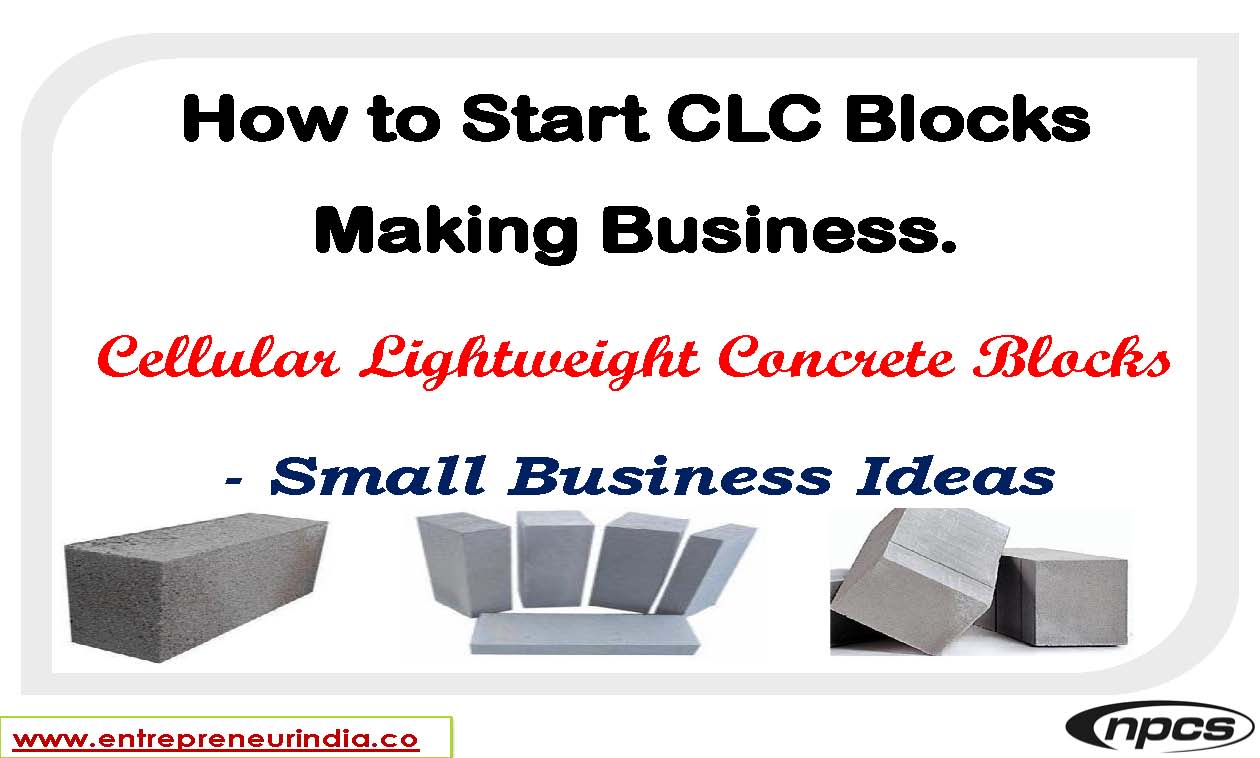
With rapid urbanization and the growing demand for cost-effective, eco-friendly construction materials, many entrepreneurs are now exploring how to start CLC blocks making business. CLC (Cellular Lightweight Concrete) blocks are lightweight, durable, and have excellent thermal insulation properties, making them a popular alternative to traditional red bricks. Moreover, they reduce the dead load on structures and help lower construction costs. Due to these advantages, CLC blocks are increasingly used in residential, commercial, and industrial buildings. For those interested in entering the construction materials sector, starting a CLC block manufacturing unit offers a sustainable, scalable, and profitable business opportunity.
How to Start CLC Blocks Making Business
To launch a successful CLC block manufacturing unit, one must focus on raw material sourcing, machinery setup, market research, and regulatory compliance. Let’s explore the critical steps involved in setting up the business.
1. Understanding the Market and Demand
Before starting, conduct a detailed market study to identify the demand in your region. CLC blocks are widely used in low-rise and high-rise buildings, partition walls, and prefabricated structures. In contrast to AAC (Autoclaved Aerated Concrete) blocks, CLC blocks do not require high-pressure steam curing, making the manufacturing process more affordable and accessible. Moreover, as construction companies and contractors seek eco-friendly materials, the demand for CLC blocks continues to rise. Focus on areas with ongoing construction, urban development, and real estate growth.
2. Raw Materials and Production Process
The core ingredients for CLC block manufacturing include:
Fly ash or sand
Cement
Protein-based or synthetic foaming agent
Water
The process involves mixing these materials to form a slurry, adding foam to introduce air bubbles, and pouring the mixture into molds. After 18–24 hours of setting, the blocks are demolded and cured using water for 14–21 days. Moreover, CLC blocks do not require high-temperature autoclaving, which reduces both capital and operating costs. The result is a strong, lightweight, and eco-friendly product suitable for modern construction.
See More –35 Profitable Business Ideas to Start
3. Machinery and Setup Requirements
Starting a small-to-medium-scale CLC blocks making business typically requires the following equipment:
CLC mixer
Foam generator
Mold sets
Curing area or tanks
Conveyor belts and trolleys
Depending on the scale, your investment can range between ?10 to ?25 lakhs. Additionally, you’ll need 2,000–5,000 sq. ft. of space for production, curing, and storage. Choose an industrial zone or rural area with good access to water, electricity, and transportation. Moreover, training staff in handling foam technology and mix design is crucial to ensure consistent quality.
4. Legal, Environmental, and Financial Considerations
To run your unit legally and efficiently, you must:
Register under MSME/Udyam
Obtain Pollution Control Board clearance
Apply for GST registration
Ensure compliance with BIS quality standards (IS 2185)
Additionally, you can explore government schemes like MUDRA loans or PMEGP for financial assistance. Since fly ash is a byproduct of thermal power plants, using it in CLC blocks supports environmental sustainability and may qualify your business for eco-incentives. Furthermore, branding your blocks as “green building materials” can improve visibility and attract real estate developers focused on sustainable construction.
See More –Small Business Ideas in India
Conclusion
Understanding how to start CLC blocks making business opens doors to an innovative and future-ready construction sector. With low production costs, eco-friendly advantages, and increasing market demand, CLC blocks provide a viable alternative to conventional bricks. Moreover, this business supports green building initiatives and contributes to more sustainable urban development. By focusing on quality, cost-efficiency, and local market connections, entrepreneurs can build a profitable business that meets the growing needs of India’s evolving construction landscape.