
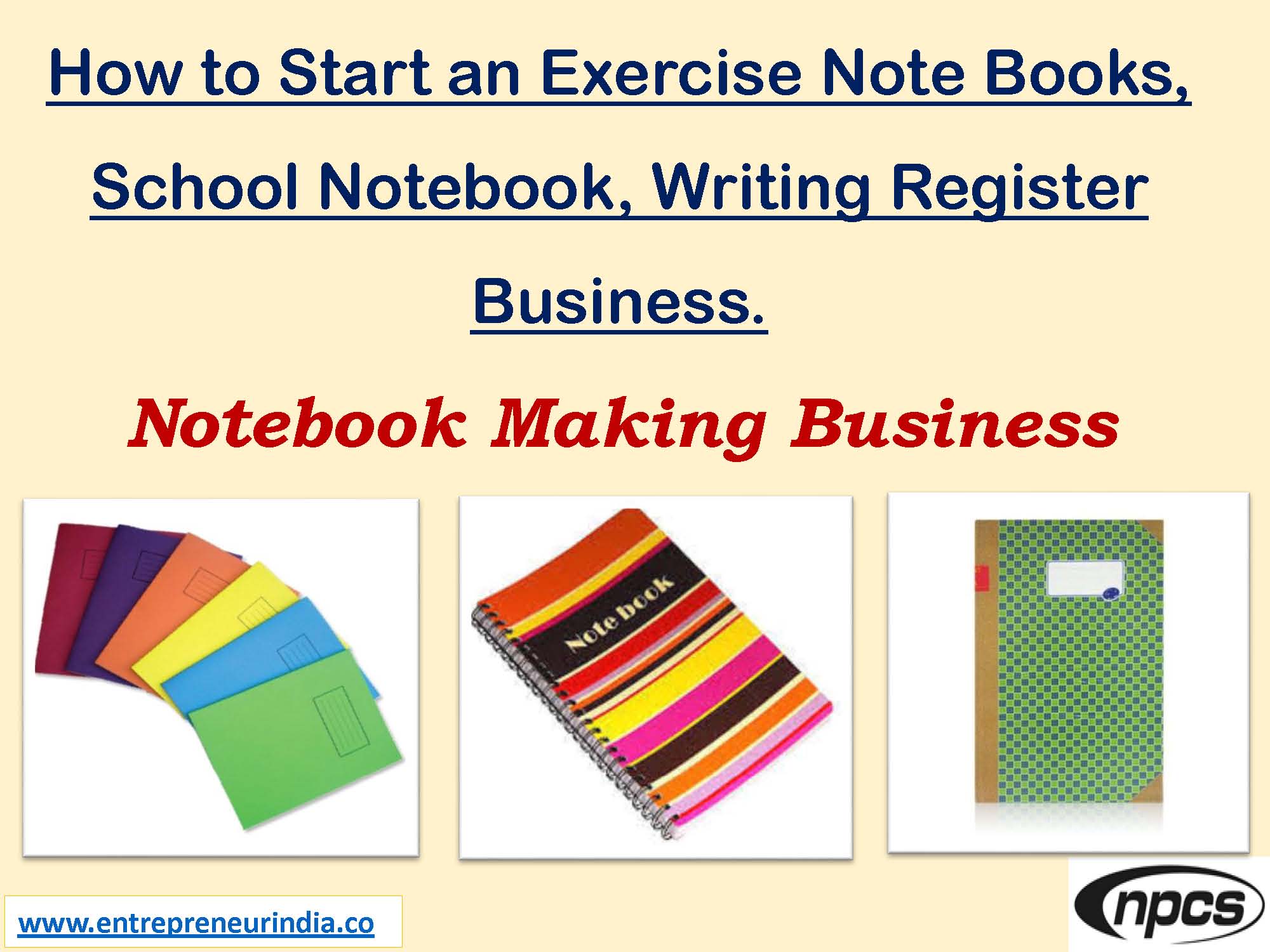
Notebook manufacturing is a practical, scalable, and high-demand business in India. With education, office work, and corporate documentation continuing to grow, the demand for quality notebooks remains stable across urban and rural areas. Starting a notebook manufacturing business not only offers a low barrier to entry but also ensures consistent income with seasonal spikes during school admission periods and government supply contracts.
In this guide, we walk you through everything from registration to manufacturing setup, marketing, and compliance. Whether you’re planning a home-based unit or a small factory setup, notebook production can be a profitable venture with relatively low investment.
Why Start a Notebook Manufacturing Business?
- Evergreen Demand: Notebooks are essential for schools, colleges, coaching institutes, offices, and government bodies.
- Low Initial Investment: You can start on a small scale and expand as orders increase.
- Government Supply Potential: Huge demand from state and central education programs.
- Easy Customization: Branding, size, paper quality, and cover design are easily customizable.
Step-by-Step Guide to Starting a Notebook Manufacturing Business
1. Market Research and Business Plan
Conduct local market research to identify your target audience (retailers, wholesalers, institutions) and their notebook requirements (size, paper quality, binding type). Create a simple business plan outlining startup costs, machinery, staffing, suppliers, and pricing.
See Also – Manufacturing Business Plans
2. Business Registration and Legal Compliance
To start a legal notebook manufacturing unit, complete the following registrations:
- Udyam Registration (MSME)
- GST Registration
- Trade License from local municipal authority
- Factory License (if employing more than 10 workers)
- BIS Standards compliance (optional but boosts credibility)
3. Location and Infrastructure
You need a workspace of at least 1000–2000 sq. ft. for a small-scale unit. Ensure proper ventilation, power supply, storage racks, and space for raw material and finished goods. Proximity to markets or wholesale hubs is an advantage.
4. Machinery and Equipment Required
Depending on scale and budget, machinery includes:
- Paper cutting machine
- Notebook stitching/binding machine (manual, semi-auto, or automatic)
- Edge squaring machine
- Cover printing machine (optional)
- Ruling machine (if starting from plain paper)
5. Raw Materials
The essential raw materials include:
- Paper (GSM 58-70 for inside pages)
- Cardboard sheets or thick paper for covers
- Ink for ruling and printing
- Thread or spiral wire for binding
- Labels and packaging material
Buy from local wholesalers or paper mills in bulk to reduce cost. Maintain consistent quality to build customer trust.
6. Manpower Requirement
You can start with 3–5 workers for a basic unit. Hire staff for:
- Machine operation
- Cutting and binding
- Quality check
- Packing
Train your staff in safety and equipment handling. For large orders, increase shifts or hire temporary labor.
7. Production Process
The basic steps in notebook production are:
- Cutting paper sheets to size
- Ruling or pre-printed paper insertion
- Collating pages
- Binding (stitching or spiral)
- Cover attachment and edge trimming
- Labeling and Packaging
8. Branding and Packaging
Use attractive and informative covers to appeal to different customer segments. Offer school-specific designs, motivational quotes, or regional language variants. Invest in eco-friendly or recyclable packaging to appeal to conscious buyers.
9. Marketing and Distribution
- Supply to stationery stores, schools, and coaching centers
- Participate in book fairs and exhibitions
- Partner with educational suppliers and tender contractors
- Sell on B2B platforms like IndiaMART and TradeIndia
- Offer bulk discounts for institutions
Create a website and showcase your range of notebooks, pricing, and contact details. Use digital marketing and social media to connect with educational institutions and wholesalers.
See Also – Small & Medium Scale Industry
Investment and Profitability
Initial Investment: INR 3–5 lakhs (small unit) Gross Margin: 20% to 35% depending on quality and volume Break-even: 6–12 months with steady demand and consistent supply
Customized, premium, or recycled paper notebooks fetch higher margins. Government tenders and school contracts ensure large-volume orders.
Conclusion
Starting a notebook manufacturing business in India is a rewarding venture for entrepreneurs looking for a sustainable and scalable idea. With low capital requirements, a wide customer base, and opportunities in both rural and urban markets, this business offers great returns if executed with quality, consistency, and smart marketing. Register your unit, source reliable suppliers, invest in quality machinery, and build your brand to succeed in the competitive stationery market.