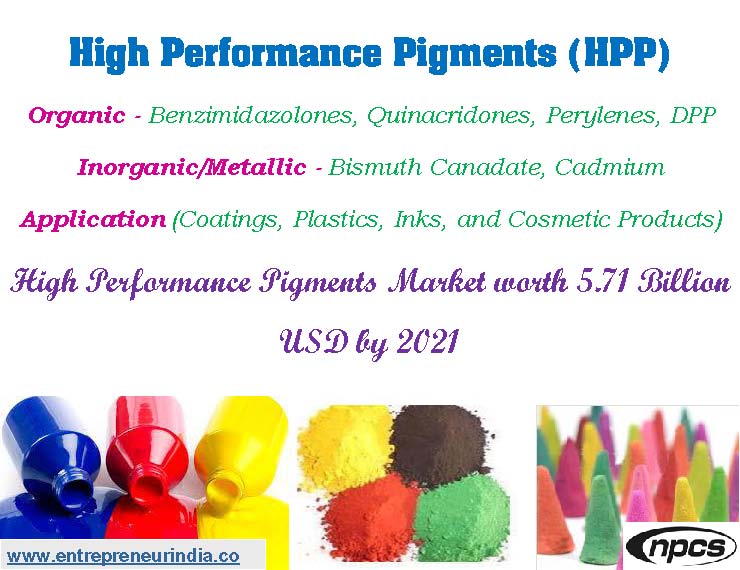
Organic High Performance Pigments (HPP) have emerged as a vital innovation in the world of specialty chemicals. Known for their vibrant color strength, superior weather resistance, and high durability, these pigments are widely used in automotive coatings, industrial paints, plastics, textiles, and even digital printing inks. As sustainability becomes central to chemical manufacturing, demand for High Performance Pigments (HPP) Organic continues to surge, creating vast opportunities for manufacturers, investors, and exporters globally. These advanced colorants not only replace traditional dyes but also deliver unmatched thermal and UV stability, making them indispensable across sectors.
Launch Your Venture in High Performance Pigments (HPP) Organic with Market-Driven Precision
The High Performance Pigments (HPP) Organic sector is innovation-led, application-driven, and environmentally aligned. With increasing regulation against heavy-metal pigments and rising demand for safe, non-toxic, and eco-compliant colorants, this industry is poised for exponential growth.
See Also :- Start Biofertilizer Production Unit
What Are High Performance Organic Pigments?
HPP organic pigments are synthetic colorants derived from complex aromatic and heterocyclic compounds. Unlike dyes, they are insoluble in water or solvents, offering exceptional fastness properties.
Common classes include:
Phthalocyanines – Bright blues and greens
Quinacridones – Vivid magenta and red hues
Diketopyrrolopyrroles (DPPs) – Deep red with extreme durability
Isoindolinones – Yellow pigments with UV resistance
Perylenes – Red shades with superior weatherfastness
These pigments outperform conventional ones due to their crystalline molecular structures, which provide high opacity, dispersion stability, and long service life.
Applications of HPP Organic Pigments Across Industries
Because of their performance, these pigments are essential in:
Automotive Coatings – Long-lasting brilliance and colorfastness
Industrial Paints – Anti-corrosive, UV-stable applications
Plastics and Polymers – Heat-resistant and migration-proof coloring
Inks for Printing – High color strength and lightfastness
Textiles and Fibers – Non-bleeding color under harsh washing
Cosmetics and Personal Care – Safe and non-toxic pigment solutions
Many companies are also adopting High Performance Pigments (HPP) Organic in solar cell technology, electronics, and high-temperature coatings.
See Also :- Industrial and Hydraulic Hoses Manufacturing Industry
Production Process Overview
Manufacturing HPP organic pigments involves advanced chemical synthesis and finishing steps. The key stages include:
Reaction and Coupling – Synthesize pigment base from raw chemical intermediates.
Filtration and Washing – Remove impurities and byproducts.
Drying and Milling – Create fine, stable particles for dispersion.
Surface Treatment – Enhance dispersibility and application compatibility.
Quality Control – Analyze color strength, pH, viscosity, particle size, and resistance properties.
All steps must be executed in a controlled environment, with sophisticated equipment ensuring batch consistency and regulatory compliance.
Raw Materials and Inputs Needed
To start production of High Performance Pigments (HPP) Organic, you need:
Aromatic amines and nitriles
Copper salts (for phthalocyanines)
Acids, solvents, and coupling agents
Anti-oxidants and dispersants
Lab-grade water and inert atmosphere setups
Filtration, drying, and pigment finishing units
Strict handling protocols are essential due to the sensitive and sometimes hazardous nature of chemical reactions.
Licenses and Regulatory Approvals
A pigment manufacturing plant must meet the following compliance standards:
Pollution Control Board NOC
MSME or Udyam Registration
Hazardous Waste Authorization
ISO 9001 and ISO 14001 Certifications
REACH, RoHS, and FDA compliance (for exports and cosmetic applications)
Factory and Boiler Licenses
Safety and environmental measures must be top priorities, as these chemicals require stringent storage and disposal practices.
Investment and Profit Potential
Starting a High Performance Pigments (HPP) Organic plant requires moderate to high investment based on capacity:
Small-scale: ?1.5–2 crore
Medium-scale: ?5–7 crore
High-scale/automated unit: ?10+ crore
The profit margin can range between 20%–35% depending on product type, target sector, and value-added customization. Exporting to Europe, the USA, and ASEAN markets significantly boosts profitability due to their preference for environmentally safe pigments.
See Also :- Investment in Healthcare Industry
Market Demand and Export Opportunities
Global demand for High Performance Pigments (HPP) Organic is driven by:
Stringent EU regulations banning heavy metal-based pigments
Automotive industry’s preference for fade-resistant paints
Rising demand for sustainable packaging and printed materials
Plastics and coatings industry adopting green chemistry
Growth of personal care industry seeking non-toxic colorants
India already exports over ?2,000 crore worth of pigments annually, and with specialized HPPs, that figure is set to rise exponentially.
Marketing and Sales Strategy
To capture a strong market share, focus on:
Partnering with OEMs and B2B clients in paints, plastics, and ink manufacturing
Participating in global trade shows like CHINACOAT, European Coatings Show, and Plastindia
Offering product variants with certifications like FDA-grade, food-grade, or REACH-compliant
Building an expert team for R&D and client customization
Creating a strong digital presence and distributor network
Emphasize the safety, durability, and eco-friendly nature of your High Performance Pigments (HPP) Organic to stand out.
Sustainability and Future Trends
This segment is inherently aligned with green chemistry, especially when focused on:
Water-based dispersions
Low-VOC and solvent-free formulations
Biodegradable carrier systems
Recycling-friendly pigments for packaging
Smart pigments with infrared reflectance or thermochromic properties
Innovation and sustainability are the two pillars that will continue driving demand in this industry.
Conclusion
Venturing into the High Performance Pigments (HPP) Organic sector offers a unique opportunity to blend profitability with sustainability. The consistent growth of color-intensive industries and rising environmental concerns have made these pigments an industry standard across the globe. With the right infrastructure, regulatory compliance, and market alignment, businesses can secure a strong foothold in this high-potential, future-proof niche of specialty chemicals.