India is the world’s largest producer and consumer of milk. With increasing demand for dairy products like milk, butter, ghee, paneer, and yogurt, the dairy industry presents immense potential for new entrepreneurs. Dairy farming to produce milk and cattle breeding is not only a sustainable rural occupation but also a lucrative agribusiness with long-term benefits.
This detailed project report highlights the essentials of starting a profitable dairy farm, including breed selection, infrastructure setup, veterinary care, feed management, milk production, and profitability analysis.
Understanding Dairy Farming and Its Scope in India
Dairy farming is the management of milking animals such as cows and buffaloes for continuous milk production. It is an age-old practice in India, now modernized with better technology, genetics, and market access. Cattle breeding enhances herd quality and milk yield, contributing to long-term productivity and income.
See More – Nanotech Focus
With India’s growing middle class and increased health consciousness, the demand for fresh milk and dairy products is consistently rising. Rural development schemes and financial subsidies make this business even more appealing for first-time entrepreneurs.
Key Components of a Dairy Farming Project
A successful dairy project involves several interconnected components. Here is a breakdown of what you need to know before launching your business in dairy farming to produce milk and cattle breeding.
1. Breed Selection
The choice of breed directly affects milk yield, disease resistance, and adaptability to climate. Popular high-yielding cattle breeds include:
Jersey: High milk yield with lower feed intake. Ideal for small farms.
Holstein Friesian: Superior yield but sensitive to heat.
Gir and Sahiwal: Indigenous Indian breeds with good milk potential and resistance to tropical diseases.
For cross-breeding, semen from proven bulls can improve productivity and hybrid vigor.
2. Farm Location and Infrastructure
The location should have adequate water supply, easy access to roads, and proximity to markets. Essential infrastructure includes:
Covered sheds with good ventilation
Separate areas for calves, milking cows, and dry cows
Fodder storage units
Veterinary room or first-aid facility
Milking parlour or automated machine room
Waste disposal and bio-gas pit
A farm housing 20–50 milch animals can function efficiently with well-planned space and resources.
3. Feed and Fodder Management
Nutrition is critical for milk production and reproductive efficiency. The feeding schedule includes:
Green Fodder: Napier grass, maize, or berseem
Dry Fodder: Paddy straw, wheat straw
Concentrate Feed: Mineral mix, grains, protein-rich supplements
Water: At least 30–50 litres per cow daily
Feeding should be balanced based on body weight and lactation cycle. Silage-making during the surplus season ensures year-round fodder availability.
4. Milking Process and Equipment
Milking should follow strict hygiene to maintain quality and prevent infections.
Manual milking twice a day is common on small farms.
For larger operations, milking parlours or automated milking machines improve efficiency.
Milk should be filtered and stored in aluminum or stainless steel cans and transferred to chilling plants within 2–3 hours.
Testing for milk fat content ensures pricing and quality consistency.
5. Veterinary Support and Disease Management
Animal health is central to successful dairy farming to produce milk and cattle breeding. Regular health checks, vaccinations, and deworming are essential. Common issues include:
Mastitis
Foot-and-mouth disease
Reproductive disorders
Parasitic infections
Collaboration with a local veterinarian ensures timely care and advice. Some farms also set up a small in-house veterinary clinic.
6. Cattle Breeding and Calf Management
Breeding is either natural or through artificial insemination (AI). AI is preferred due to:
Genetic control
Disease prevention
Planned breeding cycles
Calves require special care with colostrum feeding in the first 24 hours. Female calves are reared for future milking; male calves can be sold or raised for farm labor or meat (where legal).
7. Cow Urine and Dung Utilization
Waste from dairy farms is a valuable byproduct. You can use it for:
Biogas production: Renewable energy for cooking or electricity
Cow dung cakes: Used as fuel or organic fertilizer
Cow urine distillation: For use in herbal medicines, pest repellents, and cleaning agents
A cow dung processing unit can add revenue through vermicompost or organic fertilizer sales.
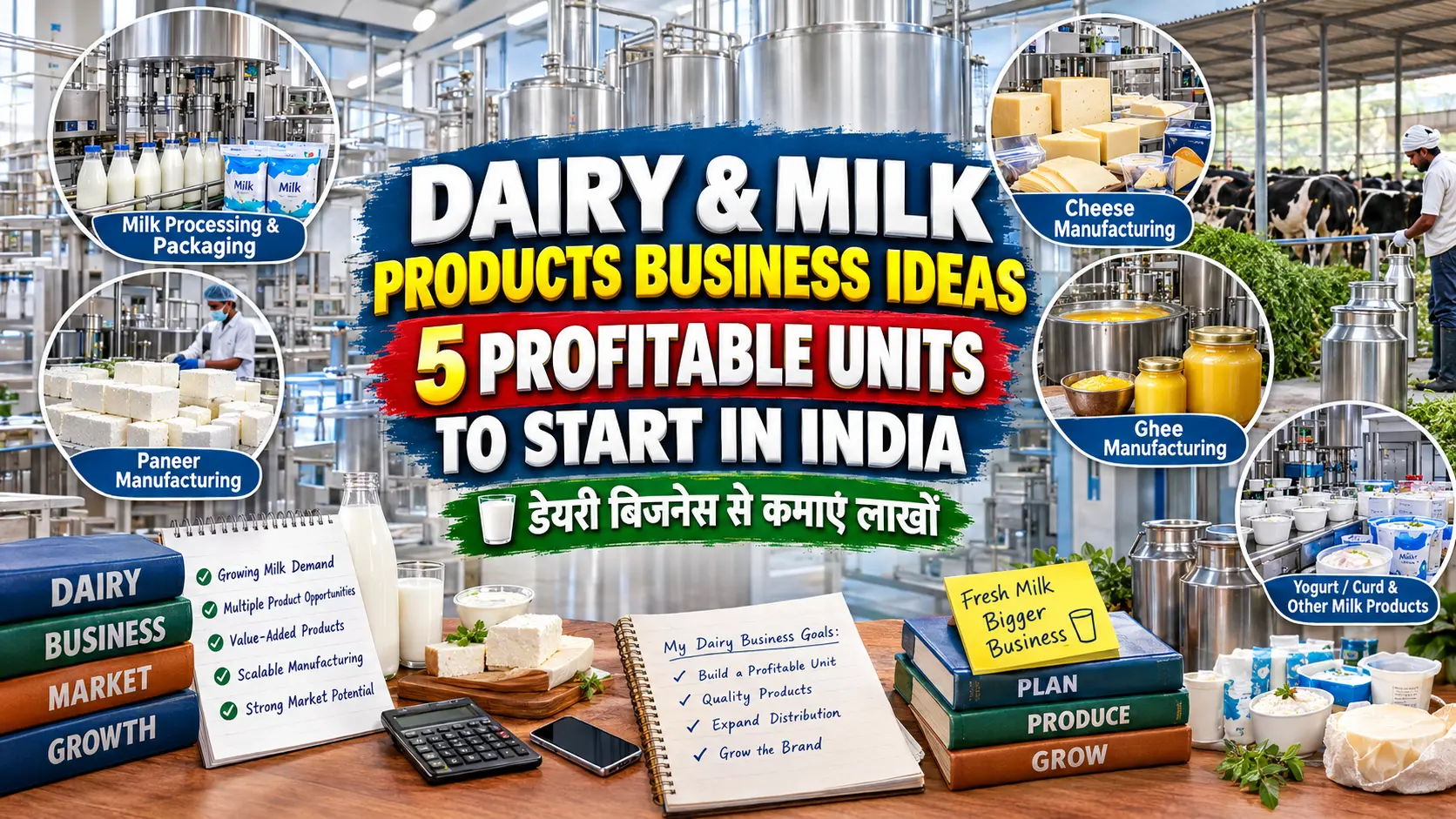
8. Dairy Product Diversification
In addition to raw milk sales, processing it into value-added products increases margins:
Paneer
Ghee
Yogurt
Processed Cheese
Lassi and Butter
Small-scale dairy processing units with pasteurizers and packaging lines can significantly boost profits and ensure shelf-stable products.
Cost Estimation for a 20-Cow Dairy Farm
Below is a rough cost structure for a medium-sized dairy farming to produce milk and cattle breeding project:
| Particulars | Amount (INR) |
|---|---|
| 20 High-yielding Cows | ?12,00,000 |
| Cattle Shed Construction | ?4,00,000 |
| Fodder Cultivation & Silage Pit | ?1,50,000 |
| Milking Machine & Equipment | ?2,00,000 |
| Water Supply & Storage | ?50,000 |
| Veterinary Room & First Aid Kit | ?50,000 |
| Transportation & Miscellaneous | ?50,000 |
| Total Investment | ?21,00,000 |
Expected Returns
A healthy cow yields around 10–12 liters of milk daily. Assuming 20 cows:
Daily Milk Yield = 200–240 liters
Monthly Yield = ~6,000–7,200 liters
Monthly Income = ?2,40,000 (at ?35/liter)
Monthly Expenses = ?1,30,000–?1,50,000
Net Profit = ?80,000–?1,10,000
Profits increase with milk processing, biogas use, and sale of manure or calves.
Government Schemes and Loans
The Indian government offers multiple schemes to support dairy entrepreneurs:
Dairy Entrepreneurship Development Scheme (DEDS)
National Livestock Mission (NLM)
PM Kusum for biogas energy integration
NABARD dairy loans with subsidies of 25–33%
Animal Husbandry Infrastructure Development Fund (AHIDF)
You can apply through nationalized banks or cooperative societies with a proper business plan and DPR.
Licensing and Compliance
To start a dairy farm, you’ll need:
Animal health certificate
FSSAI license for processed milk products
GST registration
Pollution Control Board NOC
Farm registration with local authorities
Proper documentation helps in grant approvals and ensures regulatory compliance.
Marketing of Milk and Dairy Products
You can sell directly to:
Local households via delivery networks
Cooperative societies like Amul, Mother Dairy
Hotels, restaurants, and cafes
Supermarkets and retail outlets
Online platforms or mobile apps
Branding your dairy with a unique logo, quality assurance, and eco-friendly packaging gives a competitive edge.
Sustainability Practices in Dairy Farming
To make your dairy venture more sustainable:
Use solar panels for lighting
Recycle water from cleaning operations
Grow your own fodder using drip irrigation
Implement rainwater harvesting
Adopt zero-waste principles using cow dung/urine
These measures reduce costs and align with environmental goals.
See More – Industrial Alcohols Production
Conclusion
Starting a business in dairy farming to produce milk and cattle breeding is a smart move for rural entrepreneurs, agriculture graduates, and even urban investors seeking long-term returns. With modern techniques, government incentives, and rising market demand, this sector offers assured profits and scope for expansion.
By focusing on animal health, proper infrastructure, and innovative milk processing, you can build a sustainable dairy business that supports rural employment, nutritional needs, and economic development.