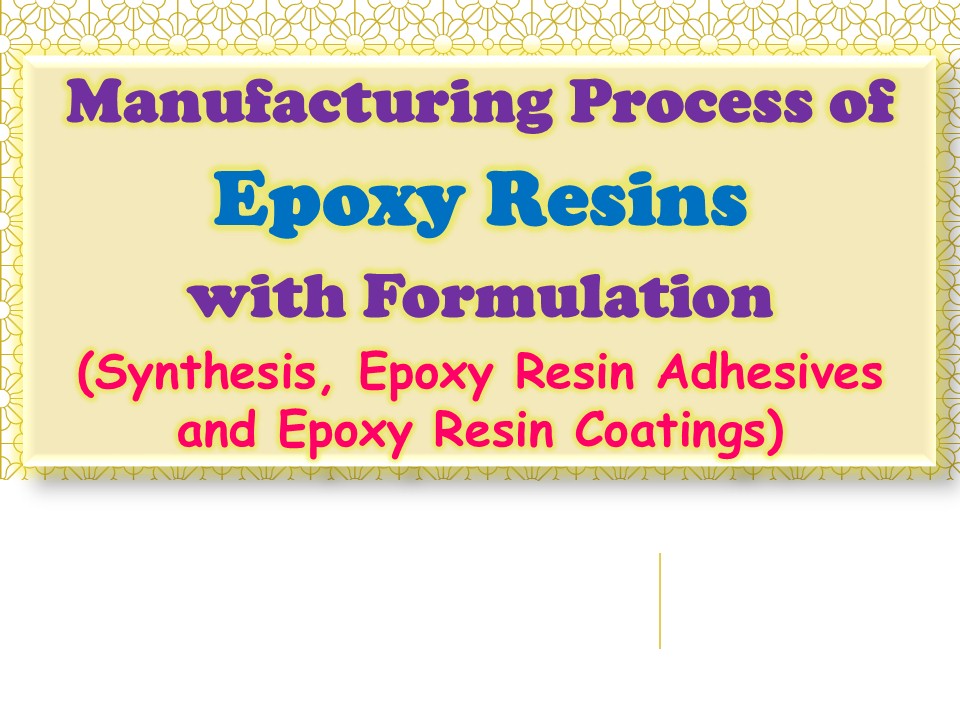
Epoxy resins play a critical role in the global chemical and construction sectors. Known for their exceptional strength, durability, and chemical resistance, these thermosetting polymers are widely used in adhesives, coatings, electronics, and structural applications. The Epoxy Resin Manufacturing Process is a vital industrial activity, offering opportunities for both large-scale producers and small-scale entrepreneurs.
Below is a complete guide that explains the process, types, applications, and market potential of epoxy resins, especially in the context of adhesives and coatings.
Understanding the Epoxy Resin Manufacturing Process
The Epoxy Resin Manufacturing Process starts with the reaction of epichlorohydrin and bisphenol-A, two major organic compounds. This reaction occurs in the presence of a strong base, typically sodium hydroxide, under control temperature and pressure conditions. The result is a glycidyl ether resin that contains reactive epoxy groups.
This resin is then process further by purification and quality testing before being used. While basic chemistry remains constant, variations in molecular weight and curing agents produce different resin grades. Some may offer high flexibility, while others provide thermal stability or electrical insulation.
See Also –Citrus Oil Extraction
In some cases, additives are blend during production to enhance specific properties like UV resistance, water repellency, or flame retardance. These modifications allow manufacturers to tailor epoxy resins for diverse end-user needs.
Raw Materials Required
For the Epoxy Resin Manufacturing Process, the main raw materials are:
Epichlorohydrin: An organochlorine compound that serves as a base reactant.
Bisphenol-A (BPA): An industrial chemical that determines the resin’s strength.
Sodium Hydroxide: A catalyst that initiates the chemical reaction.
Curing Agents: Amines, anhydrides, or polyamides used to harden the resin.
Solvents and Additives: Added based on the required end-use features.
All ingredients should meet quality standards, as impurities can reduce shelf life or structural integrity.
Types of Epoxy Resins
The types of epoxy resins produced through the Epoxy Resin Manufacturing Process include:
Liquid Epoxy Resins: These are most common and are suitable for coatings, adhesives, and flooring.
Solid Epoxy Resins: These are used in powder coatings and electrical laminates.
Solvent-Cut Epoxy Resins: Used when lower viscosity is needed for application.
Waterborne Epoxy Resins: Ideal for eco-friendly applications due to low VOC emissions.
Novolac Epoxy Resins: Offer high chemical and thermal resistance.
Each category serves different industries and is produced by tweaking the formulation.
Applications in Adhesives & Coatings
The Epoxy Resin Manufacturing Process has a strong link to the adhesives and coatings sector. These applications account for nearly 60% of global epoxy resin usage.
Adhesives
Epoxy adhesives form high-strength bonds between metals, plastics, ceramics, and composites. They are used in:
Aerospace and Automotive industries for structural bonding
Consumer Goods like appliances and electronics
Construction for anchoring bolts, beams, and tiles
They provide excellent resistance to chemicals and heat, which makes them preferable over traditional glues.
Coatings
Epoxy coatings offer a protective finish that enhances durability. They are widely applied in:
Industrial Flooring: Factories and garages benefit from abrasion-resistant epoxy floors.
Marine & Automotive Coatings: Offer protection against moisture and corrosion.
Pipe Linings and Tanks: Prevent leakage and improve hygiene in storage tanks.
Special formulations ensure that coatings adhere well and cure within desired timeframes.
Equipment Required for Manufacturing
The equipment involved in the Epoxy Resin Manufacturing Process includes:
Reactors: For controlled chemical synthesis
Mixing Tanks: For blending resins and additives
Cooling Systems: Maintain safe operational temperature
Filtration Units: Remove impurities before packaging
Storage Containers: Maintain quality and prevent contamination
Safety Gear: For operator protection against toxic fumes or spills
Automation has been adopted in large units to ensure consistency, but smaller units can use semi-automatic systems as well.
Quality Control & Testing
Quality testing is an essential part of the Epoxy Resin Manufacturing Process. Some key parameters tested include:
Viscosity and Reactivity
Epoxy Equivalent Weight (EEW)
Curing Time
Thermal Resistance
Mechanical Strength
ISO-certified labs or in-house quality units conduct tests to match client specifications. Poor-quality batches are discarded or reprocessed to maintain brand trust.
Market Potential and Industry Scope
India and Southeast Asia are experiencing growing demand for epoxy products. This rise is driven by urban development, infrastructure growth, electronics manufacturing, and automotive innovation. Therefore, the Epoxy Resin Manufacturing Process opens doors for investment.
According to market surveys, the global epoxy resin market is expected to cross USD 13 billion by 2030. Small-scale units with strategic tie-ups can serve local construction firms and OEMs. Export potential also exists, especially for specialty resins.
Subsidies, startup schemes, and government incentives for Make-in-India further boost the sector’s appeal.
Environmental and Safety Considerations
Care must be taken while handling raw materials like epichlorohydrin and curing agents, as they may release fumes or cause skin irritation. Ventilation, protective gear, and emergency protocols should be implement.
Eco-friendly resins and water-based systems are gaining traction. Investing in greener processes also helps manufacturers comply with international environmental norms. Waste should be treated before disposal, and carbon footprint reduction strategies must be considered.
Business Setup & Licensing Requirements
To start a manufacturing unit, these basic steps are followed:
Business Registration: As an LLP, private limited company, or proprietorship.
Factory License and MSME Udyam Registration
Pollution Control Certificate
GST Number and PAN
Fire Safety Certificate
Import/Export License (if required)
Capital investment varies base on plant capacity. A small-scale unit needs around ?25–?50 lakhs. For large-scale operations, the budget may exceed ?1 crore, especially with advance machinery and testing labs.
Cost Breakdown
The approximate cost structure for a basic Epoxy Resin Manufacturing Process unit may include:
Raw Materials: ?10–15 lakhs/month
Machinery: ?20–30 lakhs (one-time)
Labor and Utilities: ?2–5 lakhs/month
Testing and Packaging: ?1–2 lakhs/month
Licensing and Miscellaneous: ?3–5 lakhs (initial setup)
ROI depends on plant efficiency, market access, and product quality. With steady demand, breakeven can be achieved in 2–3 years.
See Also – AAC Blocks Manufacturing
Final Thoughts
The Epoxy Resin Manufacturing Process plays a vital role in modern industry. It enables strong, long-lasting adhesives and protective coatings used across multiple sectors. Demand continues to rise due to technological growth and infrastructure expansion.
For entrepreneurs, this sector presents long-term opportunity with manageable investment and high scalability. By ensuring safety, product quality, and compliance, a sustainable and profitable venture can be built in the chemical manufacturing space.
Let your manufacturing journey begin with a smart plan and long-term vision. The future of epoxy is bright, and your enterprise can be part of that growth.
Frequently Asked Questions (FAQs)
FAQ 1: What is the epoxy resin manufacturing process?
The epoxy resin manufacturing process involves the reaction of epichlorohydrin and bisphenol-A (BPA) in the presence of a strong base like sodium hydroxide. This reaction produces a glycidyl ether resin containing reactive epoxy groups, which is then purified and quality-tested.
Key Steps:
Raw material preparation (epichlorohydrin + bisphenol-A)
Chemical reaction under controlled temperature and pressure
Addition of sodium hydroxide as a catalyst
Purification and filtration
Quality testing (viscosity, reactivity, epoxy equivalent weight)
Packaging and storage
Variations in molecular weight and curing agents produce different resin grades for various applications.
FAQ 2: What is the minimum investment required for epoxy resin manufacturing?
The investment for epoxy resin manufacturing depends on the scale:
| Scale | Estimated Investment |
|---|---|
| Small-Scale Unit | ₹25 – 50 lakhs |
| Medium-Scale Unit | ₹50 lakhs – 1 crore |
| Large-Scale Unit | ₹1 crore and above |
Key Cost Components:
| Expense Category | Estimated Cost (₹) |
|---|---|
| Machinery (reactors, mixing tanks, filtration) | 20 – 30 lakhs |
| Raw materials (epichlorohydrin, BPA, NaOH) | 10 – 15 lakhs/month |
| Labor and utilities | 2 – 5 lakhs/month |
| Testing and packaging | 1 – 2 lakhs/month |
| Licensing and initial setup | 3 – 5 lakhs |
Government schemes like MSME subsidies and Make in India incentives can help reduce the initial burden.
FAQ 3: What are the different types of epoxy resins produced?
Through the epoxy resin manufacturing process, several types of resins are produced:
| Type | Applications |
|---|---|
| Liquid Epoxy Resins | Coatings, adhesives, flooring |
| Solid Epoxy Resins | Powder coatings, electrical laminates |
| Solvent-Cut Epoxy Resins | Applications requiring lower viscosity |
| Waterborne Epoxy Resins | Eco-friendly, low VOC emissions |
| Novolac Epoxy Resins | High chemical and thermal resistance |
Each type is produced by adjusting formulation parameters for specific end-use requirements.
FAQ 4: What raw materials are required for epoxy resin manufacturing?
The main raw materials for the epoxy resin manufacturing process include:
| Raw Material | Purpose |
|---|---|
| Epichlorohydrin | Base reactant for epoxy formation |
| Bisphenol-A (BPA) | Determines resin strength and properties |
| Sodium Hydroxide | Catalyst for the chemical reaction |
| Curing Agents | Amines, anhydrides, or polyamides for hardening |
| Solvents | For viscosity adjustment |
| Additives | UV resistance, flame retardance, flexibility |
All ingredients must meet quality standards to ensure product integrity and shelf life.
FAQ 5: What equipment is required for epoxy resin manufacturing?
A epoxy resin manufacturing plant requires the following equipment:
| Equipment | Purpose |
|---|---|
| Reactors | Controlled chemical synthesis |
| Mixing Tanks | Blending resins and additives |
| Cooling Systems | Temperature control during reaction |
| Filtration Units | Removing impurities before packaging |
| Storage Containers | Maintaining quality and preventing contamination |
| Testing Laboratory | Quality control (viscosity, EEW, curing time) |
| Safety Equipment | PPE, ventilation for operator protection |
Large units use automation for consistency, while smaller units can use semi-automatic systems.
FAQ 6: What are the applications of epoxy resins?
Epoxy resins produced through the epoxy resin manufacturing process have diverse applications:
| Sector | Applications |
|---|---|
| Adhesives | Aerospace, automotive, construction, electronics |
| Coatings | Industrial flooring, marine, automotive, pipe linings |
| Electronics | Encapsulation, printed circuit boards |
| Construction | Anchoring bolts, beams, tiles, structural bonding |
| Consumer Goods | Appliances, sporting goods, furniture |
Adhesives and coatings account for nearly 60% of global epoxy resin usage.
FAQ 7: What quality control tests are performed?
Quality testing in the epoxy resin manufacturing process includes:
| Test | Purpose |
|---|---|
| Viscosity | Flow characteristics |
| Epoxy Equivalent Weight (EEW) | Reactivity measurement |
| Curing Time | Hardening speed |
| Thermal Resistance | Heat tolerance |
| Mechanical Strength | Adhesion and bonding strength |
ISO-certified labs conduct tests to match client specifications. Poor-quality batches are discarded or reprocessed.
FAQ 8: What certifications and licenses are required?
To operate an epoxy resin manufacturing plant, you need:
| License/Certification | Purpose |
|---|---|
| Company Registration | Legal entity (LLP, Pvt Ltd, Proprietorship) |
| MSME/Udyam Registration | Access to subsidies |
| Pollution Control Certificate | Environmental compliance |
| Factory License | Compliance with Factories Act |
| GST Registration | Tax compliance |
| Fire Safety Certificate | Safety compliance |
| ISO Certification | Quality assurance |
| Import/Export License | For international trade |
Proper documentation ensures compliance and builds trust among buyers.
FAQ 9: How profitable is the epoxy resin manufacturing business?
The epoxy resin manufacturing business offers attractive profitability:
| Financial Metric | Value |
|---|---|
| Global Market Size (2030) | USD 13 billion+ |
| Profit Margins | 20 – 30% |
| Break-even Period | 2 – 3 years |
Key Profitability Drivers:
Growing demand from construction, automotive, and electronics
Infrastructure development in India and Southeast Asia
Export potential for specialty resins
Make in India incentives
With steady demand, this business delivers sustainable returns.
FAQ 10: What are the challenges in epoxy resin manufacturing?
| Challenge | Solution |
|---|---|
| Raw Material Price Fluctuations | Bulk contracts, diversified suppliers |
| Chemical Safety Risks | Ventilation, PPE, safety protocols |
| Environmental Regulations | Eco-friendly processes, waste treatment |
| Quality Consistency | Standardized procedures, ISO certification |
| Competition | Focus on specialty products, branding |
| High Initial Investment | Government subsidies, MSME schemes |
Proper planning, safety measures, and quality assurance can mitigate these risks.
FAQ 11: What is the future growth potential for epoxy resins?
The epoxy resin manufacturing industry has strong growth potential:
| Growth Driver | Impact |
|---|---|
| Infrastructure Development | Rising demand for construction adhesives and coatings |
| Automotive Innovation | Lightweight composites and structural bonding |
| Electronics Growth | Encapsulation and PCB applications |
| Green Manufacturing | Waterborne and eco-friendly resins |
| Export Opportunities | Global demand for specialty resins |
| Make in India Initiative | Government support for chemical manufacturing |
The global epoxy resin market is expected to cross USD 13 billion by 2030.
FAQ 12: Can I start epoxy resin manufacturing with government support?
Yes, the Indian government offers several schemes:
| Scheme | Benefit |
|---|---|
| MSME/Udyam Registration | Access to subsidies and benefits |
| PMEGP | Financial assistance for micro-enterprises |
| MUDRA Loans | Loans for small businesses |
| Make in India | Policy support and investment facilitation |
| State-Level Subsidies | Power subsidies, land benefits, tax exemptions |
| Chemical Industry Support | Special incentives for chemical manufacturing |
Applying for these schemes can significantly reduce the initial financial burden.
FAQ 13: What are the export opportunities for epoxy resins?
India has significant export potential for epoxy resins:
| Target Market | Demand |
|---|---|
| Southeast Asia | Growing construction and electronics sectors |
| Middle East | Infrastructure and oil & gas applications |
| Europe | High-quality specialty resins |
| Africa | Emerging construction markets |
| USA & Canada | Diverse industrial applications |
Requirements for Export:
Import Export Code (IEC) from DGFT
REACH compliance for Europe
ISO certification
FAQ 14: What are the environmental considerations in epoxy resin manufacturing?
Environmental practices in epoxy resin manufacturing include:
| Practice | Benefit |
|---|---|
| Waterborne Resins | Low VOC emissions |
| Eco-Friendly Additives | Reduced environmental impact |
| Waste Treatment | Safe disposal of by-products |
| Carbon Footprint Reduction | Energy-efficient processes |
| Recycling | Waste minimization |
Investing in greener processes helps comply with international environmental norms.
FAQ 15: Why should I invest in epoxy resin manufacturing?
| Reason | Benefit |
|---|---|
| Growing Demand | Construction, automotive, electronics sectors |
| High Profit Margins | 20-30% gross margins |
| Scalable Operations | Can start small and expand |
| Government Support | MSME subsidies, Make in India |
| Export Potential | Global demand for specialty resins |
| Essential Product | Critical for multiple industries |
| Diverse Applications | Adhesives, coatings, electronics, construction |
With proper planning, quality control, and strategic marketing, epoxy resin manufacturing can become a highly profitable and sustainable venture.
Ready to Start Your Epoxy Resin Manufacturing Plant?
The epoxy resin industry is booming, driven by infrastructure development, automotive innovation, and electronics growth. With the global market projected to exceed USD 13 billion by 2030, there has never been a better time to enter this high-potential sector.
At NPCS (NIIR Project Consultancy Services), we specialize in providing end-to-end project consultancy services:
✅ Detailed Project Reports – Comprehensive feasibility studies, market analysis, and financial projections
✅ Technology & Machinery Selection – Guidance on reactors, mixing tanks, and quality testing equipment
✅ Plant Setup Support – End-to-end assistance from land acquisition to commissioning
✅ Regulatory Compliance – Expert advice on licensing, safety, and quality certifications
✅ Market Intelligence – Insights into demand trends, pricing, and export opportunities
Take the first step toward building a profitable and sustainable epoxy resin manufacturing plant today!
📞 Call us now for a personalized consultation
📧 Email us to request a detailed project report
🌐 Visit our website to explore more business opportunities