
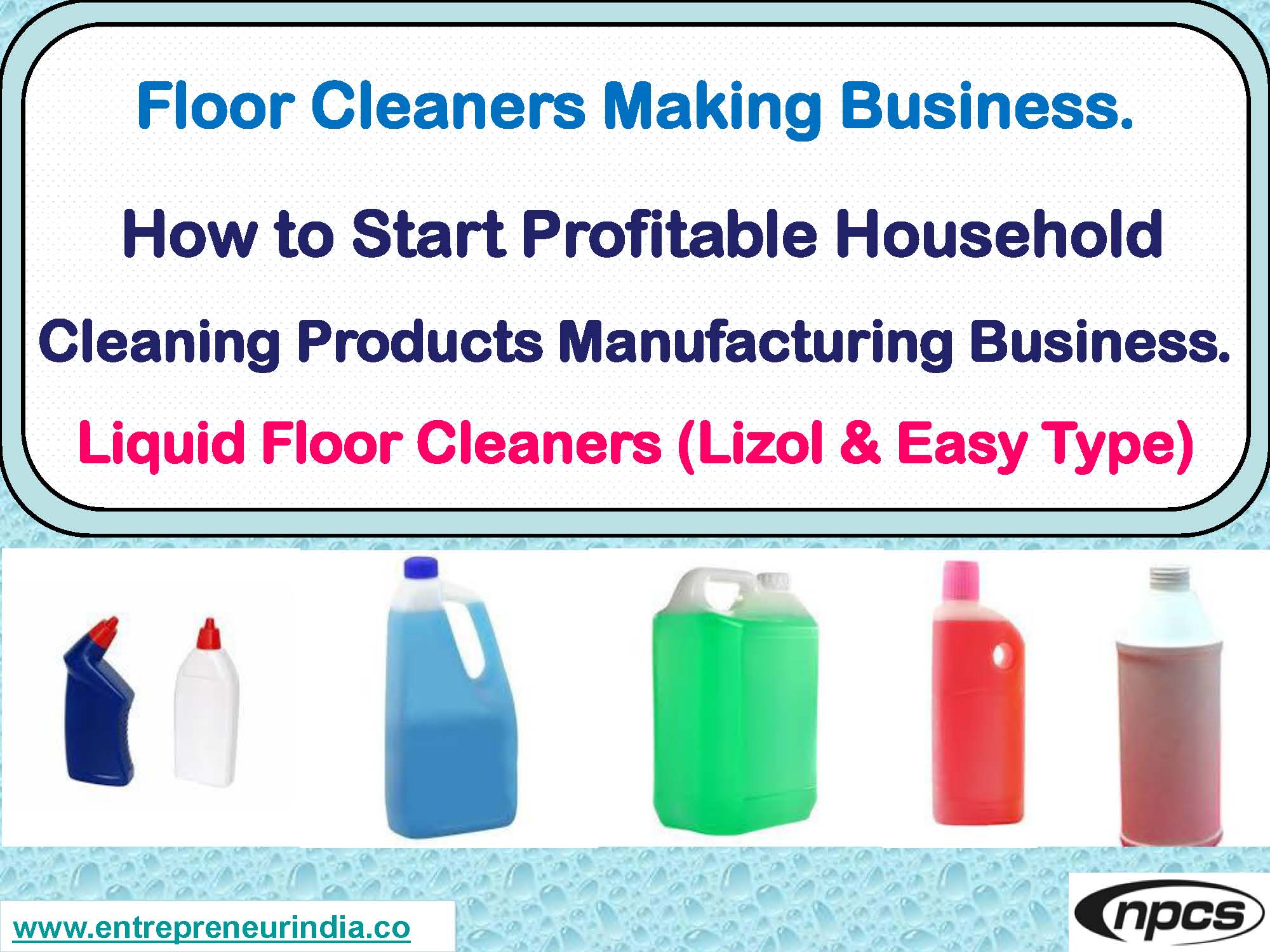
Starting a How to Start Household Cleaning Products Manufacturing Business is a smart and timely venture. With growing awareness around hygiene and cleanliness, demand for products like floor cleaners, toilet cleaners, glass cleaners, dishwashing liquids, and disinfectants has skyrocketed in both urban and rural areas. This business offers excellent growth potential with moderate investment, and it aligns well with evolving consumer habits and increased health consciousness. Moreover, with the right strategy, branding, and quality control, entrepreneurs can tap into both domestic and institutional markets effectively.
Household Cleaning Products Manufacturing Business
The household cleaning products manufacturing business involves the formulation, production, and packaging of a variety of surface and fabric cleaning solutions. These products are used daily in homes, offices, hospitals, schools, and hotels. Due to the shift toward health-focused living post-pandemic, consumers are now more selective about hygiene and cleanliness standards, thereby creating consistent demand for reliable cleaning brands.
Market Potential and Industry Trends
The Indian home care market is growing at a CAGR of over 9%, expected to reach ?65,000 crore by 2026. The household cleaning segment contributes significantly to this growth. Increasing disposable incomes, rising urbanization, and awareness campaigns about hygiene are driving sales of both branded and affordable local products.
Furthermore, eco-friendly and herbal cleaning products are becoming popular among health-conscious consumers. This opens opportunities for niche players in the household cleaning products manufacturing business who can focus on green or organic formulations.
Also Read – Investment Opportunity in Edible Oil Manufacturing Unit
Types of Household Cleaning Products You Can Manufacture
You can start by manufacturing a few essential products and gradually expand your range. Common cleaning products include:
1. Floor Cleaners
Liquid-based, scented or unscented, floor cleaners are widely used for mopping and disinfecting floors.
2. Toilet Bowl Cleaners
Acid-based products that clean and sanitize toilet bowls. Packaging often includes angled-neck bottles for easy use.
3. Dishwashing Liquid
Gentle on hands, but effective in removing grease and oil from utensils. Available in refill packs or bottles.
4. Glass and Surface Cleaners
Ammonia-based or alcohol-based sprays used for cleaning glass, mirrors, and stainless steel surfaces.
5. Multipurpose Disinfectants
These products serve a dual purpose—cleaning and disinfecting surfaces such as kitchen slabs, furniture, and sinks.
Depending on your target market and capacity, you can also manufacture laundry detergents, hand wash, or room fresheners.
Manufacturing Process
The production of cleaning products involves formulation, blending, and packaging. Here’s a basic overview of the process:
1. Formulation and Mixing
Raw chemicals like surfactants, acids, solvents, thickeners, and fragrances are measured and mixed in a blending tank. The formula varies based on the type of product being manufactured.
2. Quality Testing
The mixture is tested for pH level, viscosity, effectiveness, and safety. If required, preservatives or colorants are added.
3. Filling and Packaging
The finished solution is filled into bottles or pouches using filling machines. These are then sealed, labeled, and packed in cartons for distribution.
Proper hygiene, quality checks, and consistency in production are key to building a trustworthy brand in this space.
Required Machinery and Equipment
Starting a household cleaning products manufacturing business requires some basic but essential machinery. These include:
Mixing and blending tanks (stainless steel or plastic)
Storage tanks for raw materials and finished products
Liquid filling machines (manual/semi-automatic/automatic)
Capping and sealing machines
Labeling machines
Water purification units (for demineralized water)
Packaging machines (shrink wrapping, pouch sealing)
For small-scale units, semi-automatic machines are cost-effective and sufficient.
Investment and Cost Analysis
The total investment depends on your production scale, location, and whether you plan to launch your own brand. Here’s a general estimate for a small to medium-scale unit:
| Expense Category | Estimated Cost (INR) |
|---|---|
| Machinery & Equipment | ?5 – ?10 lakh |
| Raw Materials (initial stock) | ?3 – ?5 lakh |
| Bottles, Labels & Packaging | ?2 – ?4 lakh |
| Land/Rent & Infrastructure | ?5 – ?10 lakh |
| Licenses & Certifications | ?1 – ?2 lakh |
| Marketing & Branding | ?2 – ?3 lakh |
| Total Estimated Investment | ?18 – ?30 lakh |
If you opt for contract manufacturing, your capital investment can be significantly reduced.
Raw Materials Used
Some commonly used raw materials include:
Sodium Lauryl Sulfate (SLS)
Sodium Hydroxide (NaOH)
Hydrochloric Acid (HCL) or Sulfamic Acid
Isopropyl Alcohol or Ethanol
Fragrances and Colorants
Essential Oils (optional)
Water (preferably demineralized)
Make sure to source chemicals from certified suppliers and comply with safety regulations while handling them.
Licensing and Compliance
To legally operate your household cleaning products manufacturing business, you’ll need the following approvals:
MSME/Udyam Registration
Factory License
GST Registration
Pollution Control Board NOC
BIS Certification (optional but adds credibility)
Drug License (if using disinfectants or alcohol-based formulas)
Trademark Registration (for brand protection)
Maintaining proper Material Safety Data Sheets (MSDS) and labeling requirements is essential to meet regulatory norms.
Target Market and Distribution
Your cleaning products can be sold through multiple channels:
Retailers and Supermarkets
E-commerce Platforms (Amazon, Flipkart, etc.)
Institutional Buyers (hotels, offices, hospitals)
Wholesale Distributors
Your Own Website and Social Media
To penetrate the market quickly, consider offering bulk purchase discounts or product bundles. Eye-catching packaging and strong branding also help attract customers in a crowded segment.
Profit Margin and ROI
The household cleaning products manufacturing business offers attractive margins due to low production costs and strong demand.
Gross Margin: 40% – 60%
Net Profit Margin: 15% – 30%
Break-even Point: 12 – 18 months
Return on Investment: Within 2 years (on average)
Additionally, as your brand grows and production scales, profit margins improve significantly due to economies of scale.
Sustainability and Innovation
As consumers become more eco-conscious, you can consider producing:
Herbal or plant-based cleaners
Biodegradable packaging
Refill pouch systems to reduce plastic waste
These innovations not only reduce environmental impact but also appeal to premium and health-focused customers.
Also Read – Profitable Manufacturing & Processing Business Ideas in Haryana
Conclusion
The household cleaning products manufacturing business is a low-risk, high-reward opportunity in today’s hygiene-driven world. With consistent demand, relatively low entry barriers, and scalability, it’s an excellent choice for entrepreneurs looking to start a sustainable and profitable venture. Whether you start with basic floor and toilet cleaners or explore organic and premium options, this industry offers flexibility and strong growth potential.
Would you like help with a business plan, equipment list, or marketing strategy? I’m here to support your journey from idea to execution.
References and Useful Government / Institutional Links
The following official government and institutional resources are recommended for further reading and for direct application to the schemes discussed in this article.
- Startup India – Official Portal –https://www.startupindia.gov.in/
- Ministry of Micro, Small & Medium Enterprises (MSME) –https://msme.gov.in/
- Udyam Registration Portal –https://udyamregistration.gov.in/
- Department for Promotion of Industry and Internal Trade (DPIIT) –https://dpiit.gov.in/
- Small Industries Development Bank of India (SIDBI) –https://www.sidbi.in/
- MUDRA / PMMY Official Portal – https://www.mudra.org.in/
- CGTMSE Official Portal –https://www.cgtmse.in/
- Ministry of Micro, Small & Medium Enterprises –https://msme.gov.in/
- JanSamarth Portal (Government Loan Schemes) –https://www.jansamarth.in/
- Niir Project Consultancy Services (NPCS) –https://www.niir.org/