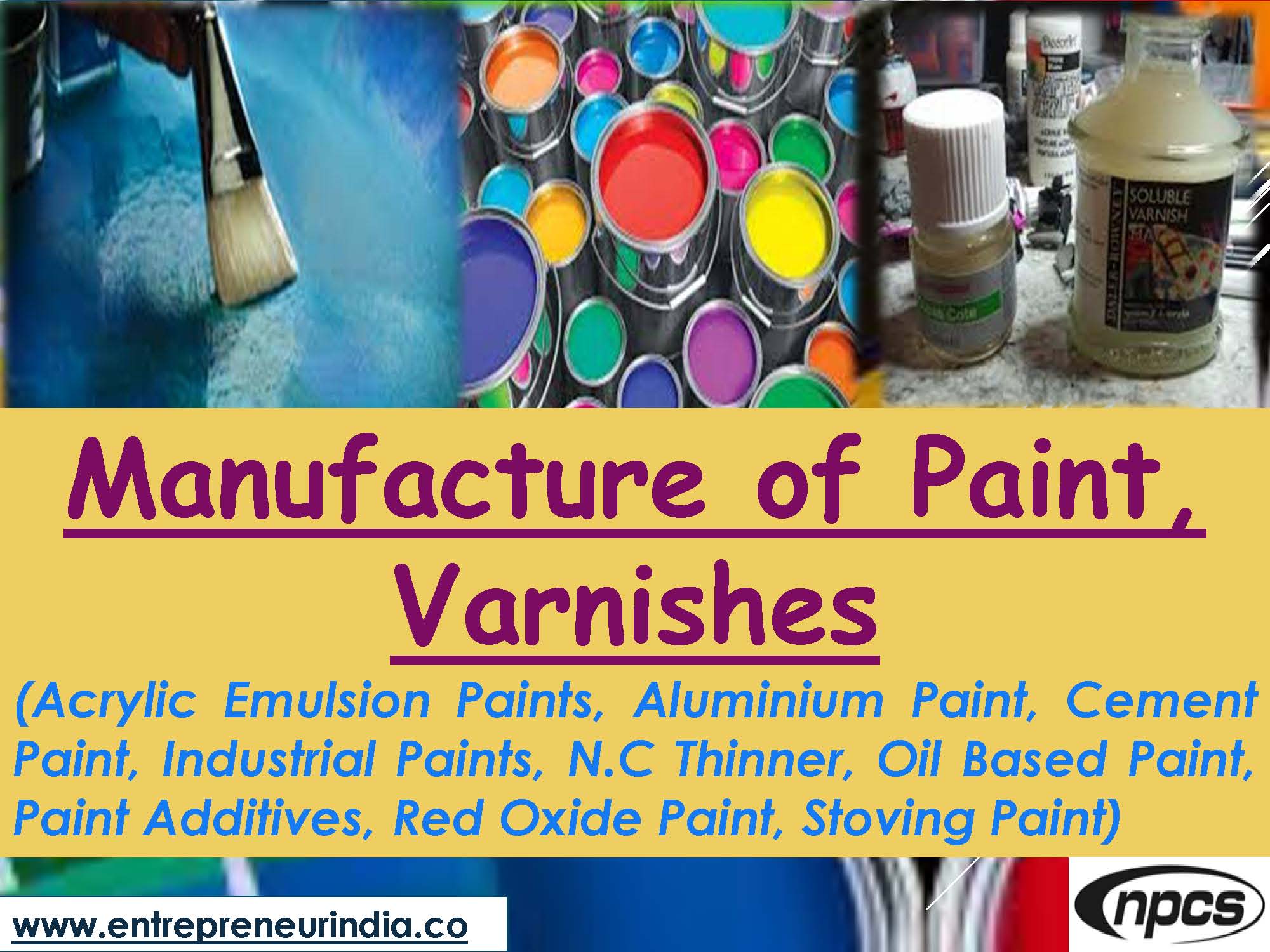
The manufacture-of-paint-varnishes-acrylic-emulsion-paints-aluminium-paint-cement-paint-industrial-paints-n-c-thinner-oil-based-paint-paint-additives-red-oxide-paint-stoving-paint has been widely embraced across multiple industries to meet diverse surface finishing and protective needs. Various paint types have been developed to serve both decorative and functional purposes. As a result, eco-friendlier, longer-lasting, and more efficient coatings have been demanded by modern markets. Over time, technological advancements have led to improved formulations, faster drying times, and greater environmental compliance. Moreover, the inclusion of additives and modifiers has allowed properties like adhesion, gloss, and durability to be enhanced. In the following sections, the manufacturing processes and uses of major paints and varnishes will be outlined.
Manufacturing and Applications of Paints and Varnishes
A variety of raw materials are used in the production of paints and varnishes, including binders, pigments, solvents, and additives. These materials are typically blended through a controlled process to ensure product consistency and performance. The manufacture-of-paint-varnishes-acrylic-emulsion-paints-aluminium-paint-cement-paint-industrial-paints-n-c-thinner-oil-based-paint-paint-additives-red-oxide-paint-stoving-paint is guided by strict industrial standards and environmental regulations.
See Also : Business to Start in Arunachal Pradesh
Acrylic Emulsion Paints
Acrylic emulsion paints are manufactured using water-dispersed acrylic resins, into which pigments and stabilizers are incorporated. These paints are widely used due to their low toxicity and fast drying properties. Moreover, resistance to fungus and weathering has been greatly improved through the addition of specialty additives. Acrylic emulsion paints are typically applied to walls, ceilings, and masonry surfaces. In modern buildings, they are preferred for their environmental safety and ease of cleanup, especially in residential and commercial applications.
Aluminium and Cement Paints
Aluminium paint is prepared by suspending finely ground aluminium flakes in a resin or solvent medium. Once applied, a reflective metallic coating is formed, which offers heat resistance and surface protection. Cement paint, on the other hand, is produced using a blend of white or grey cement, pigments, and waterproofing agents. Exterior walls, facades, and concrete surfaces are often coated with cement paints to enhance durability and visual appeal. Additionally, fungal resistance and breathability are ensured through proper formulation.
Industrial Paints and N.C. Thinner
Industrial paints are specially formulated for high-performance applications, such as factory machinery, pipelines, or structural steel. These paints are manufactured using resins like epoxy, polyurethane, or alkyds. Harsh environmental exposure can be withstood by these coatings, which is why they are chosen for critical settings. N.C. thinner, which stands for nitrocellulose thinner, is blended to reduce paint viscosity and improve sprayability. Its use has been particularly prominent in wood finishing and automobile repairs where fast evaporation is desirable.
Oil-Based Paints and Paint Additives
In oil-based paint manufacturing, linseed oil or alkyd resins are used as binders. Pigments and drying agents are mixed in to provide color and longevity. These paints are generally applied to metal, wood, and masonry surfaces, where a tough, smooth finish is required. Although oil-based paints have been partially replaced by water-based alternatives, their rich finish and durability are still appreciated. To enhance product quality, various paint additives are introduced during production. Anti-settling agents, anti-foaming compounds, and UV stabilizers are added to extend shelf life and improve flow.
Red Oxide and Stoving Paints
Red oxide paint is produced using iron oxide pigment and synthetic binders. It is mostly applied as a primer to protect steel structures from corrosion. In manufacturing facilities, this paint is often used before the application of topcoats. On the other hand, stoving paints are created with special resins that require heat curing. After application, these paints are baked in ovens, where cross-linking reactions result in a hard, chemical-resistant coating. Such paints are often used on automotive parts, electrical appliances, and office furniture. Moreover, a long-lasting and glossy finish is achieved through stoving.
Read More :Bitumen Emulsion
Conclusion
The manufacture-of-paint-varnishes-acrylic-emulsion-paints-aluminium-paint-cement-paint-industrial-paints-n-c-thinner-oil-based-paint-paint-additives-red-oxide-paint-stoving-paint has been revolutionized by advances in formulation technology, environmental awareness, and evolving industrial demands. Paints are now being designed not only for protection and aesthetics but also for environmental responsibility. Over time, water-based systems have been adopted, solvent emissions have been reduced, and performance enhancers have been widely introduced. As a result, the coatings industry continues to grow while shifting toward sustainability and performance. Going forward, greater innovation will be driven by compliance, efficiency, and ecological responsibility.