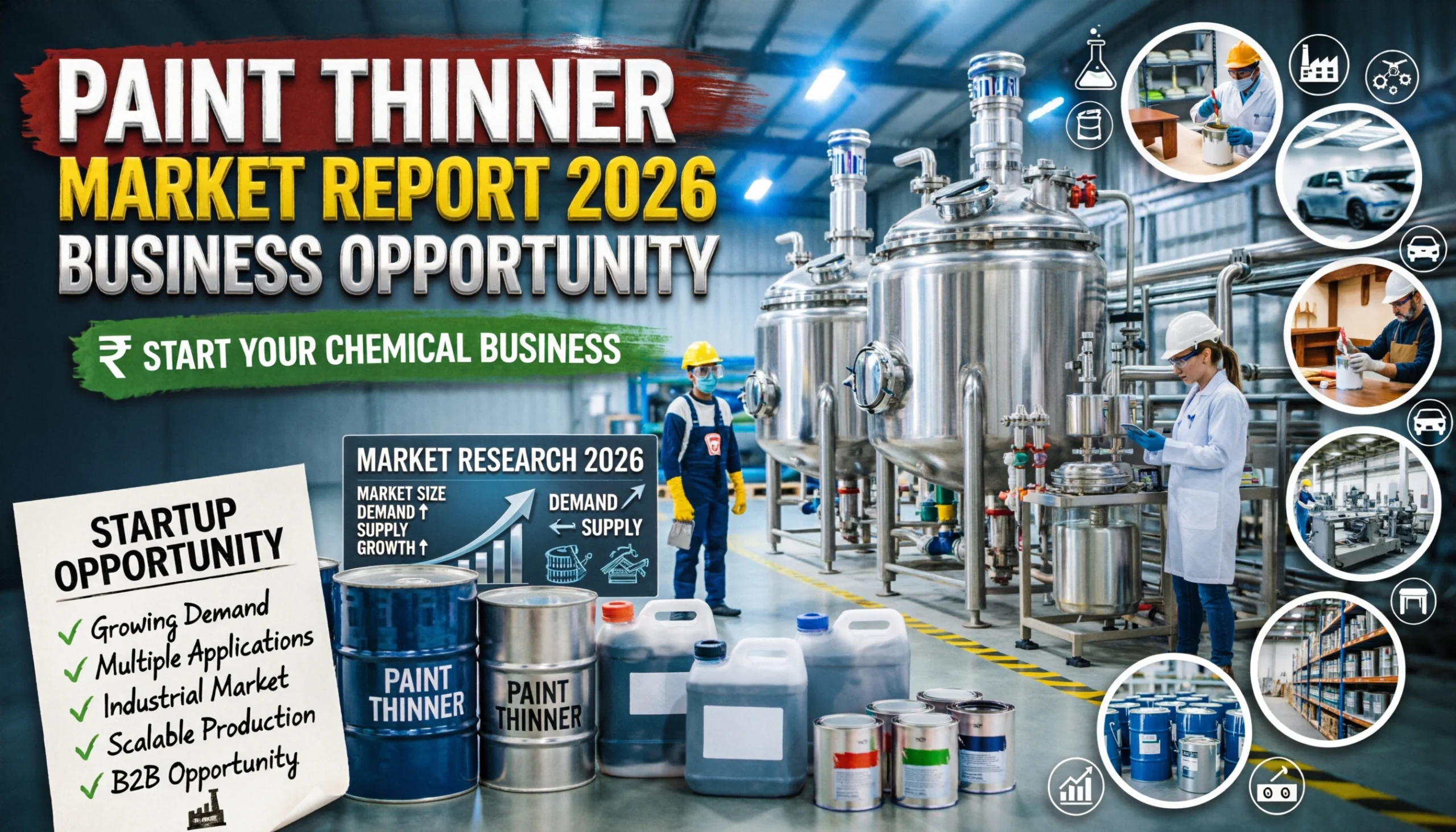
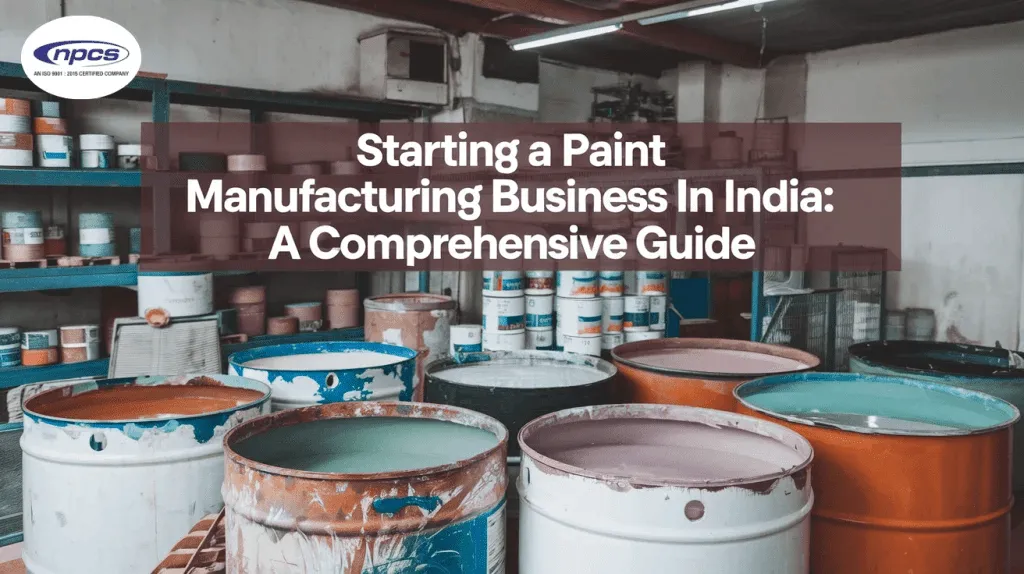

The Indian construction and real estate industry is booming, and with it comes a growing demand for high-quality paints and coatings. With the India Paint Market projected to reach $11.9 billion by 2034 and expanding at a steady CAGR of nearly 9.3% through 2031, there has never been a better time to invest. As infrastructure projects like the 1,000+ km metro network expansion and the “Housing for All” initiative drive volume, small-scale players are finding lucrative niches in eco-friendly and high-performance coatings.
Starting a paint manufacturing business in India presents a lucrative opportunity for entrepreneurs looking to tap into this fast-growing market. With careful planning, strategic sourcing, and regulatory compliance, you can build a profitable and scalable paint manufacturing unit with relatively modest investment.
In this guide, we cover every essential step to help you establish a successful paint production business in India.
Contents
- 0.1. Why Start a Paint Manufacturing Business in India?
- 0.2. Types of Paints You Can Manufacture
- 0.3. Market Research and Feasibility Study
- 0.4. Licenses and Legal Requirements
- 0.5. Investment Required to Start Paint Manufacturing
- 0.6. Essential Equipment for Paint Manufacturing
- 1. Frequently Asked Question
Why Start a Paint Manufacturing Business in India?
India’s paint industry is projected to grow at a CAGR of over 11% in the coming years, fueled by:
Rapid urbanization and infrastructure development
Rising disposable incomes and improved housing standards
Increased preference for decorative and eco-friendly paints
Government schemes like “Housing for All” and “Smart Cities” initiatives
The market is divided into decorative paints (75%) and industrial paints (25%), both offering substantial opportunities for new entrants.
Types of Paints You Can Manufacture
Choosing your product line is critical for defining your investment and operational needs. Common categories include:
Water-based paints (Emulsions, distempers)
Solvent-based paints (Enamels, primers)
Industrial coatings (Epoxy, PU paints)
Textured or designer paints
Eco-friendly or organic paints
Starting with water-based emulsions and distempers is advisable for beginners due to lower toxicity and simpler production.
Market Research and Feasibility Study
Before jumping in, conduct a detailed market analysis:
Identify target regions and customer segments (residential, commercial, industrial)
Analyze competitors in your area—pricing, product range, brand loyalty
Understand seasonal demand cycles (peak season is pre-monsoon and festive months)
Evaluate raw material availability and distribution networks
Platforms like NIIR Project Consultancy Services provide industry-specific project reports, feasibility studies, and supplier directories to help plan your business effectively.
Licenses and Legal Requirements
To operate legally in India, your paint manufacturing business must obtain the following licenses:
Business Registration (as Proprietorship, LLP, or Pvt. Ltd.)
Factory License from State Government
GST Registration
Consent to Establish and Operate from State Pollution Control Board
Trade License from local municipality
Fire Safety Certificate
BIS Certification (optional but recommended for credibility)
Additionally, compliance with Hazardous Waste Management Rules is essential if your process involves flammable solvents or chemicals.
Investment Required to Start Paint Manufacturing
Your initial investment depends on the scale and product category. A small-scale paint manufacturing unit typically requires:
| Expense Head | Estimated Cost (INR) |
|---|---|
| Land/Lease (500–1000 sq. ft.) | ?2,00,000 – ?5,00,000 |
| Machinery & Equipment | ?5,00,000 – ?10,00,000 |
| Raw Materials Inventory | ?2,00,000 – ?5,00,000 |
| Licensing & Compliance | ?1,00,000 – ?2,00,000 |
| Working Capital (3 months) | ?2,00,000 – ?3,00,000 |
| Total Estimated Investment | ?12,00,000 – ?25,00,000 |
Opting for used or semi-automatic machinery can help reduce costs during the initial phase.
Essential Equipment for Paint Manufacturing
Basic equipment required includes:
High-speed dispersers or mixing tanks
Ball mills or sand mills (for pigment dispersion)
Weighing scales
Storage tanks for solvents and emulsions
Filling and packing machines
Quality testing instruments (viscosity, density, pH)
Safety equipment (PPE, fire extinguishers, ventilation systems)
Start small, then upgrade as demand increases.
Raw Materials Needed
The core raw materials used in paint manufacturing business in India include:
Pigments (titanium dioxide, iron oxide, carbon black)
Binders/Resins (acrylic, alkyd, epoxy)
Solvents (mineral turpentine oil, xylene)
Additives (dispersants, thickeners, driers)
Water (for emulsions)
Fillers (calcium carbonate, china clay)
Always purchase from ISO-certified chemical suppliers to ensure product consistency and safety.
Production Process: Step-by-Step Overview
Raw Material Weighing and Charging – Accurately weigh pigments, binders, and solvents.
Mixing and Grinding – Mix materials in dispersers or mills to create a uniform slurry.
Thinning and Tinting – Adjust viscosity, color, and flow properties.
Filtering – Remove impurities or large particles.
Packaging – Fill into pre-labeled cans, pails, or drums.
Storage and Distribution – Store in dry, ventilated warehouses and ship to dealers/distributors.
Staffing Requirements
Start with a small team of 5–10 employees, including:
1–2 chemical technicians
1 production supervisor
2–3 machine operators/helpers
1 packaging assistant
1 administrative/marketing executive
As production scales, hire additional quality control and logistics personnel.
Marketing and Distribution Strategy
To build your brand and customer base:
Develop a distinctive brand name and logo
Create visually appealing packaging
Establish a dealer/distributor network in key cities and towns
Offer starter kits or sample packs to retailers
Promote through local newspapers, wall paintings, and digital ads
Create a basic website and list your brand on eCommerce and B2B portals
Offer training and promotional support to dealers to encourage loyalty.
Sustainability and Safety Practices
Paint manufacturing involves chemicals and waste. Follow these practices:
Install effluent treatment systems
Provide PPE to workers
Store flammable chemicals in fireproof rooms
Conduct regular fire and spill drills
Ensure ventilation and fume extraction systems are functioning
Follow ISO 14001 and OSHA guidelines for environment and workplace safety
Government Support and Subsidies
You may be eligible for:
MSME loan schemes under CGTMSE
Capital subsidy for plant and machinery under various state policies
Technology Upgradation Fund (TUF)
Export assistance under DGFT for overseas markets
Startup India and Make in India incentives
Approach your District Industries Centre (DIC) or consult with a chartered accountant for more guidance.
Future Trends in the Indian Paint Industry
Smart entrepreneurs should stay ahead of industry trends such as:
Rise of eco-friendly and non-toxic paints
Anti-bacterial and dust-resistant paints
Water-repellent and self-cleaning exterior paints
Increased use of automation and AI in manufacturing
Growing demand from Tier-II and Tier-III cities
Aligning your business with these trends will ensure sustained growth and profitability.
Final Thoughts
Starting a paint manufacturing business in India can be highly rewarding if executed with precision, compliance, and smart marketing. The sector promises high margins, expanding demand, and vast product innovation potential. Begin with thorough planning, start lean, and scale smartly as demand grows.
Frequently Asked Question
What types of paints can I manufacture when starting out in India?
You can start with water-based paints like emulsions and distempers, which are simpler and lower-toxicity. You may also later expand to solvent-based enamels/primers, industrial coatings (epoxy, PU), textured/ designer paints, or eco-friendly/organic paints depending on demand and capacity.
What legal licences and approvals are required to start a paint manufacturing business in India?
You need business registration (Proprietorship, LLP or Pvt. Ltd.), GST registration, a factory licence from the state government, trade licence from local municipality, fire-safety certificate, and consent from the state pollution control board to establish and operate.
If you use flammable solvents or handle hazardous chemicals, compliance with hazardous-waste and environmental regulations becomes crucial.
What is the approximate initial investment needed for a small-scale paint manufacturing unit?
For a small-scale unit (say 500–1000 sq ft facility), the typical estimated investment ranges between ?12 lakh and ?25 lakh — covering land/lease, equipment, raw materials, licensing/compliance and working capital.
This cost goes up if you opt for more advanced machinery or produce multiple paint types.
What basic machinery and raw materials are needed to start paint production?
Essential machinery includes high-speed dispersers or mixing tanks, ball mills or sand mills for pigment dispersion, weighing scales, storage tanks, filling and packing machines, and equipment for quality testing (viscosity, density, pH, etc.).
Raw materials typically include pigments (titanium dioxide, iron oxide, etc.), binders or resins (acrylic, alkyd, epoxy etc.), solvents (or water for emulsions), additives (thickeners, dispersants, driers), fillers (calcium carbonate, clay), and water.