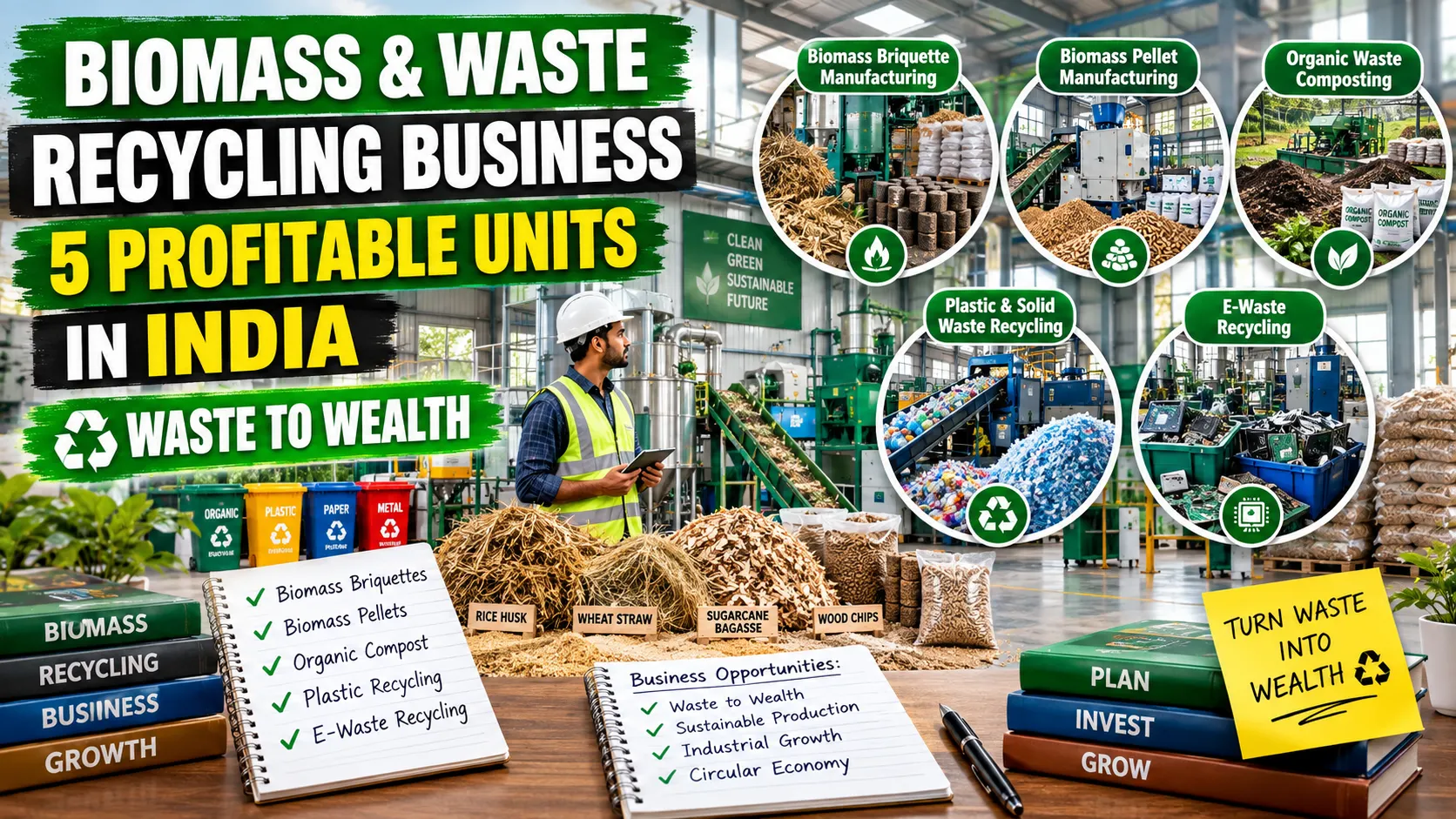
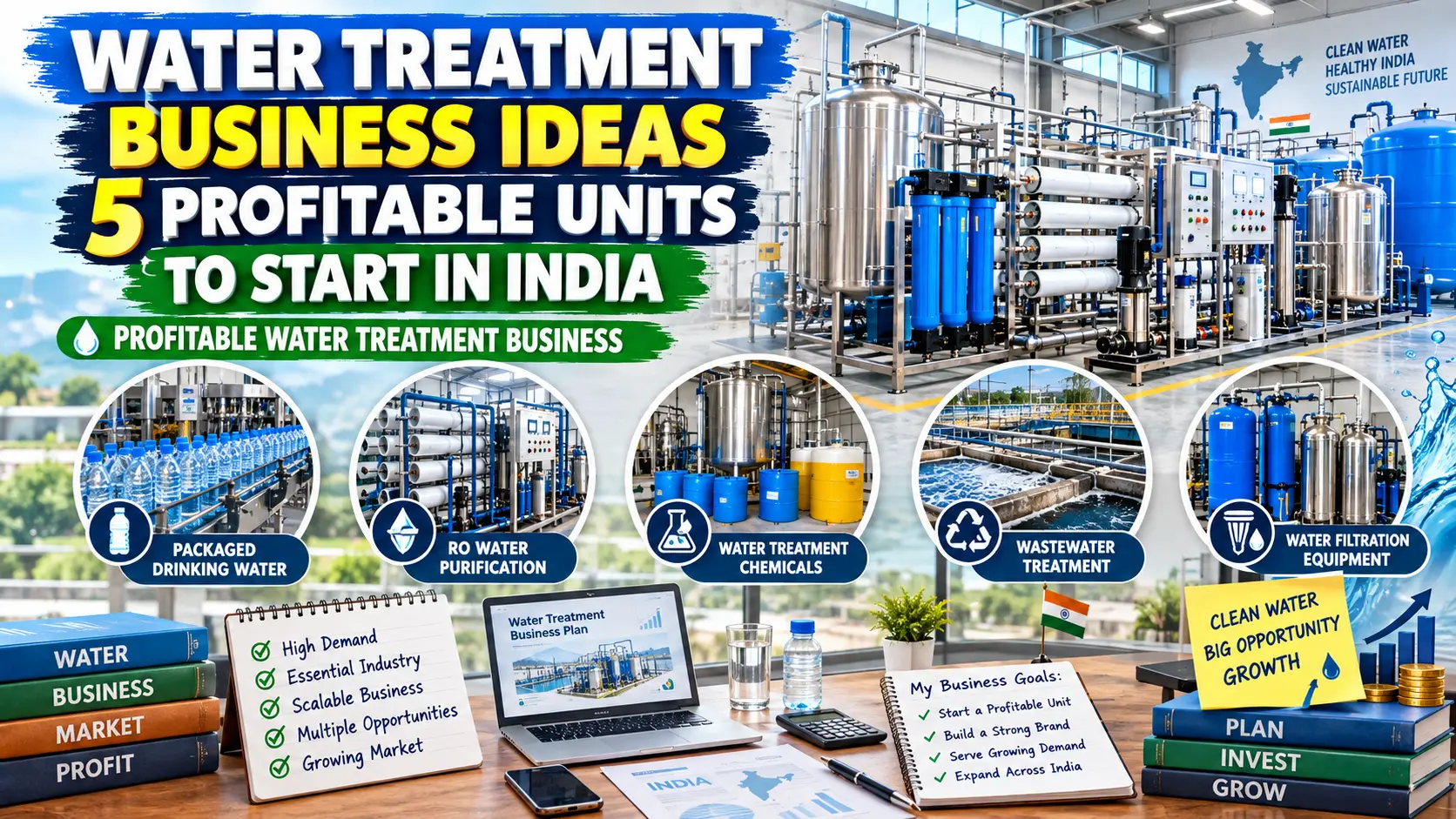
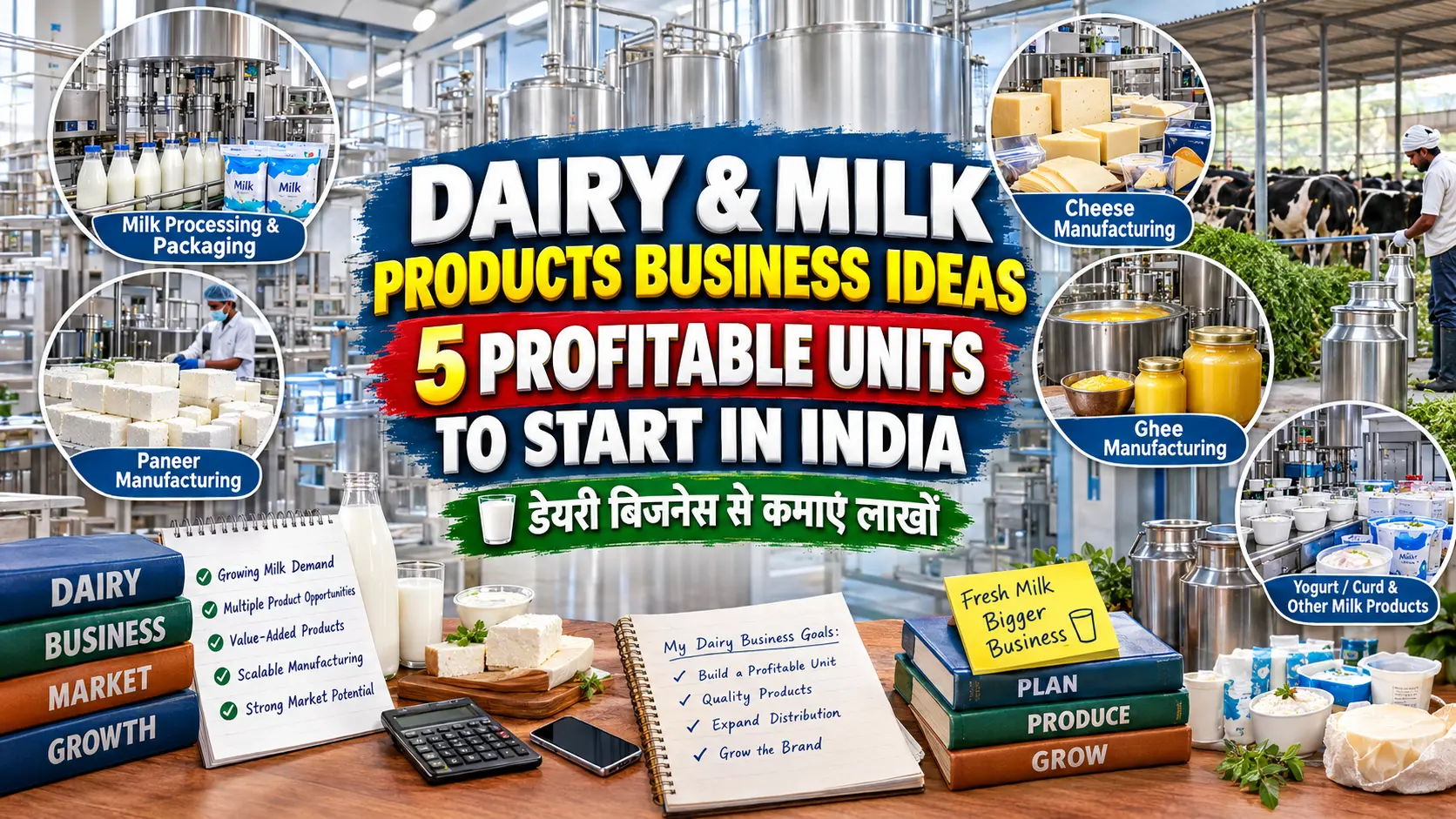
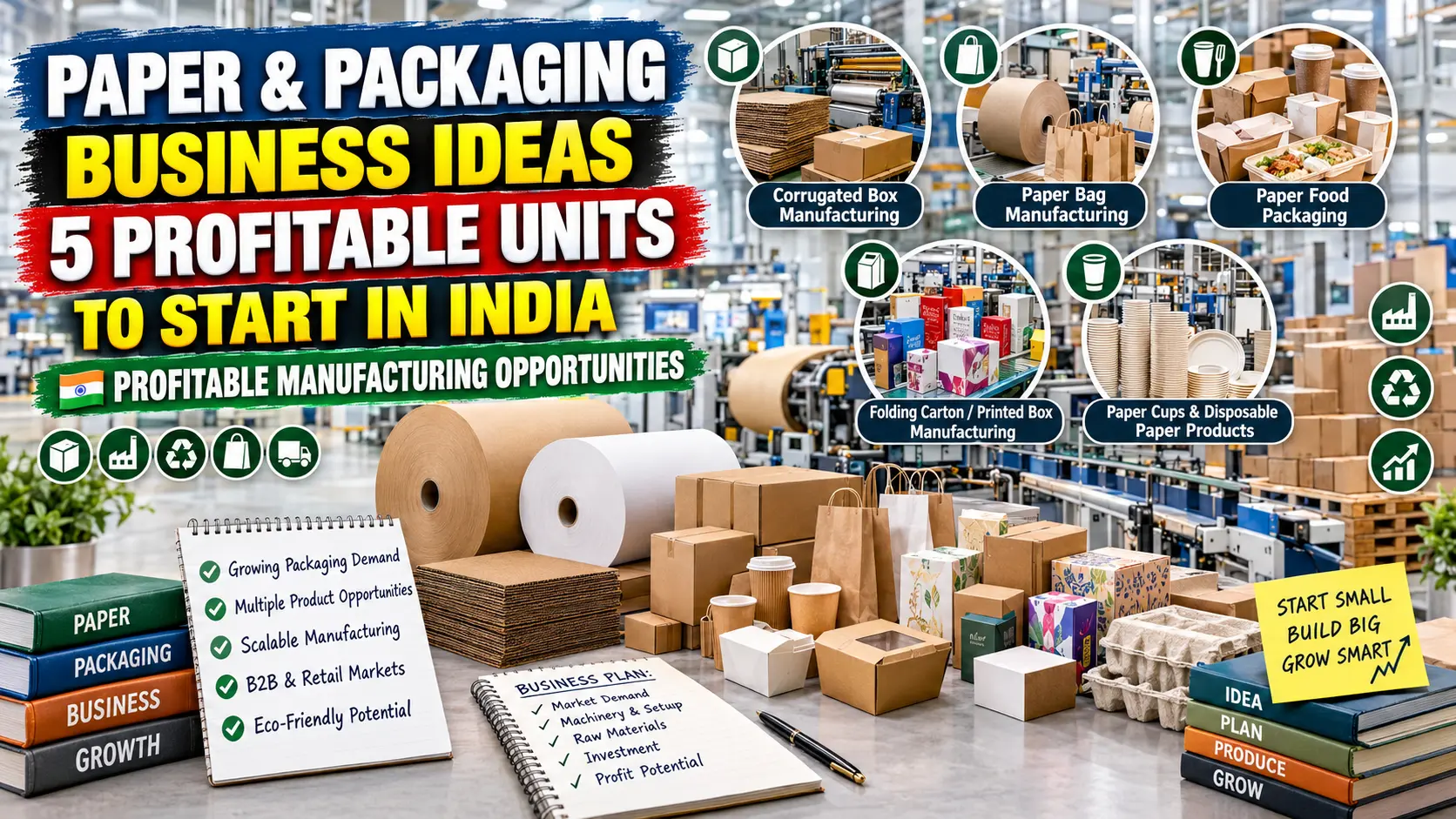
India’s manufacturing ecosystem has evolved rapidly over the past decade, offering entrepreneurs vast potential to build thriving ventures. If you’re looking for profitable small-scale business ideas, this guide is your starting point. With a budget of ₹2 crore, you can establish manufacturing units that meet both domestic and export market demands. These small-scale business ideas are designed to minimize risk while maximizing returns. In this comprehensive guide, we will explore the most profitable small-scale business ideas that require modest investment but promise substantial growth. Whether you are a first-time entrepreneur or an experienced investor, these small-scale business ideas offer scalability, sustainability, and long-term profitability.
Contents
- 1. Top 10 Small-Scale Manufacturing Ideas to Start with 2 Crore Investment
- 1.1. 1. Organic Fertilizer Production Unit
- 1.2. 2. Paper Bag Manufacturing Unit
- 1.3. 3. LED Light Manufacturing
- 1.4. 4. Disposable Tableware Manufacturing
- 1.5. 5. Ready-to-Eat (RTE) Snacks Production
- 1.6. 6. Sanitary Napkin Manufacturing
- 1.7. 7. Detergent and Cleaning Product Manufacturing
- 1.8. 8. Herbal Cosmetic and Ayurvedic Product Manufacturing
- 1.9. 9. Ice Cream and Frozen Dessert Manufacturing
- 1.10. 10. Modular Furniture Manufacturing
- 1.11. Why Small-Scale Business is the Future of Indian Manufacturing
- 2. Frequently Asked Questions (FAQs)
- 2.1. FAQ 1: What are the most profitable small-scale manufacturing businesses to start with ₹2 crore investment?
- 2.2. FAQ 2: Is ₹2 crore sufficient to start a manufacturing business in India?
- 2.3. FAQ 3: What are the top 5 business ideas with the fastest ROI under ₹2 crore?
- 2.4. FAQ 4: What licenses and certifications are required for small-scale manufacturing businesses?
- 2.5. FAQ 5: Can I export products from my small-scale manufacturing business?
- 2.6. FAQ 6: How can I get government subsidies for my small-scale manufacturing business?
- 2.7. FAQ 7: How do I choose the right small-scale manufacturing business for my location?
- 2.8. FAQ 8: What are the common challenges in small-scale manufacturing and how can I overcome them?
- 3. Summary Table: 10 Business Ideas at a Glance
Top 10 Small-Scale Manufacturing Ideas to Start with 2 Crore Investment
Below are the top 10 small-scale manufacturing ideas that combine scalability, affordability, and high demand. These opportunities are ideal for entrepreneurs eager to capitalize on India’s Make in India initiative, digital growth, and demand for sustainable and innovative products.
1. Organic Fertilizer Production Unit
With the surge in organic farming and eco-conscious agriculture, starting an organic fertilizer manufacturing plant is a lucrative small-scale business. Vermicompost, bio-fertilizers, and seaweed extracts are in high demand by both domestic farmers and international buyers.
- Investment Needed: ?1.2 to ?1.6 crore
- Raw Materials: Cow dung, plant waste, microbial cultures
- Target Market: Organic farmers, agricultural co-operatives, retail stores
- ROI Timeline: 12–18 months
The environmental shift toward chemical-free farming practices makes this a sustainable business with long-term benefits.
2. Paper Bag Manufacturing Unit
With a countrywide ban on plastic bags, the paper bag manufacturing industry has grown exponentially. Businesses and retailers are moving toward eco-friendly alternatives, making this one of the fastest-growing small-scale business ideas.
- Investment Needed: ?50 lakh – ?1.5 crore
- Machines Required: Sheet cutter, printing press, bag-making machine
- Raw Materials: Kraft paper, glue, ink
- Profit Margins: 25–40%
You can start locally and scale up to supply large retail chains or export markets.
3. LED Light Manufacturing
The government’s push for energy-efficient solutions has led to a booming demand for LED products in India. LED bulb and light assembly is a cost-effective and profitable manufacturing venture under ?2 crore.
- Machinery Cost: ?60 lakh – ?1 crore
- Raw Materials: PCB, LED chips, resistors, casings
- Target Clients: Households, commercial buildings, municipal projects
- Certifications Needed: BIS Certification, ISO
This small-scale business also opens doors to exports, especially in developing markets across Asia and Africa.
4. Disposable Tableware Manufacturing
Biodegradable cutlery and tableware are now preferred in hotels, catering companies, and takeaway services. Disposable plates and cups made of areca, sugarcane bagasse, and paper are eco-friendly and highly marketable.
- Initial Capital: ?75 lakh – ?1.8 crore
- Machinery: Hydraulic press, forming machines
- Products: Plates, bowls, trays, glasses
- Markets: Domestic retail, food service industry, exports
Sustainability trends make this business resilient even during economic fluctuations.
5. Ready-to-Eat (RTE) Snacks Production
The snacking industry in India has seen double-digit growth. You can start a ready-to-eat snacks manufacturing unit under ?2 crore focused on regional delicacies, healthy snacks, or even ethnic products for NRIs.
- Investment: ?1.5–?2 crore
- Products: Namkeens, baked chips, millet snacks
- Market: Supermarkets, e-commerce, export channels
- Licenses: FSSAI, ISO 22000
Packaging and branding are key in this small-scale business, helping differentiate your product in a saturated market.
6. Sanitary Napkin Manufacturing
A highly impactful business with social relevance, sanitary napkin production helps promote menstrual hygiene and is backed by several government initiatives.
- Startup Capital: ?1.2–?1.6 crore
- Raw Materials: Absorbent pads, non-woven fabric, adhesives
- Customer Base: Rural and urban women, NGOs, healthcare distributors
- ROI: High margins with good scalability
With proper awareness campaigns, this small-scale business can gain momentum quickly, especially in semi-urban regions.
7. Detergent and Cleaning Product Manufacturing
The cleaning and hygiene segment in India is recession-proof and consistently growing. Manufacturing detergents, floor cleaners, toilet cleaners, and dishwashing liquids is a solid business model.
- Setup Cost: ?80 lakh – ?1.5 crore
- Equipment Needed: Mixing vessels, filling and sealing machines
- Sales Channels: Wholesalers, supermarkets, B2B contracts
- Margins: 25–50%
This small-scale business offers potential for private labeling and expansion into institutional supply.
8. Herbal Cosmetic and Ayurvedic Product Manufacturing
The herbal and ayurvedic cosmetics market is expected to reach ?50,000 crore by 2030. Starting a herbal cosmetic manufacturing unit with face creams, soaps, oils, and shampoos is both trendy and lucrative.
- Capital Requirement: ?1.5 crore
- Key Ingredients: Aloe vera, turmeric, neem, sandalwood
- Certifications: GMP, AYUSH, ISO
- Target Audience: Beauty retailers, online shoppers, salons
This is a high-growth small-scale business with tremendous potential, especially among the millennial and Gen Z demographic.
9. Ice Cream and Frozen Dessert Manufacturing
The frozen dessert sector is booming, with rising consumer preferences for artisanal and health-focused ice creams. A manufacturing plant under ?2 crore can produce gelato, vegan ice cream, and kulfis.
- Startup Budget: ?1.5 crore
- Machinery: Pasteurizer, homogenizer, deep freezer
- Market: Café chains, retail, online food delivery platforms
- Compliance: FSSAI and Cold Chain Setup
Flavored and healthy variations like fruit-based or sugar-free options can help you stand out.
10. Modular Furniture Manufacturing
As real estate space gets compact, the demand for modular and space-saving furniture is on the rise. Entrepreneurs can start a small-scale modular furniture unit that serves offices, homes, and institutions.
- Investment Needed: ?1.8–?2 crore
- Equipment: CNC routers, edge banders, panel saws
- Materials: MDF, plywood, laminates
- Sales Channels: Interior designers, e-commerce, furniture showrooms
This small-scale business requires precision but offers huge margins and room for customization services.
Why Small-Scale Business is the Future of Indian Manufacturing
Starting a small-scale business in India is no longer just an alternative; it’s often the first choice for entrepreneurs seeking agility, profitability, and innovation. With schemes like MSME registration, Mudra loans, and subsidies under Stand-Up India, the ecosystem supports ambitious founders.
Moreover, the emphasis on local production and Atmanirbhar Bharat has created an urgent demand for decentralized, agile manufacturing units. Whether it’s a factory producing biodegradable utensils or LED bulbs, the common thread is affordability, fast setup, and high return on investment.
By selecting the right niche based on your region, market understanding, and product demand, your small-scale business can thrive even in competitive sectors.
Visit the page Select and Choose the Right Business Startup for You for sorting out the questions arising in your mind before starting any business and know which start-up you can plan. We, at NPCS, endeavor to make business selection a simple and convenient step for any entrepreneur/startup. Our expert team, by capitalizing on its dexterity and decade’s long experience in the field, has created a list of profitable ventures for entrepreneurs who wish to diversify or venture. The list so mentioned is updated regularly to give you a regular dose of new emerging opportunities.Frequently Asked Questions (FAQs)
FAQ 1: What are the most profitable small-scale manufacturing businesses to start with ₹2 crore investment?
The most profitable small-scale manufacturing businesses with a ₹2 crore investment include:
Organic Fertilizer Production – ₹1.2–1.6 crore investment, ROI within 12–18 months
LED Light Manufacturing – ₹60 lakh–1 crore machinery cost, high demand from government and commercial projects
Herbal Cosmetic Manufacturing – ₹1.5 crore investment, ₹50,000 crore market potential by 2030
Modular Furniture Manufacturing – ₹1.8–2 crore investment, huge margins with customization
Sanitary Napkin Manufacturing – ₹1.2–1.6 crore investment, high social impact and scalability
Each of these businesses offers strong profitability, growing market demand, and scalability. The key is to align your choice with your expertise, location advantages, and target market.
FAQ 2: Is ₹2 crore sufficient to start a manufacturing business in India?
Yes, ₹2 crore is more than sufficient to start a profitable small-scale manufacturing business in India. With this investment, you can cover:
Plant and machinery costs (₹60 lakh–1.8 crore depending on the industry)
Raw material procurement
Licensing and regulatory compliance
Working capital for initial operations
Marketing and branding expenses
Many successful manufacturing units have been established with ₹1–2 crore, especially in sectors like paper bag manufacturing, LED assembly, detergent production, and disposable tableware. Government schemes like MSME subsidies and Stand-Up India can further reduce your financial burden.
FAQ 3: What are the top 5 business ideas with the fastest ROI under ₹2 crore?
Here are the top 5 business ideas with the fastest ROI under ₹2 crore:
| Business Idea | Investment | ROI Timeline |
|---|---|---|
| Organic Fertilizer Production | ₹1.2–1.6 crore | 12–18 months |
| Paper Bag Manufacturing | ₹50 lakh–1.5 crore | 18–24 months |
| Detergent Manufacturing | ₹80 lakh–1.5 crore | 18–24 months |
| LED Light Manufacturing | ₹60 lakh–1 crore | 18–24 months |
| Ready-to-Eat Snacks Production | ₹1.5–2 crore | 18–24 months |
These businesses benefit from high demand, recurring orders, and government support for eco-friendly and indigenous manufacturing.
FAQ 4: What licenses and certifications are required for small-scale manufacturing businesses?
Depending on your chosen industry, the following licenses may be required:
| Business Type | Required Licenses |
|---|---|
| Food Products (Snacks, Ice Cream) | FSSAI License, ISO 22000, GST Registration |
| Herbal Cosmetics | GMP Certification, AYUSH Approval, ISO |
| LED Manufacturing | BIS Certification, ISO |
| Sanitary Napkins | ISO, Medical Device Registration (if applicable) |
| Detergents & Cleaners | BIS Certification, Pollution Control Clearance |
| General Manufacturing | Factory License, MSME/Udyam Registration, GST, Pollution Control Clearance |
Always consult with a regulatory expert to ensure full compliance with central and state government requirements.
FAQ 5: Can I export products from my small-scale manufacturing business?
Absolutely! Small-scale manufacturing businesses in India have significant export potential. Key export opportunities include:
LED Lights – High demand in Asia and Africa
Organic Fertilizers – Growing global organic farming market
Paper Bags – Plastic ban in many countries drives demand
Herbal Cosmetics – Global preference for natural products
Ready-to-Eat Snacks – Indian diaspora and international markets
To export, you will need:
Import Export Code (IEC) from DGFT
Compliance with international standards (RoHS, REACH, CE markings)
Participation in trade fairs and B2B platforms like IndiaMART and Alibaba
FAQ 6: How can I get government subsidies for my small-scale manufacturing business?
The Indian government offers several schemes to support small-scale manufacturing businesses:
| Scheme | Benefit |
|---|---|
| MSME Registration | Access to subsidies, priority lending, and government tenders |
| PMEGP (Prime Minister’s Employment Generation Programme) | Up to 35% subsidy on project cost |
| Stand-Up India | Loans for SC/ST and women entrepreneurs |
| Make in India | Policy support and investment facilitation |
| State-Specific Subsidies | Varies by state – includes power subsidies, land benefits, etc. |
Visit your state’s MSME department or the District Industries Centre (DIC) for detailed information on available schemes for your specific business.
FAQ 7: How do I choose the right small-scale manufacturing business for my location?
Choosing the right small-scale manufacturing business depends on several factors:
| Factor | Consideration |
|---|---|
| Raw Material Availability | Choose industries where raw materials are locally available |
| Skilled Labor | Assess local workforce availability and skill levels |
| Market Demand | Analyze regional and national demand for your product |
| Logistics & Infrastructure | Ensure good connectivity for supply chain and distribution |
| Competition | Evaluate existing players and identify gaps in the market |
| Government Incentives | Check for state-specific subsidies for certain industries |
For example, if you are in an agricultural region, organic fertilizer or paper bag manufacturing may be ideal. In urban areas, modular furniture or LED manufacturing could be more suitable.
FAQ 8: What are the common challenges in small-scale manufacturing and how can I overcome them?
| Challenge | Solution |
|---|---|
| High Initial Investment | Utilize government subsidies, MSME loans, and partner with investors |
| Raw Material Price Volatility | Diversify suppliers and sign long-term contracts |
| Skilled Manpower Shortage | Partner with ITIs and provide in-house training |
| Regulatory Compliance | Hire compliance consultants for smooth approvals |
| Competition | Focus on quality, branding, and niche products |
| Technology Upgradation | Invest in automation and Industry 4.0 solutions |
With proper planning, risk management, and continuous innovation, these challenges can be effectively managed, ensuring long-term success in your small-scale manufacturing venture.
Summary Table: 10 Business Ideas at a Glance
| Business Idea | Investment Range | ROI Timeline | Key Licenses |
|---|---|---|---|
| Organic Fertilizer | ₹1.2–1.6 crore | 12–18 months | ISO, MSME |
| Paper Bag Manufacturing | ₹50 lakh–1.5 crore | 18–24 months | MSME, GST |
| LED Light Manufacturing | ₹60 lakh–1 crore | 18–24 months | BIS, ISO |
| Disposable Tableware | ₹75 lakh–1.8 crore | 18–24 months | FSSAI, MSME |
| Ready-to-Eat Snacks | ₹1.5–2 crore | 18–24 months | FSSAI, ISO 22000 |
| Sanitary Napkin | ₹1.2–1.6 crore | 18–24 months | ISO, MSME |
| Detergent Manufacturing | ₹80 lakh–1.5 crore | 18–24 months | BIS, MSME |
| Herbal Cosmetics | ₹1.5 crore | 24–36 months | GMP, AYUSH, ISO |
| Ice Cream Manufacturing | ₹1.5 crore | 24–36 months | FSSAI, Cold Chain Setup |
| Modular Furniture | ₹1.8–2 crore | 24–36 months | MSME, GST |