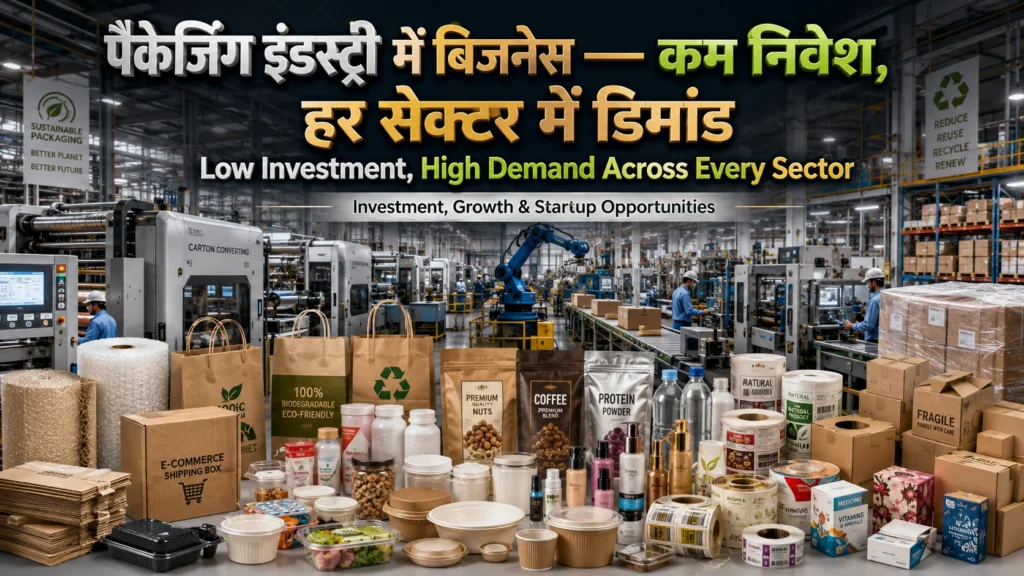

पैकेजिंग इंडस्ट्री में बिजनेस
Packaging एक ऐसी industry है जो किसी एक sector पर निर्भर नहीं है। Food, pharma, FMCG, e-commerce, cosmetics, agriculture — हर जगह packaging चाहिए। यही कारण है कि packaging manufacturing को ‘recession-proof’ industry भी कहा जाता है। और अगर आप कम investment में एक ऐसा business idea ढूंढ रहे हैं जिसमें demand कभी कम न हो, तो packaging sector सबसे suitable जवाब है।
भारत की पैकेजिंग इंडस्ट्री — मौजूदा स्थिति
भारत दुनिया के top packaging markets में से एक है। Indian Institute of Packaging (IIP) के अनुसार, भारत का packaging sector तेज़ी से विस्तार कर रहा है। E-commerce boom, FMCG growth, और food processing expansion — तीनों ने इस growth को fuel किया है।
Get Detailed Insights from This Book: Handbook on Modern Packaging Industries
पैकेजिंग के मुख्य सेगमेंट
1. Corrugated Box Manufacturing
यह packaging industry का सबसे large segment है। E-commerce ने corrugated boxes की demand में massive jump लाया है। Amazon, Flipkart के sellers को हमेशा boxes चाहिए।
Investment ₹15-40 लाख से शुरू होता है। Monthly revenue एक medium unit से ₹20-50 लाख तक हो सकती है।
2. Flexible Packaging
Laminated pouches, standup pouches, और multilayer films food और pharma packaging का सबसे popular format बन चुका है। यह traditional rigid packaging से lighter, cheaper, और more attractive है।
Related Article: Sustainable Packaging Business in India – Future, Investment & Profit Guide
3. Rigid Plastic Containers
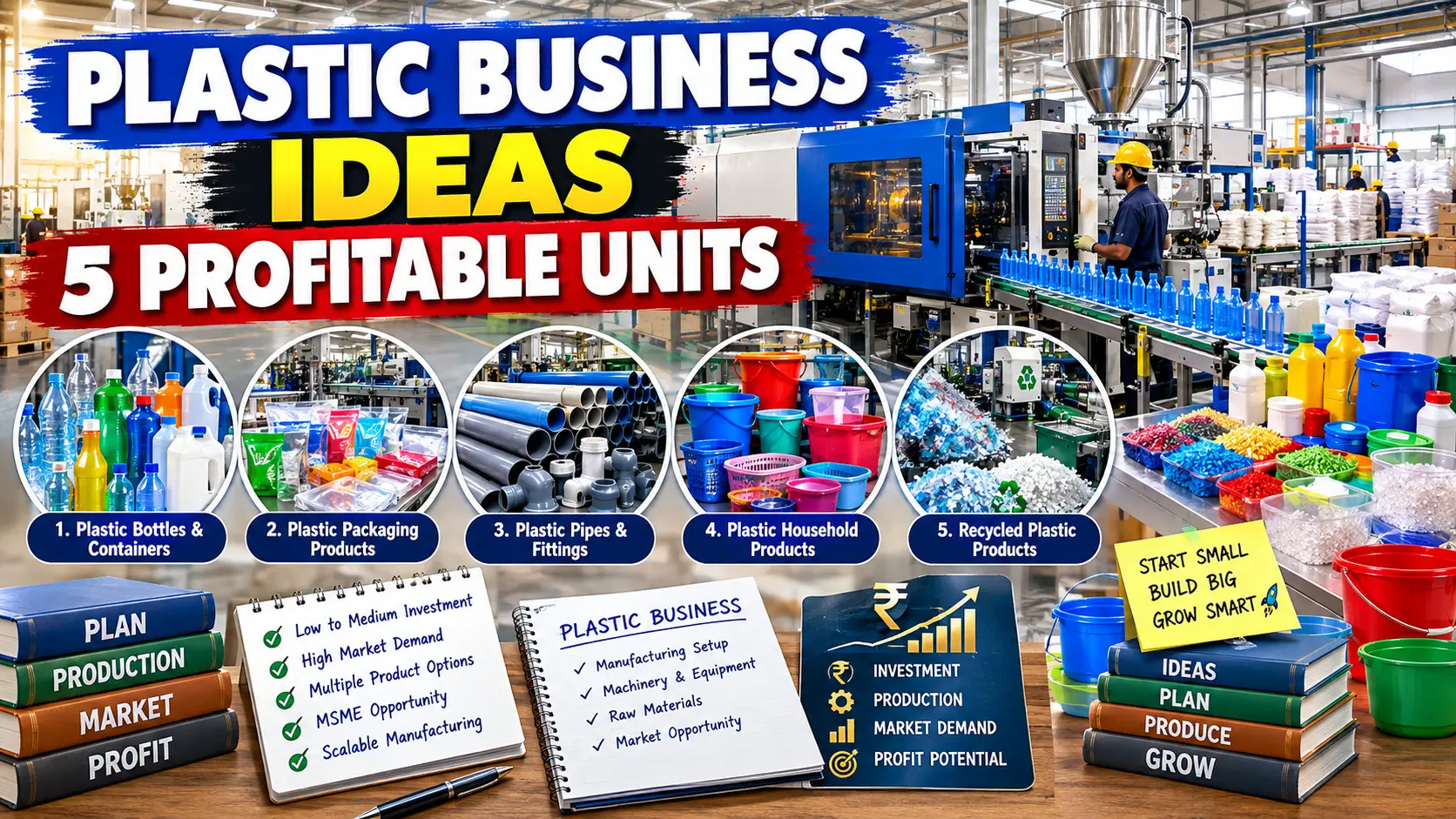
Bottles, jars, और containers की demand personal care, pharma, और food sectors में बहुत ज़्यादा है। Injection molding machines से ये बनते हैं — एक machine से multiple products बना सकते हैं।
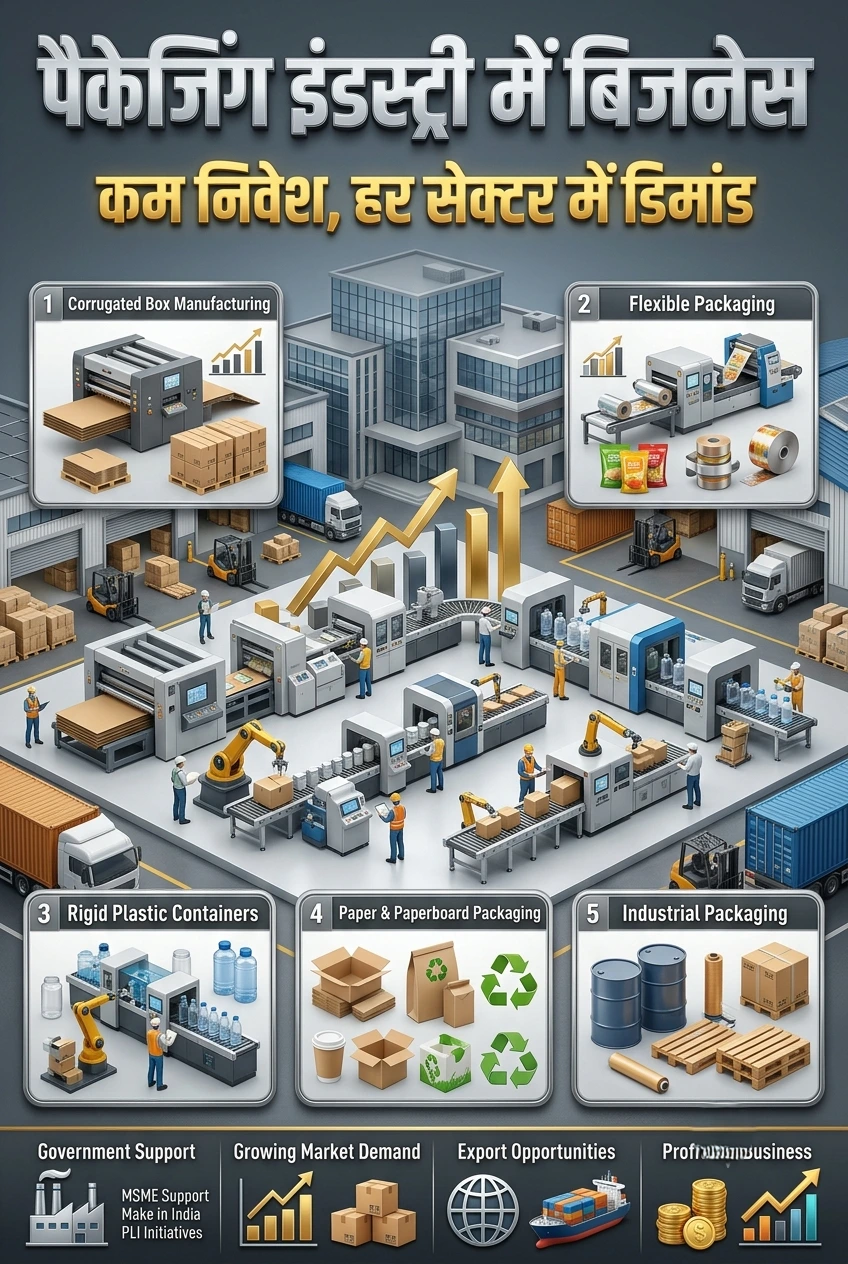
4. Paper और Paperboard Packaging
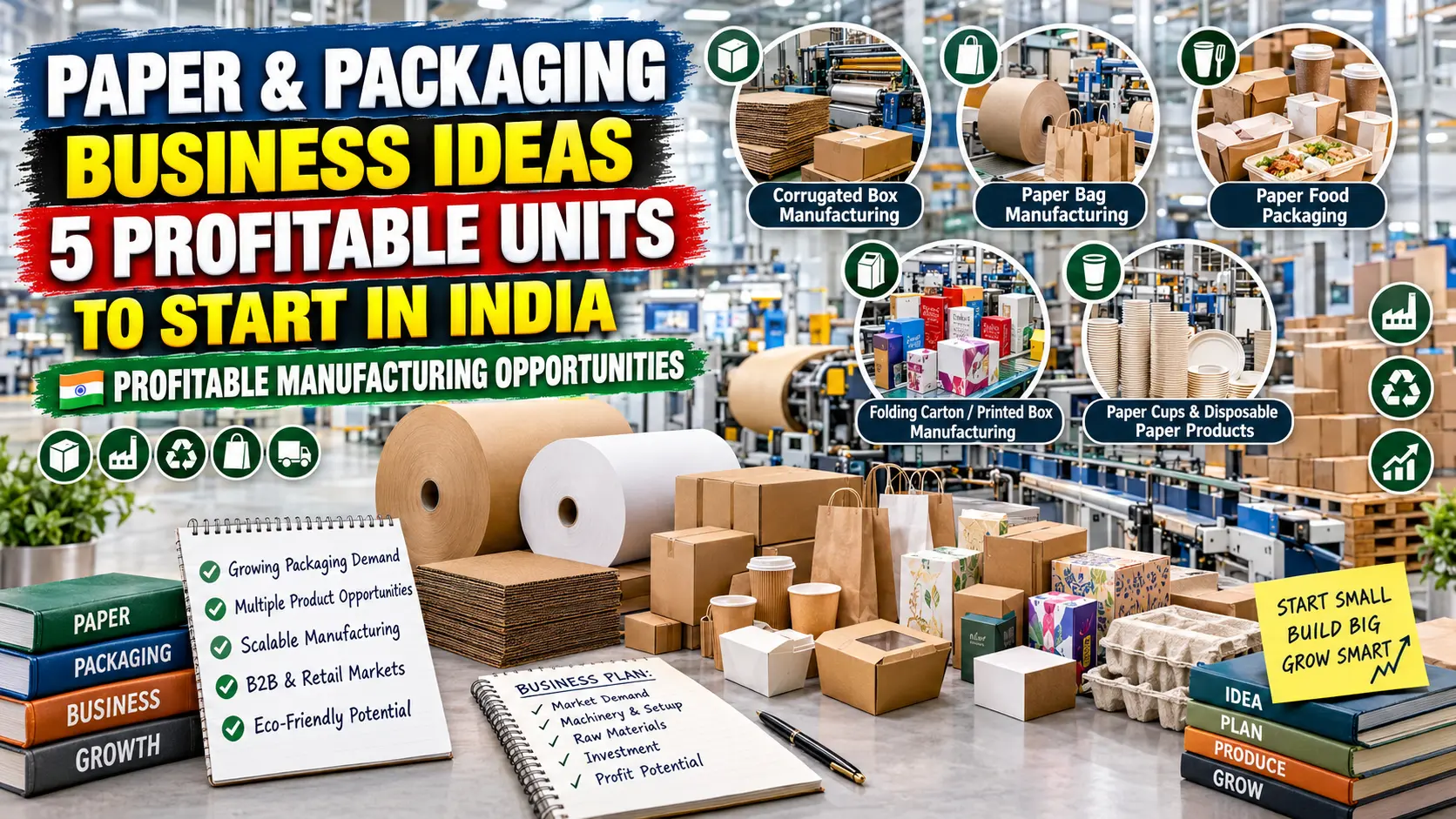
Paper bags, paper cups, paper plates, और folding cartons की demand plastic ban के बाद और बढ़ गई है। यह एक environmentally friendly segment है जिसमें premium market भी है।
Get Detailed Project Report (DPR): Biodegradable Packaging & Bio-based Polymers
5. Industrial Packaging
Drums, IBCs (Intermediate Bulk Containers), और pallet wraps — ये industrial buyers के लिए हैं। Chemical, paint, और lubricant companies इनके बड़े buyers हैं।
सबसे Profitable Packaging Products — Comparison
| Product | Investment (₹) | Target Market | Profit Margin | Scalability |
| Corrugated Boxes | 15–40 लाख | E-commerce, FMCG | 15–25% | बहुत ज़्यादा |
| Flexible Pouches | 30–80 लाख | Food, Pharma | 20–35% | ज़्यादा |
| Plastic Containers | 20–60 लाख | Personal care, Food | 25–40% | ज़्यादा |
| Paper Bags/Cups | 5–20 लाख | Retail, Cafes | 25–40% | मध्यम |
| Industrial Drums | 25–70 लाख | Chemical, Paint | 20–30% | मध्यम |
E-Commerce Packaging — सबसे तेज़ Growing Segment
E-commerce packaging सबसे fast-growing packaging segment है। Confederation of Indian Industry (CII) के अनुसार, India का e-commerce market तेज़ी से बढ़ रहा है, जिससे packaging demand में proportional growth आ रही है। Customized boxes, protective packaging (bubble wrap, foam inserts), और branded mailer bags की demand हर महीने बढ़ रही है।
Packaging Business के लिए ज़रूरी Machines
- Corrugated Box Unit: Die-cutting machine, Flexo printing machine, Stitching machine
- Paper Bag Unit: Paper bag making machine, Handle fitting machine
- Plastic Container: Injection molding machine, Blow molding machine
- Flexible Pouch: Lamination machine, Pouch making machine
सरकारी Support और Schemes
Packaging industry को MSME schemes का पूरा benefit मिलता है। Udyam registration के बाद MUDRA loan, CGTMSE credit guarantee, और Credit Linked Capital Subsidy Scheme (CLCSS) — सब available हैं। Export के लिए DPIIT (Department for Promotion of Industry and Internal Trade) की startup और MSME schemes का लाभ उठाएं।
Choose the right startup backed by real market demand
Packaging Business में सफलता के Tips
Quality consistency सबसे ज़रूरी है। एक bad batch पूरा contract खो सकती है। इसलिए raw material quality पर कभी compromise नहीं करें।
Delivery reliability भी उतनी ही ज़रूरी है। Packaging buyers को just-in-time delivery चाहिए। इसलिए production planning और inventory management strong होना चाहिए।
Customization offer करना competitive advantage देता है। Branded packaging, custom colors, और special printing — इससे आप commodity supplier से value-added supplier बन जाते हैं।
अक्सर पूछे जाने वाले सवाल (FAQ)
Q1. Packaging business के लिए minimum investment कितना चाहिए?
Paper bag manufacturing जैसे simple segment में ₹5-10 लाख से शुरुआत हो सकती है। Corrugated boxes या flexible packaging के लिए ₹20 लाख से ज़्यादा चाहिए।
Q2. Packaging में export का scope है?
हां, pharmaceutical packaging और specialty packaging में India के export opportunities बड़े हैं। FDA-compliant packaging units को US और European clients मिलते हैं।
Q3. क्या घर से packaging business शुरू हो सकता है?
बहुत छोटे scale पर — जैसे handmade paper bags या gift packaging — घर से शुरू हो सकता है। लेकिन industrial scale के लिए dedicated space ज़रूरी है।
Q4. Packaging में BIS या किसी certification की ज़रूरत है?
Pharma packaging के लिए FDA approval ज़रूरी है। Food contact packaging के लिए food-grade material certification चाहिए। General packaging के लिए कोई mandatory certification नहीं है।
निष्कर्ष
Packaging industry एक ऐसी manufacturing business है जिसमें demand कभी नहीं रुकती। E-commerce, food processing, pharma — ये सभी sectors growing हैं, और सबको packaging चाहिए। कम investment में high demand वाला यह business idea उन उद्यमियों के लिए perfect है जो stable और scalable business चाहते हैं। अधिक जानकारी और Detailed Project Report के लिए niir.org पर जाएं।