
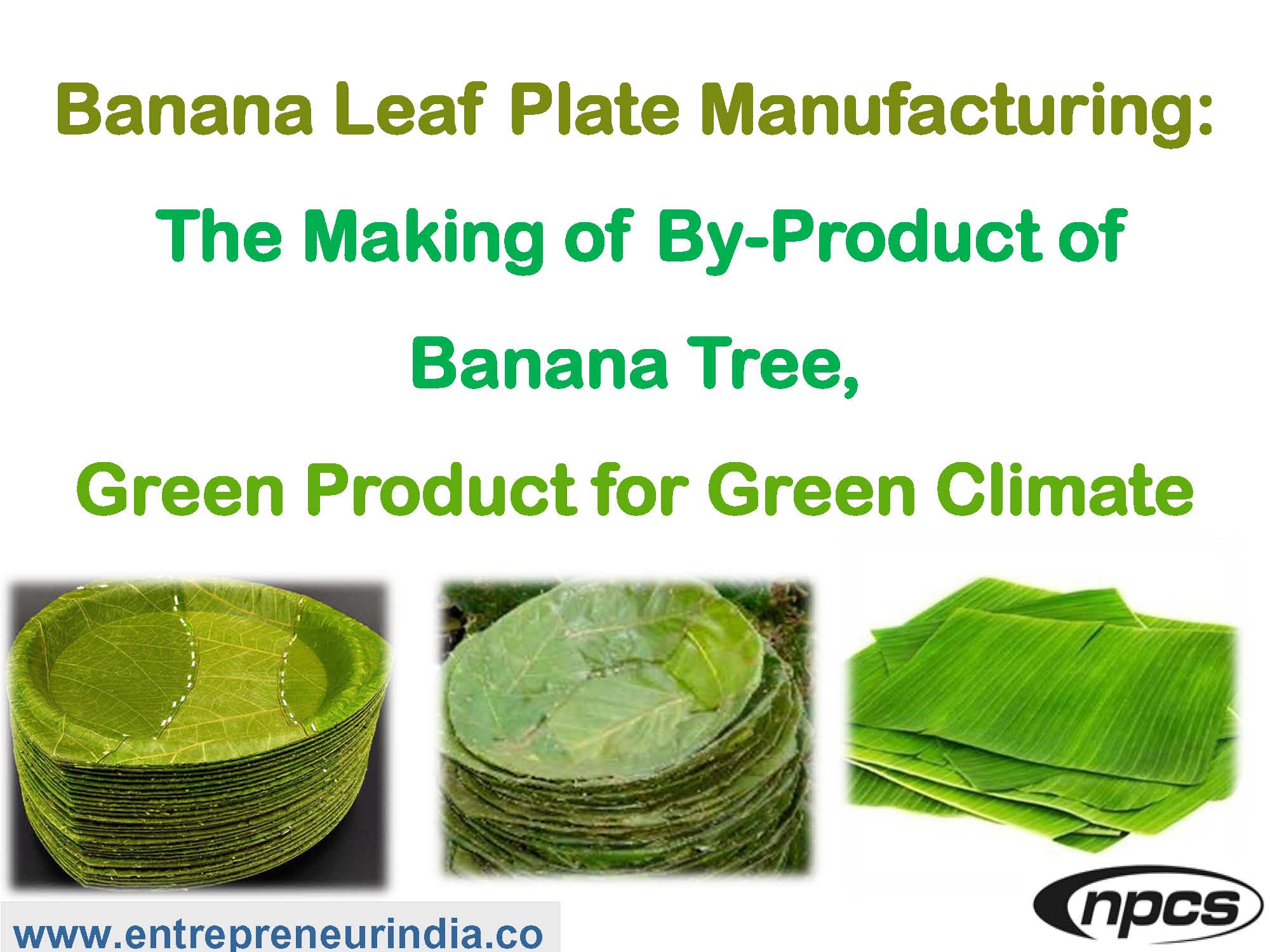
India’s increasing emphasis on sustainable living and eco-conscious products has created a booming market for biodegradable tableware. One of the most in-demand items in this category is the banana leaf plate, a traditional yet highly relevant alternative to plastic and styrofoam. As a result, banana leaf plate manufacturing is becoming a profitable green business opportunity across rural and urban areas. These plates are 100% natural, compostable, chemical-free, and carry strong cultural significance, especially in religious, wedding, and festive events. With rising environmental awareness and government restrictions on single-use plastics, this business is not just eco-friendly—it’s future-ready.
Industrial banana leaf manufacturing is a process of transforming raw banana leaves into durable, eco-friendly, and food-safe products like plates and bowls via automated cleaning, high-pressure sanitizing, and molding. This process increases leaf flexibility and strength, that makes products strong to handle heat, and moisture while remaining biodegradable. It serves to a growing traditional tableware market with a eco-friendly banana leaf plate by replacing plastic packaging. Banana Leaf Plate Manufacturing is a handy process now with the help of latest technological innovation.
Starting a Banana Leaf Plate Manufacturing Business
Setting up a banana leaf plate manufacturing unit involves sourcing natural materials, investing in affordable equipment, and meeting hygiene and packaging standards. Here’s a step-by-step guide to help entrepreneurs successfully launch and scale this eco-conscious venture.
1. Market Demand and Scope
Banana leaf plates are widely used in South Indian households, temples, dhabas, eco-resorts, and even exported to countries with Indian diaspora or eco-conscious populations. Unlike synthetic plates, they decompose quickly and leave no toxic waste. Moreover, the visual appeal and traditional touch make them ideal for catering, religious functions, and natural food packaging. In contrast to plastic alternatives, these plates are gaining traction in weddings, events, and organic restaurants. The growing movement toward sustainable living ensures steady demand throughout the year.
2. Raw Material and Production Process
The key raw material is banana leaves, which are abundantly available in states like Tamil Nadu, Kerala, Karnataka, Andhra Pradesh, and parts of Maharashtra and Assam. The production process includes:
Sourcing and cleaning banana leaves
Drying or pressing them flat to remove moisture
Shaping using a hydraulic or manual die press
Trimming to desired sizes (round, square, or compartmental)
Packaging in moisture-resistant and hygienic material
Moreover, this process doesn’t involve harmful chemicals, making it completely organic and safe for food contact.
See More – Cashew Nut Processing
3. Machinery and Setup Requirements
To set up a banana leaf plate manufacturing unit, you’ll need the following equipment:
Leaf cleaning table
Manual or hydraulic die press machine
Molds for different plate sizes and shapes
Trimming and sealing tools
Basic packaging setup
A small unit can start with an investment of ?2–5 lakhs, including machines and initial raw material. Around 400–800 sq. ft. of workspace is sufficient for a small-scale operation. Moreover, this business can be started in rural areas, helping generate employment and supporting local banana farmers by utilizing naturally shed or trimmed leaves.
4. Legal Requirements and Marketing Strategy
To legally operate your unit, you will need:
Udyam/MSME registration
GST registration
FSSAI registration (optional but useful for food-contact products)
Trade license from local authorities
Trademark registration (for branding)
Marketing these plates is easy if you highlight their eco-friendly, disposable, and chemical-free qualities. Moreover, selling on platforms like Amazon, IndiaMART, and Flipkart can boost visibility. You can also approach restaurants, caterers, temples, organic food outlets, and zero-waste stores. Participating in green expos and local festivals also helps in reaching eco-conscious consumers.
Key Benefits of Processed Banana Leaves
- Durability: Due to enhanced technology banana leaves allows to hold heavy food items and withstand with high-temperature dishes.
- Eco-Friendly: These leaf products are fully biodegradable and often break down within 28 days.
- Hygiene: The high-temperature processed ensures the products are food-grade and safe for consumption.
See More – CLC Blocks Making
Conclusion
The banana leaf plate manufacturing business offers a sustainable, low-investment opportunity with strong demand and long-term potential. It supports both environmental goals and rural economies, making it ideal for entrepreneurs looking to align profit with purpose. Modern processing facilities are very helpful as it uses a highly technical, multi-step approach to handle raw banana leaves. Moreover, as plastic bans become stricter and consumers look for biodegradable alternatives, this green business model stands out for its simplicity, impact, and scalability. With basic machinery, raw material access, and a good marketing plan, you can build a thriving brand in India’s growing eco-products sector.